
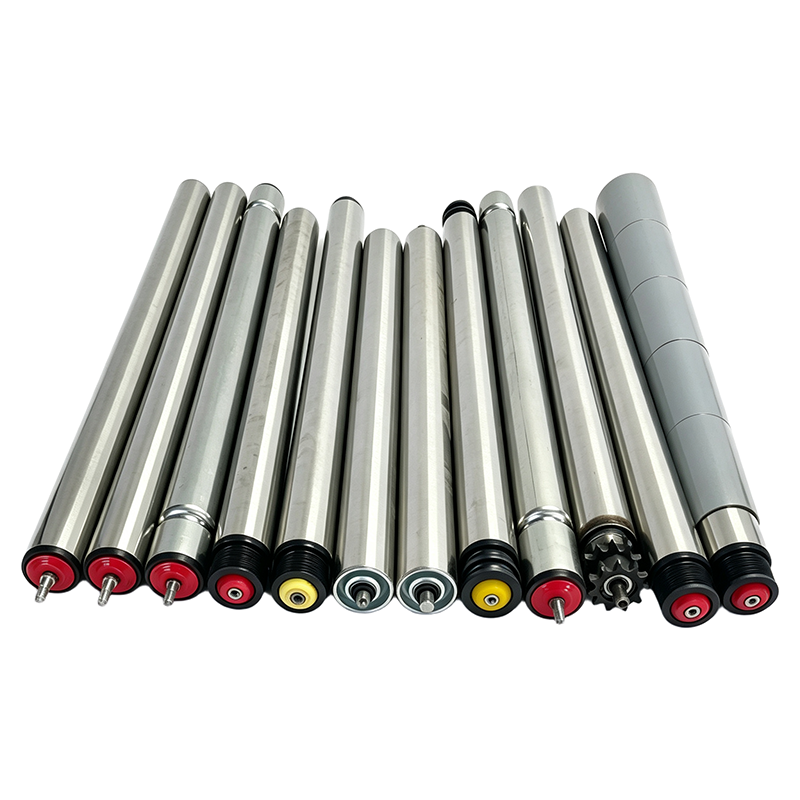
Rollers carry high-precision surfaces, tight tolerances and, in many cases, a significant price tag. Whether it is a steel backup roller for a cold rolling mill, an aluminum idler for a web converting line, or a rubber nip roller for a printing press, the way it is packed decides whether it arrives ready to run — or arrives as a claim.
This guide walks through the packaging methods that protect different roller types in storage, road transport, air cargo and long ocean voyages, and explains how a professional roller manufacturer matches packaging to the product. If you are sourcing rollers for export, these are the questions worth asking before you sign a purchase order.
01 · Why Roller Packaging Matters
Industrial rollers are rarely "just round metal." They are precision components with ground or plated surfaces, controlled runout and surface finish that directly affects product quality downstream. In transit they face four main enemies:
- Moisture and condensation — inside an ocean container, temperature swings produce condensation that can start oxidation on steel, galvanized and chrome-plated surfaces within days.
- Scratches and dents — a machined surface touched by another roller, a tool, or a container wall is a rework in waiting.
- Deformation under pressure — soft-core rubber rollers and long, slender bodies can bend or flat-spot when stacked or laid directly on the ground.
- Contamination — dust, moisture and chemical residue can compromise rollers used in cleanroom, food and medical lines.
The damage may not be visible at delivery, but it shows up as vibration, web wandering, uneven coating or premature wear the moment the roller is installed. That is why serious roller manufacturers treat packaging as part of the engineering, not an afterthought.
02 · Seven Packaging Methods, Each with a Job to Do
No single packaging solution covers every roller. The right choice depends on material, surface finish, dimensions and the transport route. These seven methods — used alone or combined — form the toolkit professional manufacturers apply:
Vacuum Packaging Sea-freight moisture control
Vacuum packaging is the core defense against humidity on long ocean voyages. By drawing air out of the package, it dramatically reduces the moisture inside and slows the oxidation and corrosion of metal rollers. It is especially important for galvanized, chrome-plated and precision steel rollers that must cross oceans inside container holds.
- Lowers internal humidity where container condensation would otherwise form.
- Seals the roller off from outside moisture for the duration of the voyage.
- Works best combined with desiccant bags and VCI (volatile corrosion inhibitor) paper for double-layer protection.
Best for: galvanized, chrome-plated and precision steel rollers shipped by sea.
Paper Tube Packaging Anti-scratch for precision surfaces
For aluminum alloy rollers and other high-precision bodies, the priority is keeping the surface untouched. A rigid paper (spiral-wound) tube wraps the roller body evenly, preventing direct contact with other objects and acting as a buffer during handling.
- Wraps the roller body uniformly and separates it from direct contact.
- Cushions and isolates the surface during loading, unloading and stacking.
- Withstands moderate external pressure, keeping the profile intact.
Best for: aluminum alloy rollers and machined surfaces where scratch protection matters more than moisture.
Corrugated Carton Packaging Cushioning & outer protection
Corrugated board is the workhorse outer layer. Its multi-layer flute structure absorbs the shocks and vibrations of road and rail transport, and it integrates easily with every other method on this list — a vacuum-sealed roller, a paper-tube roller or a kraft-wrapped rubber roller all finish inside a corrugated carton.
- Absorbs impact and vibration across the logistics chain.
- Combines with vacuum, tube and kraft methods as the final outer shell.
- Adds structural integrity and stacking strength to the whole package.
Best for: general-purpose rollers as an outer layer; note that corrugated board alone offers no moisture or rust protection.
Kraft Paper Wrapping Anti-sticking for rubber & coated rollers
Rubber, paint and coated rollers have slightly tacky surfaces. Packed carelessly, they stick to each other or to the packaging, and any peeling can damage the coating. Kraft paper is the classic answer: its smooth surface keeps friction low, it will not adhere to rubber or coatings, and its moderate breathability helps the surface stay in good condition.
- Smooth surface lowers friction and prevents surface scuffing.
- Does not stick to rubber or coated layers, preventing blocking.
- Balanced breathability keeps the roller surface stable in storage.
Best for: rubber-coated rollers, paint rollers and any roller with a tacky or coated surface.
Shaft (Journal) Support Prevents deformation
For rubber rollers, soft-cover rollers and long slender bodies, structure matters as much as wrapping. Supporting the roller on its shafts or journals keeps the body suspended — off the floor, out of direct contact, and free of the localized pressure that creates flat spots and bends.
- Keeps the roller body suspended, away from floors and stacking loads.
- Distributes force through the journals, not the working surface.
- Essential in demanding transport environments and long-term storage.
Best for: rubber rollers and any easy-to-deform, long or large-diameter bodies in demanding transport conditions.
Export Wooden Crate Packaging Export-ready structural protection
For heavy rollers and long-distance export shipments, a wooden crate is the strongest outer shell. The crate absorbs the shocks of container loading, forklift handling and multi-stage transport, keeps the roller isolated from external impact, and gives the whole package the stacking strength a carton simply cannot offer. Inside, the roller is held on cradles or end blocks so the body stays suspended.
- Provides rigid structural protection for heavy, valuable rollers.
- Supports stacking and container loading without crushing the product.
- Heat-treated, ISPM-15-compliant wood is used for international shipments.
- Pairs naturally with vacuum, VCI and shaft-support protection inside.
Best for: heavy steel rollers, large-diameter rollers and any export shipment requiring robust, internationally compliant packaging.
Channel Steel Reinforced Packaging Heavy-load reinforcement
Some rollers are simply too heavy for wood alone. For backup rollers, steel-mill rollers and other components weighing hundreds of kilograms to several tons, channel steel (U-shaped steel profiles) is built into the base and frame of the crate. The steel frame carries the load, keeps the crate rigid through lifting and transit, and distributes weight evenly so the packaging — and the roller inside — never distorts.
- Bears extreme loads that wooden framing alone cannot safely support.
- Keeps the crate square and rigid during crane lifts and container handling.
- Provides rated lifting points and load-distribution beams for safe rigging.
- Often combined with a wooden outer crate and vacuum/VCI inner protection.
Best for: ultra-heavy rollers — backup rollers, rolling-mill and mining rollers — where packaging weight capacity is the first concern.
03 · Matching Packaging to Roller Type and Transport Mode
The same roller can travel by truck, air or sea — and the packaging changes accordingly. The table below maps common roller families to their main risk and the recommended protection:
| Roller type | Main risk in transit | Recommended packaging | Extra protection |
|---|---|---|---|
| Steel / galvanized / chrome-plated | Oxidation and rust from humidity | Vacuum packaging + moisture barrier | Desiccant, VCI paper, rust-preventive oil |
| Aluminum alloy | Surface scratches and dents | Paper tube + foam end caps | Corrugated outer carton |
| Stainless steel | Contamination and surface marks | Protective film + paper tube | Clean wrap for medical / food lines |
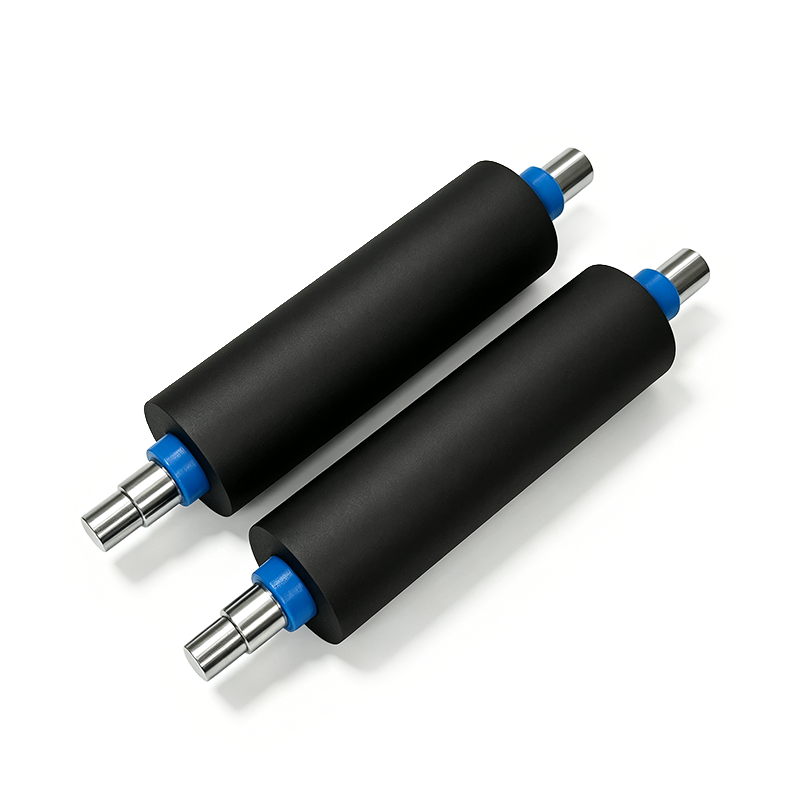
| Rubber / coated / paint | Sticking, blocking, deformation | Kraft paper + shaft support | Corrugated outer carton, no stacking |
| Carbon fiber / lightweight | Impact damage, edge chipping | Foam cradle + corrugated box | Shaft support, vertical storage |
| Long / large-diameter | Bending under own weight | Shaft support in wooden crate | Spacer blocks and slings |
| Heavy / backup rollers | Package failure under extreme weight | Channel-steel-reinforced wooden crate | Rated lifting points, load-distribution beams |
Before your rollers go into a container
- Use vacuum packaging with desiccant and VCI paper for any metal roller crossing the ocean.
- Confirm wooden crates meet ISPM-15 marking requirements for international shipping.
- Support long rollers on their journals inside the crate — never let the body carry the load.
- Fit foam end caps or cradles to isolate journals and protect roller edges.
- Reinforce heavy-load crates with channel steel and rated lifting points so rigging never distorts the package.
- Apply handling labels and keep a packing list with container-loading instructions.
- Leave the roller in its protective packaging until it is ready to install.
04 · Why Choose AstraRoll as Your Roller Manufacturing & Packaging Partner
AstraRoll is the industrial roller brand of Shaanxi Hongtai Gaoxin Precision Machinery Co., Ltd., a professional manufacturer of rollers, wheels, casters and customized automation components. From design and prototyping to mass production, we provide high-precision machining and one-stop manufacturing for customers worldwide.
Our rollers are engineered for demanding applications across new energy and lithium battery, mining and heavy industry, logistics, textile, printing, packaging, paper-making and converting lines — including idler rollers, rubber rollers, steel and stainless steel rollers, aluminum alloy rollers, carbon fiber rollers and chrome-plated rollers.
05 · Frequently Asked Questions
Buyers sourcing rollers for storage, domestic delivery or international export usually ask the same practical questions. Here are the answers:
Q1 What is the best packaging for rollers shipped by sea?
For ocean freight, vacuum packaging is the core solution: it removes air from the package to cut moisture and prevent oxidation of metal rollers. It works best combined with desiccants, VCI anti-rust paper and a sturdy outer crate with shaft support, so the roller body never touches the floor of the container.
Q2 Why are rubber rollers wrapped in kraft paper?
Rubber, paint and coated rollers have slightly sticky surfaces. Kraft paper has a smooth surface and a low friction coefficient, so it does not adhere to rubber or coatings, prevents blocking between rollers and allows moderate breathability that keeps the surface in good condition.
Q3 How do you keep steel rollers from rusting during transport?
Steel, galvanized and chrome-plated rollers are protected with vacuum packaging plus a moisture barrier, desiccant bags and VCI (volatile corrosion inhibitor) paper. Rust-preventive oil can be applied for longer voyages, and the vacuum seal should stay intact until installation.
Q4 Can AstraRoll customize packaging for different roller materials?
Yes. AstraRoll matches packaging to the roller material, surface finish, dimensions and transport route — from simple cartons for domestic trucking to vacuum + VCI + wooden crate combinations for overseas sea freight. Each roller is packed according to its specific risk profile.
Q5 Do you offer export-ready packaging with documentation?
Yes. As a manufacturer exporting to customers worldwide, AstraRoll provides export-ready packaging including custom crates, handling labels, packing lists and container-loading planning, coordinated with your freight forwarder under an ISO-certified quality management system.
Q6 How should rollers be stored before installation?
Keep rollers in their original protective packaging, store them in a dry, ventilated area, keep them supported on their shafts or journals so the body is suspended, and never stack heavy rollers directly on top of each other. Remove packaging only when the roller is ready to install.
Q7 When is a wooden crate or steel-reinforced crate needed?
Wooden crates are recommended for heavy rollers, large diameters and export shipments, because they offer structural rigidity and ISPM-15-compliant international shipping. Channel-steel-reinforced packaging is needed when a roller weighs hundreds of kilograms or more: the steel frame carries the load, keeps the crate rigid during crane lifts and provides rated lifting points.
Getting the Right Roller — and the Right Packaging
Send AstraRoll your roller drawings, specifications or target industries, and our engineers will recommend the material, machining and packaging solution matched to your route and budget.
Get a Custom Roller & Packaging Quote OEM & ODM welcome · Small batch to mass productionAstraRoll — industrial roller manufacturer. AstraRoll specializes in custom industrial rollers, heavy-duty wheels and precision casters for new energy, lithium battery, mining, heavy industry, logistics, textile, printing, packaging and paper-making applications. We provide precision roller manufacturing, roller surface treatment, roller repair and export-ready roller packaging, including vacuum packaging for sea freight, paper tube and foam protection for aluminum rollers, kraft paper wrapping for rubber rollers, shaft-support crating for long rollers, ISPM-15 export wooden crates and channel-steel-reinforced packaging for heavy rollers. As a professional roller factory with experience serving global customers, we combine custom roller engineering, ISO-certified quality management and route-matched protective packaging to ensure every roller arrives ready to run. Request a roller packaging and manufacturing quote today.