Phone: +86 15398058207
E-mail: sales@astraroll.com
Add: 1002, Unit 2, Building 6, Yandong Community, Fengcheng Eighth Road, Xi'an, Shaanxi, China
How to Choose Industrial Cooling and Heating Rollers
In roll-to-roll (web handling) manufacturing, plastic extrusion, coating, laminating, and lithium battery production, temperature control is the ultimate deciding factor for final product quality. Whether you are thermally bonding two layers of film flawlessly or rapidly setting freshly extruded molten plastic, the success of your production line relies heavily on two critical components: Heating Rollers and Cooling Rollers (Chill Rolls).
If you are designing a new production line or upgrading an existing temperature control system, understanding the internal mechanics of these rollers and knowing exactly how to specify them is essential.
1. How Do They Work? The Principles of Thermal Rollers
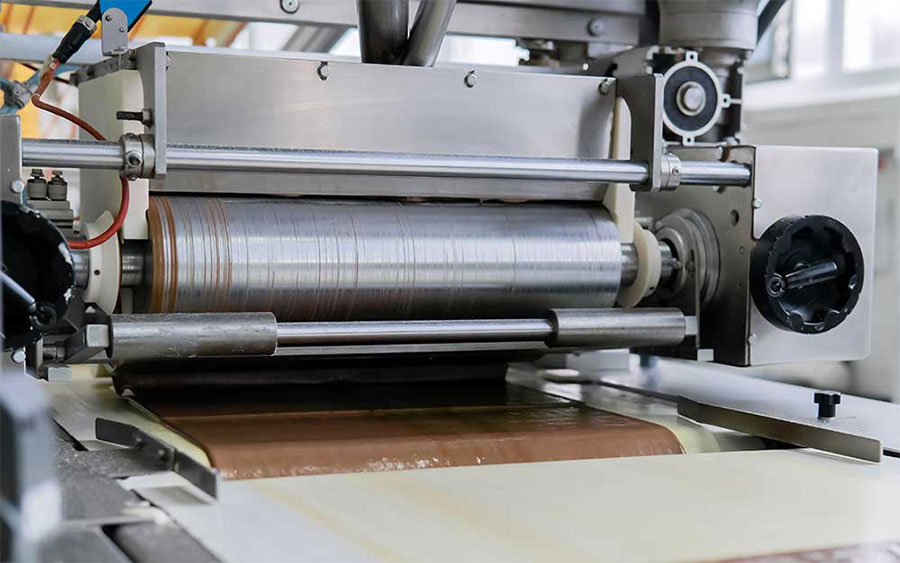
From the outside, heating and cooling rollers look much like standard conveyor rollers. However, their internal engineering is vastly more complex.
The Mechanics of Heating Rollers
The primary task of a heating roller is to transfer thermal energy evenly and consistently to the substrate (such as paper, fabric, or plastic film) passing over its surface. There are two primary heating methods:
- Fluid Heating (Thermal Oil / Hot Water): The roller features internal fluid channels. An external Temperature Control Unit (TCU) heats oil or water, which is then pumped into the rotating roller via a Rotary Union. This method provides exceptional temperature uniformity across the entire roll face.
- Electric / Induction Heating: Internal electric heating elements or advanced electromagnetic induction technology directly heat the roller's shell. This method offers rapid heat-up times and can reach extreme temperatures (over 300°C) without the need for complex fluid piping.
Cooling rollers, or chill rolls, are designed to rapidly extract heat from a substrate, allowing it to crystallize, set, or cool down to a safe handling temperature.
- Internal Fluid Circulation: Chilled water or glycol mixtures enter the roller through a rotary union. As the hot web contacts the roller surface, heat is transferred to the fluid, which is then expelled back to an external chiller unit.
- The Key Mechanism: To maximize heat exchange efficiency, high-end chill rolls are not just empty hollow tubes. They are engineered to ensure the cooling fluid remains in a state of turbulent flow, breaking up the thermal boundary layer that would otherwise insulate the fluid and hinder heat transfer.
2. Advanced Engineering: The Power of the Double-Shell Spiral Baffle
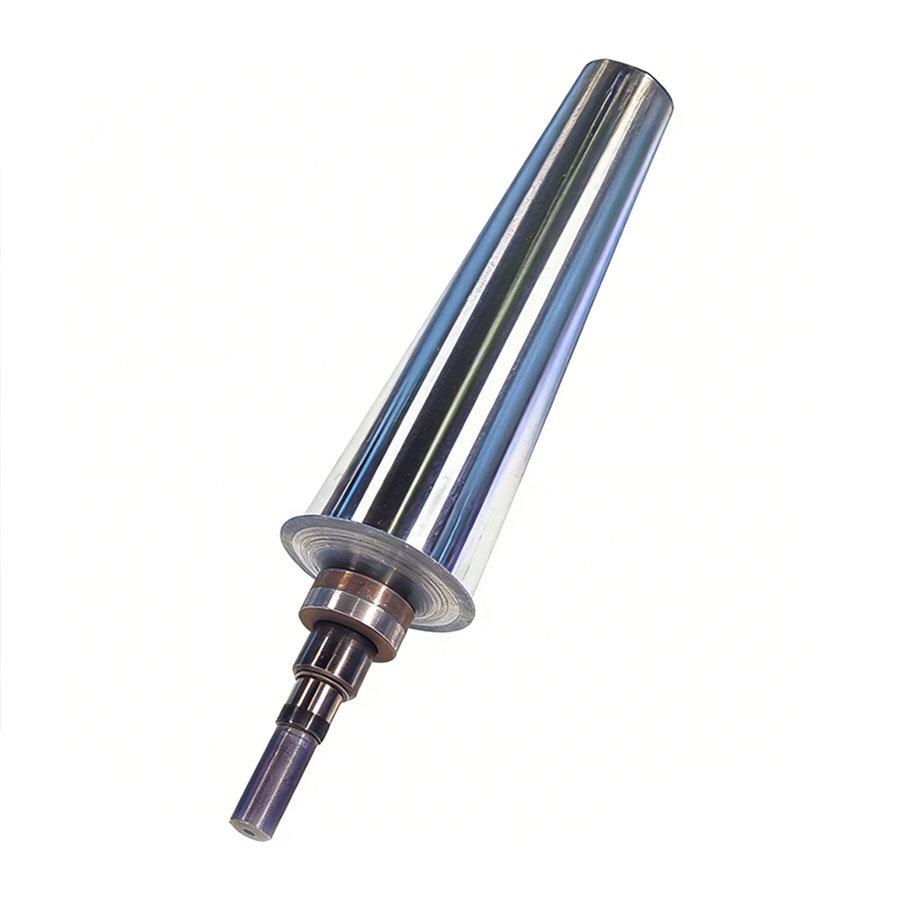
The most significant difference between a low-cost roller and an industrial-grade precision roller lies in its internal flow design.
Standard hollow rollers (single-shell design) allow fluid to take the path of least resistance, resulting in severe hot and cold spots across the roller face. This leads to wrinkled films, uneven adhesion, and rejected products.
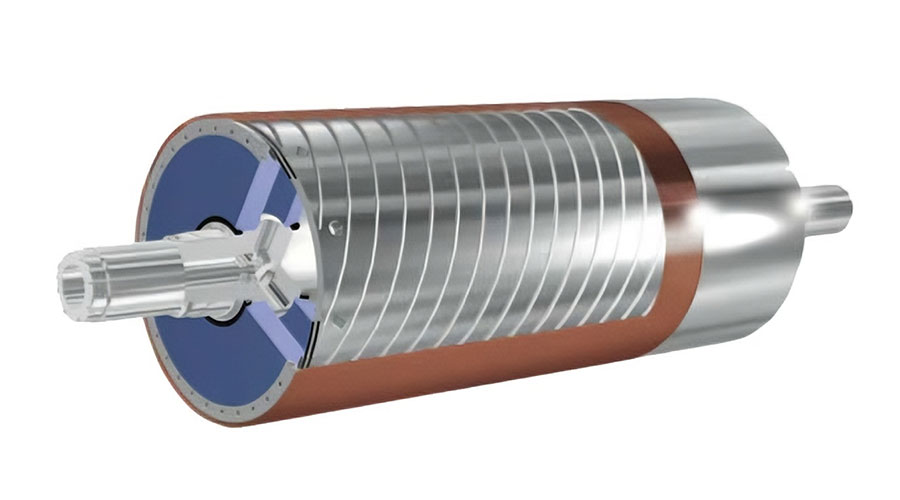
Premium manufacturers like AstraRoll utilize a "Double-Shell Spiral Baffle Design":
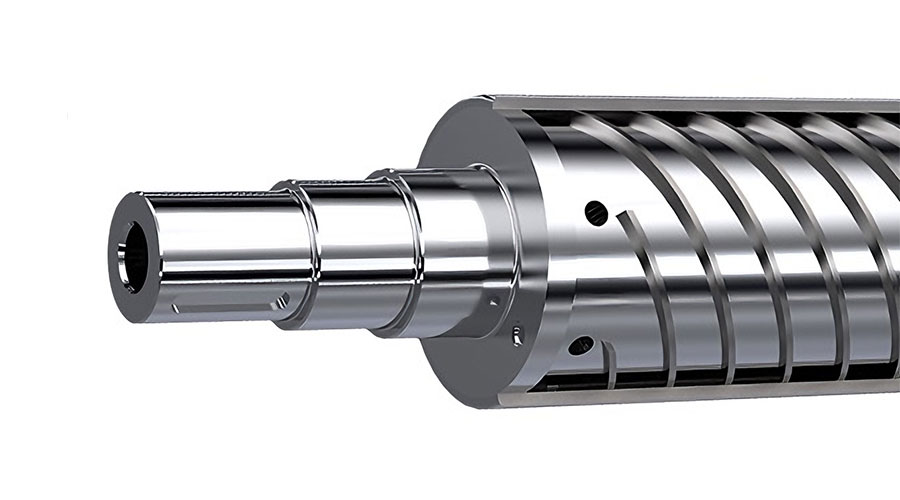
Between the outer shell and the inner core of the roller, precisely machined spiral baffles are welded into place. As fluid enters, it is forced through this spiral maze, flowing at high velocities tightly against the inner wall of the outer shell. This advanced design ensures that the temperature variance across the entire face of the roller is kept strictly within ±1°C (±1.8°F)—a mandatory requirement for optical films and high-precision coating.
3. Key Industries and Applications
Because precise temperature control is vital to altering the physical properties of materials, heating and cooling rollers are the backbone of numerous heavy industries:
- Plastics & Film Extrusion: Chill rolls rapidly cool and solidify molten polymer as it exits the extrusion die (cast film lines, sheet extrusion), determining the film's clarity and thickness.
- Coating & Laminating: Heating rollers activate thermal adhesives and hot-melts, pressing multiple layers of foil, paper, or plastic together for flexible packaging.
- Lithium Battery Manufacturing: Extremely high-pressure, heated calendering rollers are used to compress battery electrode materials to exact densities.
- Paper & Printing: Heated rollers dry inks rapidly and calender paper to create smooth, glossy finishes. Textiles & Non-Wovens: Used for thermal bonding of synthetic fibers, heat-setting fabrics, and embossing patterns.
4. The Ultimate Buying Guide: How to Specify Your Rollers
When purchasing heating or cooling rollers, simply providing a diameter and length is a recipe for disaster. Always confirm the following 5 critical parameters with your manufacturer:
Temperature Range & Uniformity
What is your target operating temperature? (Water cooling is typically 10-20°C, while thermal oil can exceed 250°C).
How strict is your temperature variance tolerance? If you need extreme consistency, you must specify a double-shell spiral baffle design.
Surface Finish & Coatings
The roller surface directly touches your product, making the finish critical to your end result:
Hard Chrome Plating: The industry standard. Highly wear-resistant and rust-proof.
Teflon (PTFE) Coating: Offers excellent non-stick properties, ideal for processing hot glues or sticky, freshly extruded plastics.
Mirror Finish: Polished down to an Ra 0.01 (super-finishing) level to produce flawless, transparent optical films.
Matte / Sandblasted: Used to impart a specific texture or frosted finish onto the final film.
Heat Load & Flow Rate
What material are you processing? What is its specific heat capacity, and what is your line speed? A professional manufacturer will calculate the exact thermodynamic heat load required to heat or cool your web at maximum speed, dictating the necessary flow channels and pump sizes.
Deflection & Mechanical Rigidity
If your process involves "nip pressure" (squeezing the web between two rollers), the roller may bow or deflect under the extreme force, resulting in a product that is thicker in the middle and thinner on the edges. Ensure your manufacturer uses thick-wall seamless tubing or forged steel, provides deflection calculations, and applies a crown profile (making the center slightly thicker) to compensate for bending if necessary.
Rotary Unions
The rotary union is the gateway for fluids entering a spinning roller and is the most common point of leakage. Ensure the union specified is rated for your specific media (water, thermal oil, steam), operating temperature, maximum pressure, and RPM.
Conclusion
Heating and cooling rollers are not simply metal cylinders; they are highly complex, precision heat exchangers.
When choosing an OEM manufacturer or supplier for these critical components, you must look far beyond the initial price tag. It is vital to evaluate the manufacturer based on their material quality, thermodynamic engineering efficiency, and reliable after-sales support. A poorly designed roller will cost you exponentially more in wasted energy, high scrap rates, and severe production downtime. By investing in precision-engineered rollers with optimal surface finishes and internal flow dynamics, you guarantee higher line speeds, superior product quality, and long-term ROI.
Need a Custom Temperature Control Solution?
Whether you are upgrading an existing laminator or engineering a brand-new cast film extrusion line, the engineering team at AstraRoll is ready to provide precise thermodynamic calculations and custom roller manufacturing tailored to your exact specifications.