
Phone: +86 15398058207
E-mail: sales@astraroll.com
Add: Room 603 Building C, The Huixin Center, Zhangba One Road, Yanta Zone, Xi'an City, Shaanxi Province, China
Different Caster Mount Types
The mounting structure determines how the caster connects to the equipment frame and how operational loads are transmitted through the caster assembly. Incorrect mounting selection may lead to improper installation, uneven load distribution, structural stress concentration or premature caster failure.
Common industrial caster mount types include:
- Top Plate Caster
- Threaded Stem Caster
- Grip Ring Stem Caster
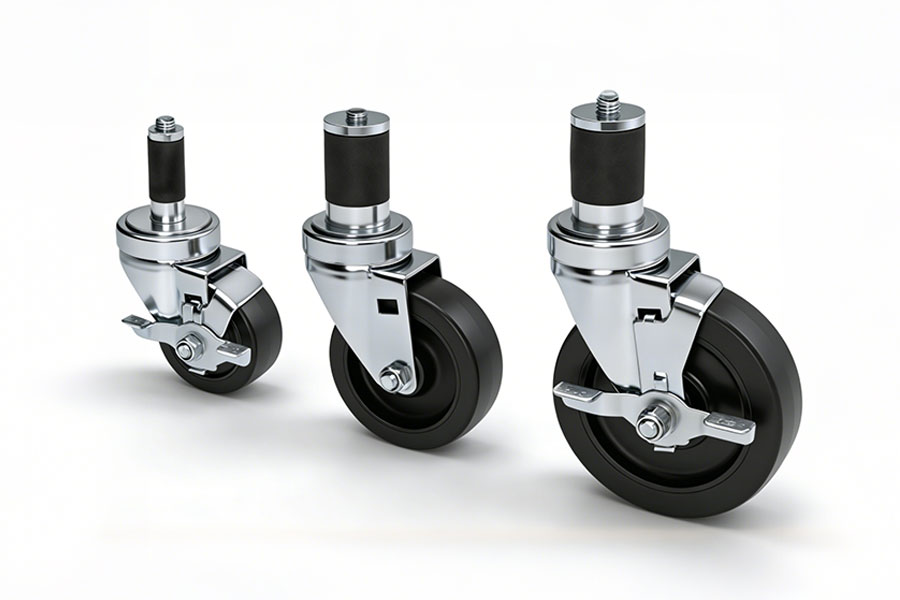
- Expandable Stem Caster
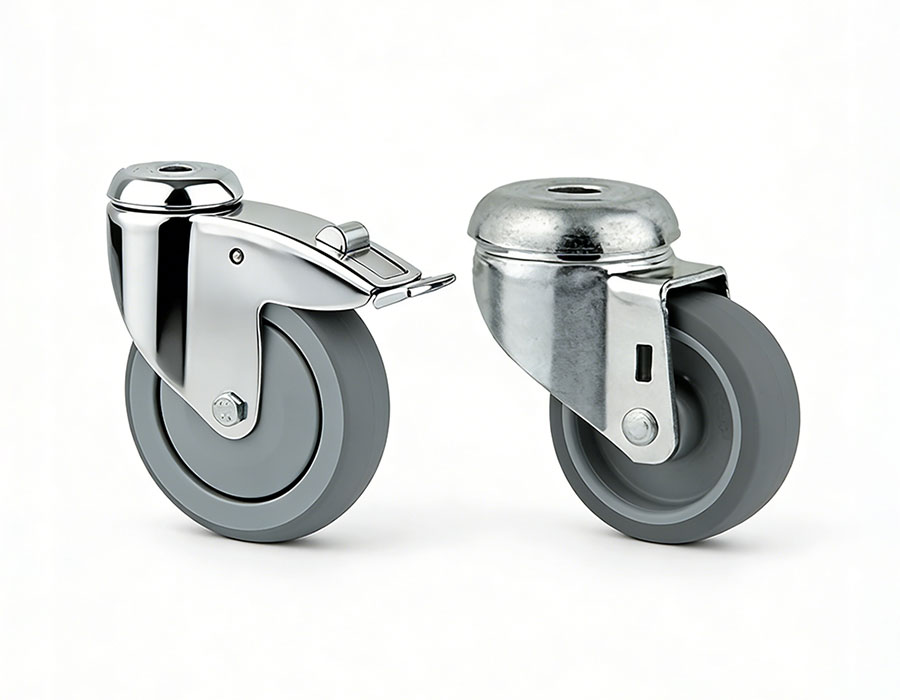
- Bolt Hole Caster
Each mounting system has distinct structural characteristics, installation requirements, load capacities and application environments. Understanding these differences allows engineers and procurement professionals to select the most suitable caster solution for their equipment.
Why Is It Important to Understand Caster Mount Types?
In industrial mobility systems, the mounting interface between the equipment frame and the caster assembly directly affects equipment safety, load performance and operational stability. Selecting the appropriate mounting method ensures that the caster integrates properly with the equipment structure and performs reliably under operating loads.
- Ensure Proper Installation: Different equipment structures require specific mounting interfaces. Plate mount casters provide strong load distribution and stability across heavy-duty surfaces by securing the caster frame through multiple bolt points. This mounting structure is commonly used on flat steel frames, equipment bases and industrial carts where higher structural rigidity is required. Stem mount casters fit into tubing or threaded sockets and are widely used for carts, racks and custom equipment frames. The stem structure allows compact installation while maintaining reliable load transfer between the caster and the equipment frame.
- Improve Load Distribution: The mounting system directly influences how equipment weight is transferred to the caster assembly. Plate mount casters distribute load across four mounting bolts and a larger mounting plate area, allowing more balanced force distribution. This structure performs particularly well under medium to heavy loads ranging from approximately 150 kg to over 2000 kg per caster, where stable load distribution is essential to prevent frame deformation or uneven wheel wear. Stem mount casters typically concentrate load through a single mounting point and are more suitable for light to medium duty equipment generally below 300 kg per caster, where structural load demands are lower.
- Maintain Equipment Stability: Different mounting structures contribute to stability in different ways. Plate mounted casters maintain equipment stability through multi-point fastening that minimizes vibration and frame movement under heavy loads. Stem mounted casters maintain stability by integrating directly into tubular or threaded frame structures, providing compact support for lighter equipment such as carts, medical devices and workstation units. Proper mounting selection ensures that the caster remains securely fixed during movement, reducing wobbling, frame stress and caster misalignment.
For these reasons, professional engineers typically determine the caster mounting method first after evaluating the load requirements. Once the mounting system is confirmed, they then proceed to select the appropriate wheel diameter and clearance, wheel material and tread profile, rig construction design and environmental compatibility to ensure optimal equipment performance.
Factors That Affect the Choice of Caster Mount Type
Several engineering considerations influence the selection of an appropriate caster mounting system.
Equipment Frame Design: The structure of the equipment frame largely determines which mounting system is compatible. Flat steel frames or reinforced platforms typically use top plate casters, while tubular frames or hollow legs often require stem mounted casters such as grip ring or expandable stems.Load Capacity Requirements: Load requirements determine the structural strength needed for the mounting interface. Heavy equipment requires mounting systems capable of distributing force across a larger contact area.
Installation Space: Some equipment designs have limited mounting space. In these cases, compact mounting solutions such as stem casters are often preferred over plate mounts.
Operating Environment: Environmental factors such as vibration, impact loads, floor conditions and operational frequency can influence mounting system selection.
Top Plate Caster
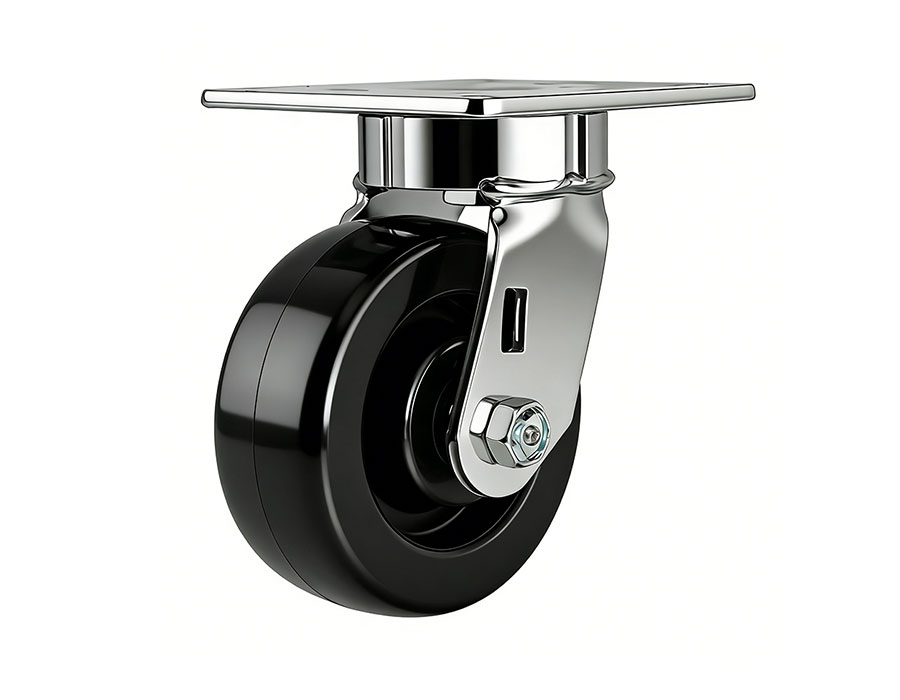
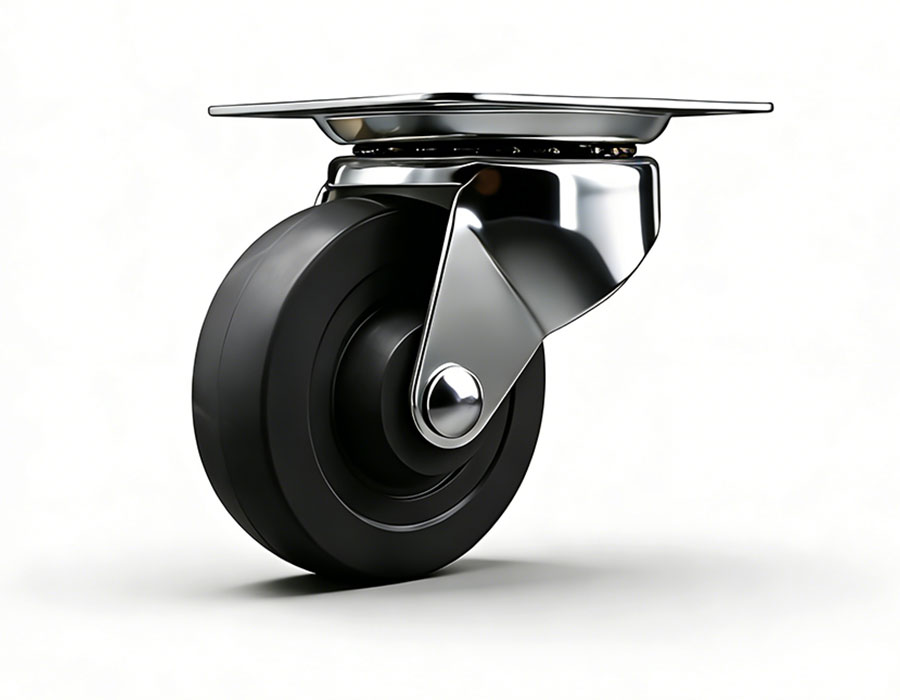
- Product Structure: A top plate caster features a rectangular steel mounting plate welded to the caster frame. The plate typically contains four mounting holes positioned at the corners, allowing the caster to be securely fastened to the equipment frame using bolts or screws. This structure distributes load across multiple fastening points and provides strong structural support between the equipment frame and the caster assembly.
- Advantages: Top plate casters provide excellent load distribution and structural rigidity. The multi-bolt mounting system reduces stress concentration and improves overall equipment stability. They are particularly suitable for industrial environments where equipment experiences continuous movement, heavy loads or frequent directional changes.
- Load Capacity:Top plate casters generally provide the highest load capacity among caster mounting types, typically ranging from 150 kg to over 2000 kg per caster depending on wheel size and caster design.
- Wheel Materials:Common wheel materials include polyurethane, nylon, rubber, cast iron and phenolic resin depending on floor conditions and load requirements.
- Typical Industries:Industrial manufacturing, Automated production lines, Warehouse logistics equipment, Material handling carts, Heavy duty machinery platforms
Plate mounts are available in two configurations: Swivel and Fixed.
- Swivel Plate Casters: The swivel caster plate features an integrated bearing race, allowing the caster to rotate a full 360 degrees. This design ensures excellent maneuverability and smooth directional changes, making it ideal for applications where frequent turns or complex movement patterns are required. Swivel casters are perfect for heavy-duty carts, warehouse equipment, and industrial machinery, providing effortless movement even under high loads.
- Fixed Plate Casters: The fixed caster plate is mounted rigidly in a single orientation, restricting movement to a straight-line path. These casters provide maximum stability and directional control and are typically paired with swivel casters in a four-wheel setup to balance maneuverability with straight-line precision. Fixed plate casters are commonly used in industrial trolleys, assembly line carts, and material handling systems to ensure reliable performance under heavy loads.
Threaded Stem (Screw-In) Caster
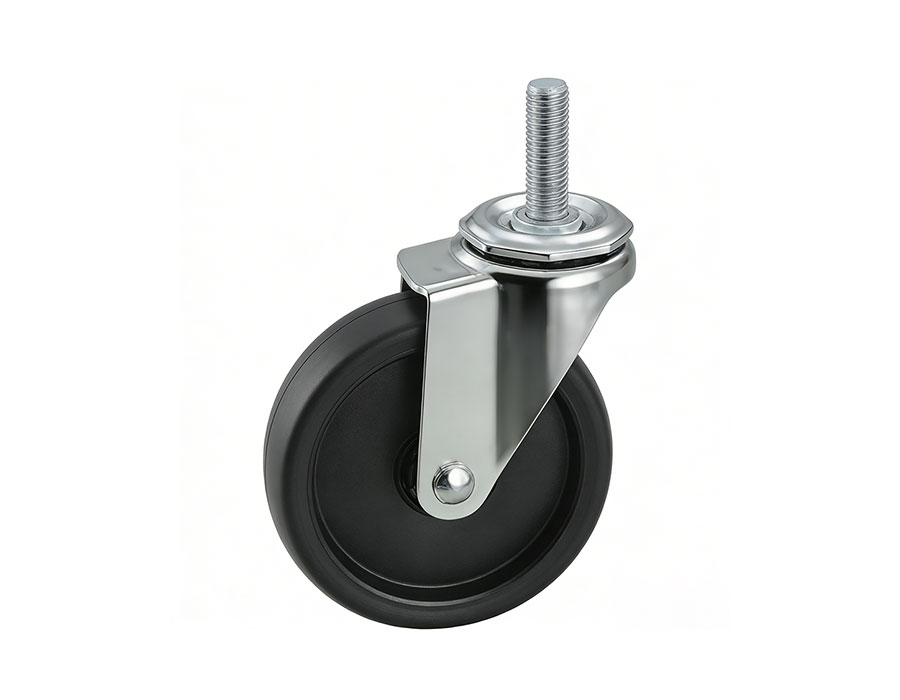
- Product Structure: A threaded stem caster uses a threaded metal stem extending vertically from the caster frame. The threaded rod is designed to screw directly into a threaded insert, mounting socket or equipment frame. The threaded connection provides secure mechanical engagement between the caster and the equipment structure.
- Advantages: Threaded stem casters allow compact installation and easy replacement. The threaded connection ensures secure mounting while maintaining flexibility for equipment that requires adjustable height or removable caster systems.
- Load Capacity: Threaded stem casters are typically designed for light to medium duty applications, with load capacities generally ranging from 50 kg to 300 kg per caster.
- Wheel Materials: Polyurethane wheels, Thermoplastic rubber wheels, Nylon wheels
- Typical Industries: Medical equipment, Laboratory devices, Mobile workstations, Commercial carts, Electronic assembly equipment
Grip Ring Stem Caster
- Product Structure: A grip ring stem caster includes a smooth metal stem with a spring steel retaining ring installed near the top of the stem. When inserted into a socket or tubular leg, the retaining ring compresses and then expands to hold the caster in place. This structure allows quick installation without threaded connections.
- Advantages: Grip ring casters provide fast installation and simple replacement while maintaining sufficient retention strength for light equipment.They are particularly suitable for equipment with hollow tubular legs.
- Load Capacity: Typical load capacity ranges from 30 kg to 120 kg per caster.
- Wheel Materials: Plastic wheels, Rubber wheels, TPR wheels, Nylon wheels
- Typical Industries: Furniture manufacturing, Retail equipment, Display racks, Light duty transport carts
Expandable Stem Caster
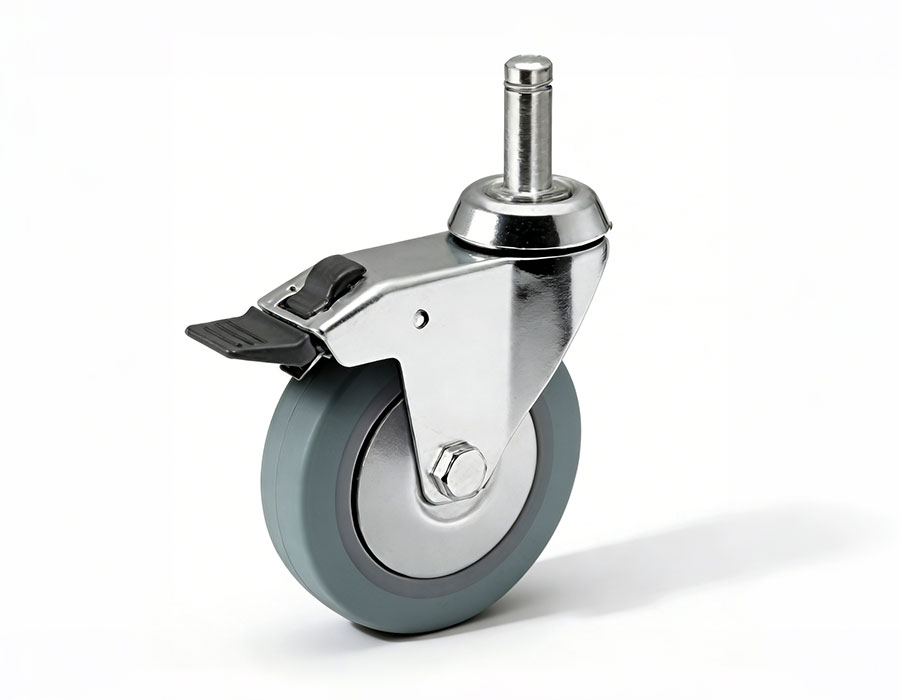
- Product Structure: Expandable stem casters contain an internal expansion mechanism consisting of a threaded bolt and an expandable sleeve. When the bolt is tightened, the sleeve expands outward and presses against the inner wall of the tubular leg. This creates a secure friction-based connection between the caster and the equipment frame.
- Advantages: Expandable stems provide stronger retention compared with standard push-in stems. They allow installation in tubular frames with varying internal diameters while maintaining secure attachment.
- Load Capacity: Typical load capacity ranges from 50 kg to 250 kg per caster.
- Wheel Materials: Polyurethane wheels, Rubber wheels, Nylon wheels
- Typical Industries: Utility carts, Workshop equipment, Light industrial racks, Portable machinery frames
Bolt Hole Caster
- Product Structure: A bolt hole caster features a single central mounting hole located in the caster swivel head. A bolt passes through this hole to secure the caster to the equipment frame.The compact design allows installation where space is limited.
- Advantages: Bolt hole casters provide a simple mounting structure and are widely used in applications where equipment design requires a single central fastening point.
- Load Capacity: Typical load capacity ranges from 50 kg to 200 kg per caster.
- Wheel Materials: Rubber wheels, Polyurethane wheels, Plastic wheels
- Typical Industries: Retail carts, Institutional equipment, Light transport carts, Commercial storage racks
Comparison of Common Caster Mount Types
| Mount Type | Typical Load Capacity | Mounting Structure | Typical Equipment |
| Top Plate Caster | 150–2000 kg | Four bolt plate mounting | Industrial equipment, heavy carts |
| Threaded Stem Caster | 50–300 kg | Threaded rod connection | Medical carts, workstations |
| Grip Ring Stem Caster | 30–120 kg | Push-in stem with retaining ring | Furniture, display racks |
| Expandable Stem Caster | 50–250 kg | Expanding sleeve inside tube | Utility carts, tubular frames |
| Bolt Hole Caster | 50–200 kg | Single central bolt | Retail carts, light equipment |
AstraRoll Industrial Caster Solutions
We also provide multiple bearing configurations such as precision ball bearings and roller bearings to meet different load capacities, operating environments and equipment designs.
AstraRoll has supported many well-known equipment manufacturers and publicly listed companies including Lead Intelligent Equipment, Lyric Automation, Han's Laser, HIT Automation, Colibri Technologies and UW Laser.
Our caster solutions are widely applied in industries such as new energy manufacturing, logistics transportation systems, intelligent manufacturing equipment, smart home production lines and medical device equipment.
With extensive engineering experience and strict quality standards, AstraRoll provides professional technical guidance and reliable caster products to support global equipment manufacturers in improving mobility performance, equipment durability and operational efficiency.
- Explosion proof electric roller
- The Silent Quality Drivers: How High-Precision Rollers Shape Release Film Perfor
- What Are the Benefits of Hard Anodized Aluminum Guide Rollers?
- Why High-End Manufacturing Cares So Much About Roller Surface Precision
- Why Your Heavy-Duty Conveyor Needs Garland Idler Rollers
- What are the differences and applications between anilox roller and embossing ro
- Why Teflon Coated Aluminum Rollers Are the Best Choice for Non-Stick Web Handlin
- How to Eliminate Static Accumulation and Defect Risks in High-Speed Battery Sepa