
Phone: +86 15398058207
E-mail: sales@astraroll.com
Add: Room 603 Building C, The Huixin Center, Zhangba One Road, Yanta Zone, Xi'an City, Shaanxi Province, China
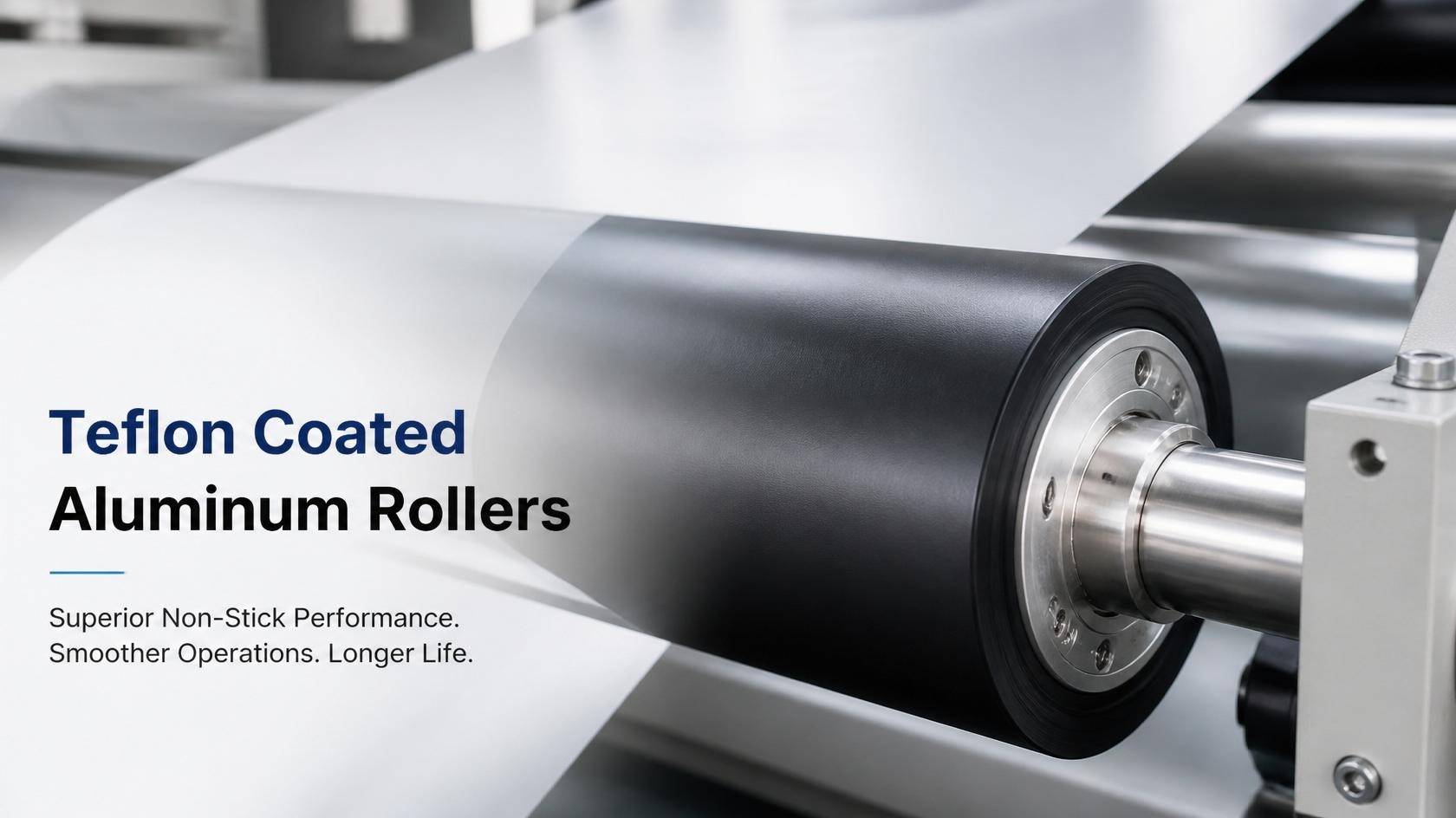
Why Teflon Coated Aluminum Rollers Are the Best Choice for Non-Stick Web Handling?
To combat adhesive transfer, engineers turn to polytetrafluoroethylene (PTFE)—universally known as Teflon. However, when designing an industrial non-stick roller, the choice of the base substrate is just as critical as the coating. While steel has traditionally been used for heavy-duty applications, Teflon Coated Aluminum Rollers have emerged as the superior engineering choice for speed, precision, and delicate web handling.
The Science of Teflon (PTFE): Ultimate Non-Stick & Thermal Power
Why is a Teflon-coated aluminum roller so effective on a production line? The secret lies in the unique molecular structure of PTFE. Fluorine atoms completely surround the carbon chain, creating an extremely low surface energy barrier. Virtually no liquid, glue, or molten polymer can form a chemical bond with it.
-
Ultra-Low Coefficient of Friction: Teflon offers one of the lowest coefficients of friction of any solid material (as low as 0.05). Sticky webs glide smoothly without dragging or stretching.
-
Extreme Chemical Inertness: Unlike bare rubber or anodized metal, PTFE is impervious to aggressive industrial solvents, acids, and caustic cleaning agents used in washdown cycles.
- High Thermal Stability: Modern industrial Teflon coatings withstand continuous operating temperatures up to 260°C (500°F), making them ideal for laminating, heat-setting, and extrusion processes where molten polymers are present.
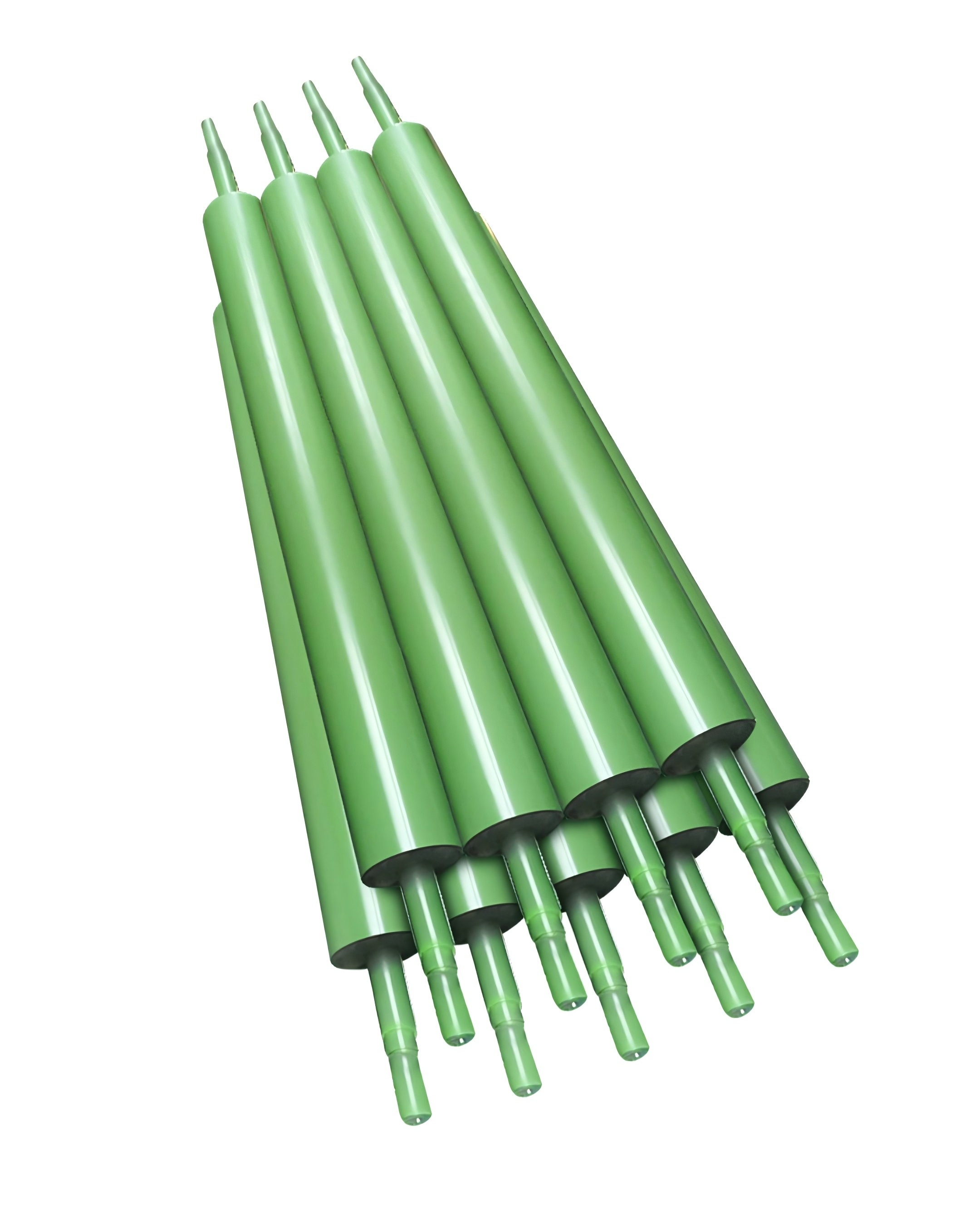
Teflon Aluminum vs. Teflon Steel Rollers: Making the Right Engineering Choice
When sourcing non-stick rollers, engineers frequently debate between aluminum and steel cores. While steel is required for high-load nip applications, aluminum is the undisputed champion for idler and guide rollers in web handling.
Here is how they compare across critical mechanical parameters:
|
Engineering Parameter |
Teflon Coated Aluminum Rollers |
Teflon Coated Steel Rollers |
|
Rotational Inertia |
Ultra-Low. Accelerates and stops instantly with web speed changes. |
High. Resists acceleration; causes drag and scratches on thin films. |
|
Weight |
Lightweight (up to 65% lighter than steel). Easier to install and reduces bearing load. |
Heavy. Requires robust structural support and higher motor torque. |
|
Thermal Conductivity |
Excellent. Dissipates heat rapidly and uniformly across the roller face. |
Moderate. Can retain heat, potentially creating hot spots. |
|
Corrosion Resistance |
Intrinsic. Aluminum naturally resists rust even if the coating is scratched. |
Vulnerable. Carbon steel will rust rapidly if the Teflon layer is breached. |
|
Best Used For |
Guide rollers, low-tension web handling, delicate films, packaging lines. |
High-pressure nip rollers, heavy load crushing, wide-span deflection resistance. |
1. The Ultra-Low Inertia Advantage
The primary reason to choose Custom Non-Stick PTFE Coated Aluminum Rollers for Web Handling is rotational inertia. In high-speed automated lines running fragile materials—such as 6-micron lithium battery separators, optical films, or thin tissue—the guide rollers must be driven entirely by the friction of the web.
A heavy steel roller takes too much torque to start spinning. When the line accelerates, the web slips against the stagnant steel, scratching the material and causing tension spikes. Lightweight aluminum shells spin effortlessly at the slightest touch, ensuring 100% speed synchronization and zero web deformation.
2. Superior Thermal Efficiency
In extrusion coating or heat-seal packaging, rollers are subjected to elevated temperatures. Aluminum boasts a thermal conductivity nearly four times higher than steel. This ensures that any heat transferred from the hot web is dissipated rapidly and evenly across the roller surface, preventing localized thermal expansion that could distort the roller's Total Indicator Reading (TIR).
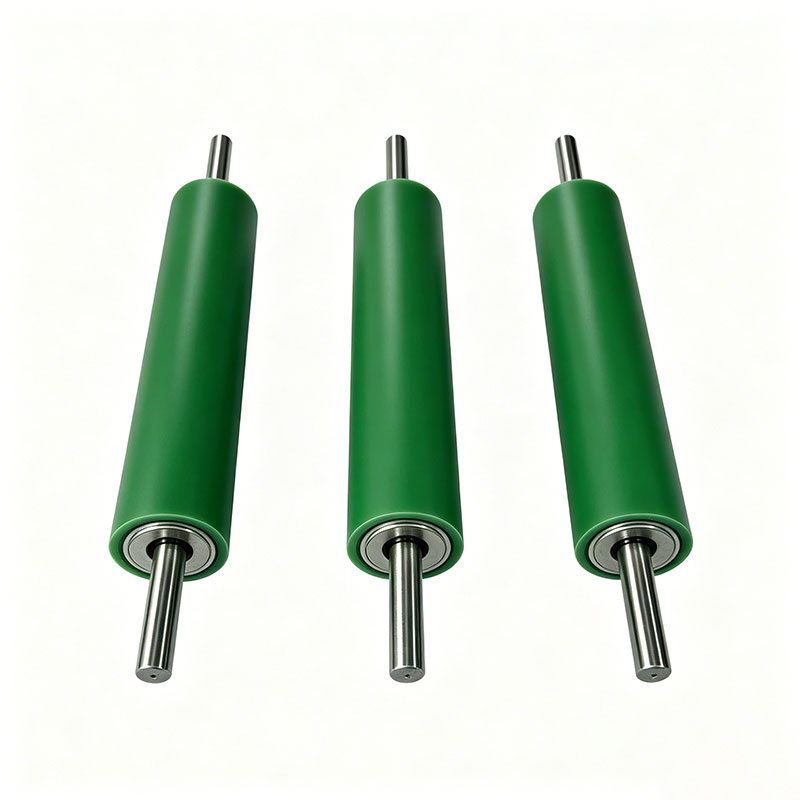
Core Applications in Modern Manufacturing
Because of their unique blend of lightweight mobility and absolute non-stick performance, AstraRoll’s PTFE-coated aluminum rollers are relied upon across diverse industries:
-
Flexographic & Digital Printing: Prevent ink transfer and buildup on idler rollers positioned immediately after print stations.
-
Adhesive Tape & Label Converting: Guide aggressive pressure-sensitive adhesives (PSA) and silicone coatings without adhesive transfer or web wrapping.
-
Plastic Film & Foil Extrusion: Handle warm, tacky extruded films smoothly as they cool, preventing surface defects and fish-eyes.
- Textile & Non-Woven Processing: Resist synthetic sizing agents, dyes, and chemical spray buildups during continuous web transport.
Why Custom Precision Matters for Teflon Coating
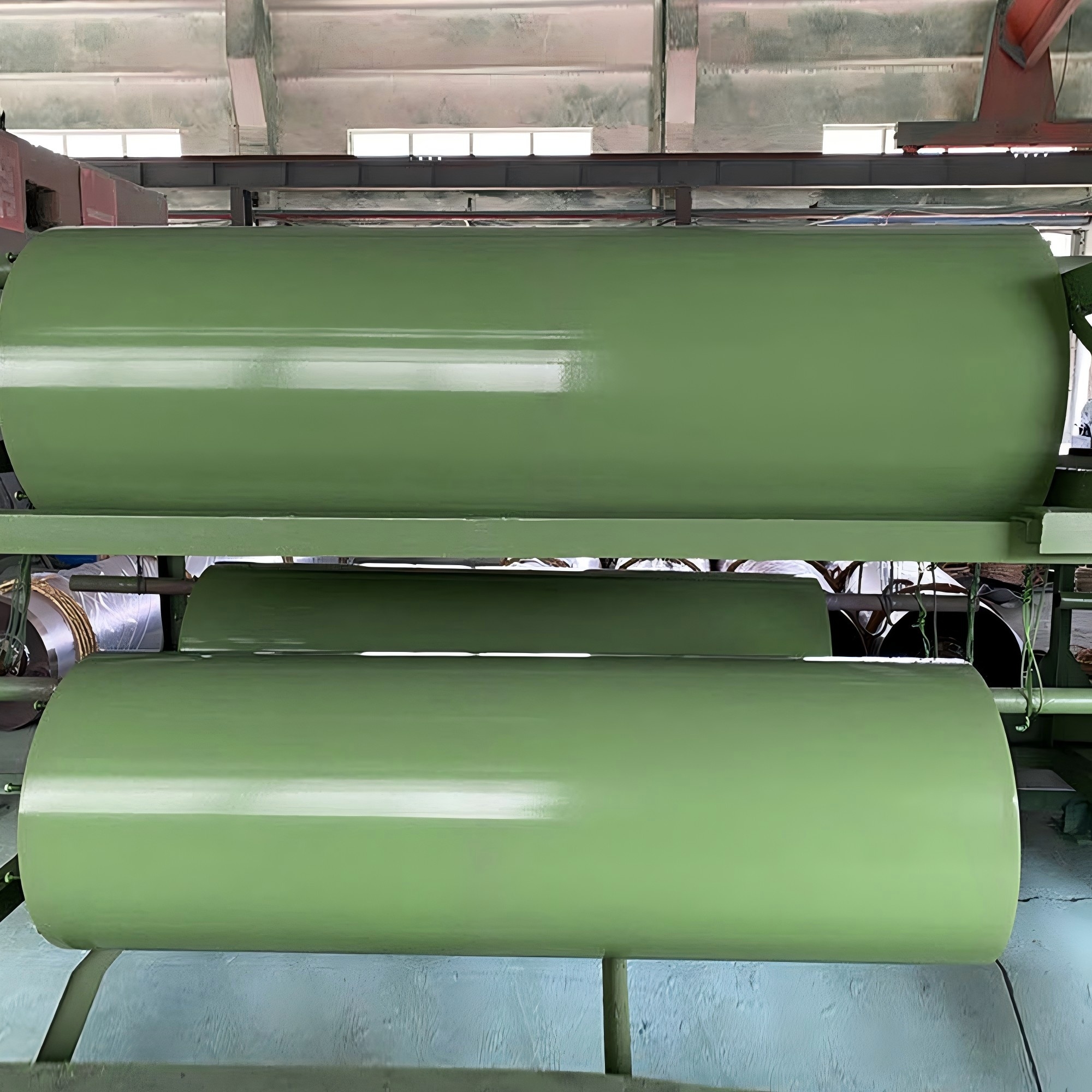
Applying a Teflon coating to a precision roller is not as simple as painting a surface. To achieve a mirror-smooth finish and prevent coating delamination under continuous industrial friction, the aluminum substrate must undergo rigorous surface engineering.
At AstraRoll, our manufacturing process begins with high-strength 6061-T6 aluminum alloy tubes. We precision-machine and dynamically balance every roller to achieve strict micrometer-level concentricity (low TIR). The aluminum surface is then micro-grit blasted to create an optimal topological anchor before applying premium multi-layer PTFE/Teflon coatings. The result is a permanently bonded, highly durable non-stick surface that delivers years of maintenance-free performance.
Upgrade Your Production Line Today
Are sticky webs, adhesive buildup, and frequent cleaning cycles eating into your plant's profitability? Replacing heavy, problematic idlers with high-precision PTFE-coated aluminum rollers is one of the most cost-effective upgrades you can make to improve web quality and line speed.
Contact the AstraRoll engineering team today to submit your custom technical drawings, discuss your specific operational temperatures, and receive a tailored non-stick roller solution designed for your machinery.
- Explosion proof electric roller
- The Silent Quality Drivers: How High-Precision Rollers Shape Release Film Perfor
- What Are the Benefits of Hard Anodized Aluminum Guide Rollers?
- Why High-End Manufacturing Cares So Much About Roller Surface Precision
- Why Your Heavy-Duty Conveyor Needs Garland Idler Rollers
- What are the differences and applications between anilox roller and embossing ro
- Why Teflon Coated Aluminum Rollers Are the Best Choice for Non-Stick Web Handlin
- How to Eliminate Static Accumulation and Defect Risks in High-Speed Battery Sepa