
Phone: +86 15398058207
E-mail: sales@astraroll.com
Add: Room 603 Building C, The Huixin Center, Zhangba One Road, Yanta Zone, Xi'an City, Shaanxi Province, China
Why High-End Manufacturing Cares So Much About Roller Surface Precision
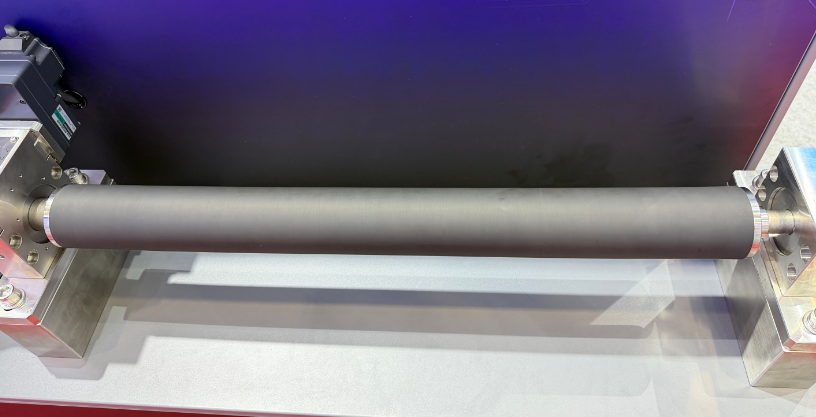
In modern automated factories, production lines run continuously using Roll-to-Roll (R2R) machinery - where long sheets of material unroll from one side, pass through a series of spinning metal rollers for processing, and roll back up on the other side.
On these lines, a single metallic roller - often just 200 mm in diameter - must have a surface smoothness polished down to the nanometer scale. This is not an unnecessary luxury; it is a strict requirement for manufacturing everyday technology like display screen films, lithium EV batteries, and ceramic capacitors (MLCCs).
As manufacturing technology advances, the surface precision of these rollers is quietly becoming the line between high-quality products and costly factory defects.
1. Rollers: The "Highways" of Continuous Manufacturing
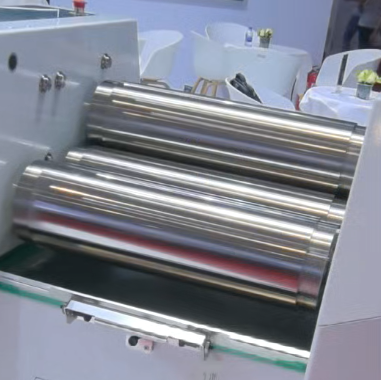
If modern manufacturing were a giant transport network, industrial rollers would be the main intersection hubs. Whether a factory is coating, flattening, stretching, or printing a material, almost every process relies on rollers working in pairs.
Why Roll-to-Roll (R2R) Processing Matters: Instead of handling materials sheet by sheet, R2R machinery processes thousands of meters of continuous material without stopping. This makes mass production fast, efficient, and affordable.
However, continuous processing comes with a catch: when products require extreme precision, any microscopic bump, scratch, or tiny wobble on a roller's surface gets stamped onto every single meter of the final product.
2. Three High-Tech Industries Where Nanometers Matter
A. Optical Display Films: The "Mirror-Grade" Challenge The bright, clear screens on LCD displays, TVs, and foldable smartphones depend on paper-thin optical films (such as polarizers and brightness-enhancing layers).
- Surface Roughness (Ra): If a coating roller's surface is even slightly too rough (over 20nm), the coating layer won't lay flat. This causes dark and light streaks across the film—a major defect for display makers.
- Wobble & Water Ripples: As a roller spins at high speeds, even a tiny wobble (radial runout) causes the coating thickness to wave up and down, leaving visible "water ripples" on the film. Top optical film factories require rollers to keep their wobble within ±1μm.
| Roller Grade | Typical Roughness (Ra) | Where It Is Used |
| Standard Industrial Roller | Ra approx 800 nm | Regular paper, plastic packaging, traditional textiles |
| Precision Coating Roller | Ra approx 50 nm | Industrial tapes, clear flexible packaging |
| AstraRoll Optical Grade Roller | Ra < 10 nm | Smartphone & TV display films, polarizers |
B. Lithium Battery Electrodes: Every Micron Adds Range To make electric vehicle (EV) batteries, chemical slurry is coated onto thin aluminum or copper foils, which are then squeezed tightly by heavy press rollers (calendering).
- Coating Precision: Battery slurry thickness must be controlled within ±2μm. A microscopic bump on the roller creates an over-thick spot on the battery plate. During pressing, this spot experiences extreme stress, which shortens battery life and can even cause dangerous short circuits.
- Pressing Precision: Heavy calendering rollers press loose battery materials to a set density. If the roller surface wears down unevenly or lacks uniform hardness, the battery plate ends up with uneven density, causing erratic battery performance.
- Industry Fact: Battery engineers estimate that making electrode thickness just 1μm more uniform increases the total energy density of an EV battery pack by 0.3% to 0.5%.
C. MLCC Ceramics: Precision You Cannot See
Multi-Layer Ceramic Capacitors (MLCCs) are tiny components found inside almost all electronics—a single smartphone uses over 1,000 of them. During production, liquid ceramic is spread onto a plastic film to create a soft ceramic layer just 1~3μm thick—more than 20 times thinner than a single strand of human hair (approx 60μm).
- Preventing Tiny Holes: Because the ceramic sheet is so thin, any tiny bump on the casting roller larger than one-third of the film's thickness (< 0.5μm) can poke a hole right through it. This destroys the electrical insulation and ruins the component.
- Roller Roughness Standards for MLCCs:
3. How Ultra-Precision Roller Surfaces Are Made
Achieving mirror-like smoothness and microscopic geometric accuracy requires a combination of advanced machining and high-tech engineering:
1) Ultra-Precision Grinding: High-rigidity CNC grinders equipped with diamond or CBN grinding wheels polish the metal surface down to Ra < 10 nm. Climate-controlled workshop environments prevent the metal roller from expanding or warping due to temperature changes during grinding.
2) Hard Protective Coatings: Core rollers are plated with hard chrome or special nickel alloys. This gives the surface high wear resistance and creates a dense base layer that can be polished to a mirror finish.
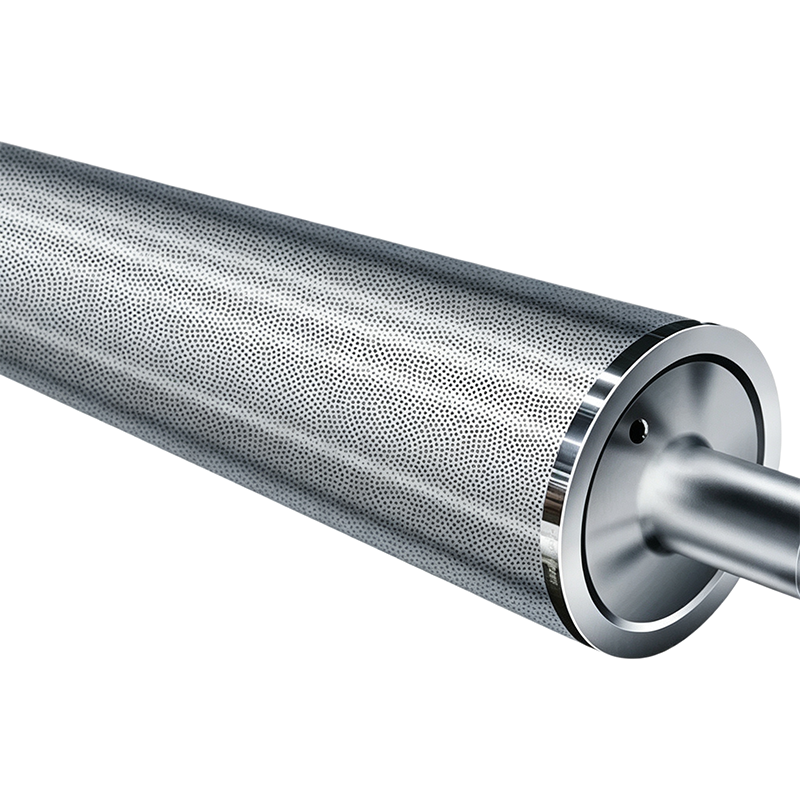
3) Ultrafast Laser Texturing: For rollers that require special micro-grooves or microscopic patterns, precise laser systems carve out tiny shapes with sub-micron accuracy (< 1μm).
4) Real-Time Closed-Loop Inspection: Modern manufacturing replaces guesswork with automated laser sensors built right into the grinding machines, checking the roller's profile in real time as it is being made.
Conclusion: Precision Is the Silent Guardian of Quality
From display screens to EV batteries and microscopic MLCC components, success in high-tech manufacturing comes down to microscopic details you cannot see with the naked eye. High roller precision is not just about machining metal—it represents a company's combined expertise in materials, precision grinding, and quality control.
At AstraRoll, we focus on engineering ultra-rigid, high-precision industrial rollers with custom surface finishes and microscopic tolerances, helping manufacturing lines around the world run smoothly and reliably.
Facing coating streaks, uneven battery pressing, or surface pinholes on your production line? Contact the AstraRoll Engineering Team today to discuss customized roller solutions.
- The Silent Quality Drivers: How High-Precision Rollers Shape Release Film Perfor
- What Are the Benefits of Hard Anodized Aluminum Guide Rollers?
- Why High-End Manufacturing Cares So Much About Roller Surface Precision
- Why Your Heavy-Duty Conveyor Needs Garland Idler Rollers
- What are the differences and applications between anilox roller and embossing ro
- Why Teflon Coated Aluminum Rollers Are the Best Choice for Non-Stick Web Handlin
- How to Eliminate Static Accumulation and Defect Risks in High-Speed Battery Sepa
- What Are Hard Coated Rollers?