
Phone: +86 15398058207
E-mail: sales@astraroll.com
Add: Room 603 Building C, The Huixin Center, Zhangba One Road, Yanta Zone, Xi'an City, Shaanxi Province, China
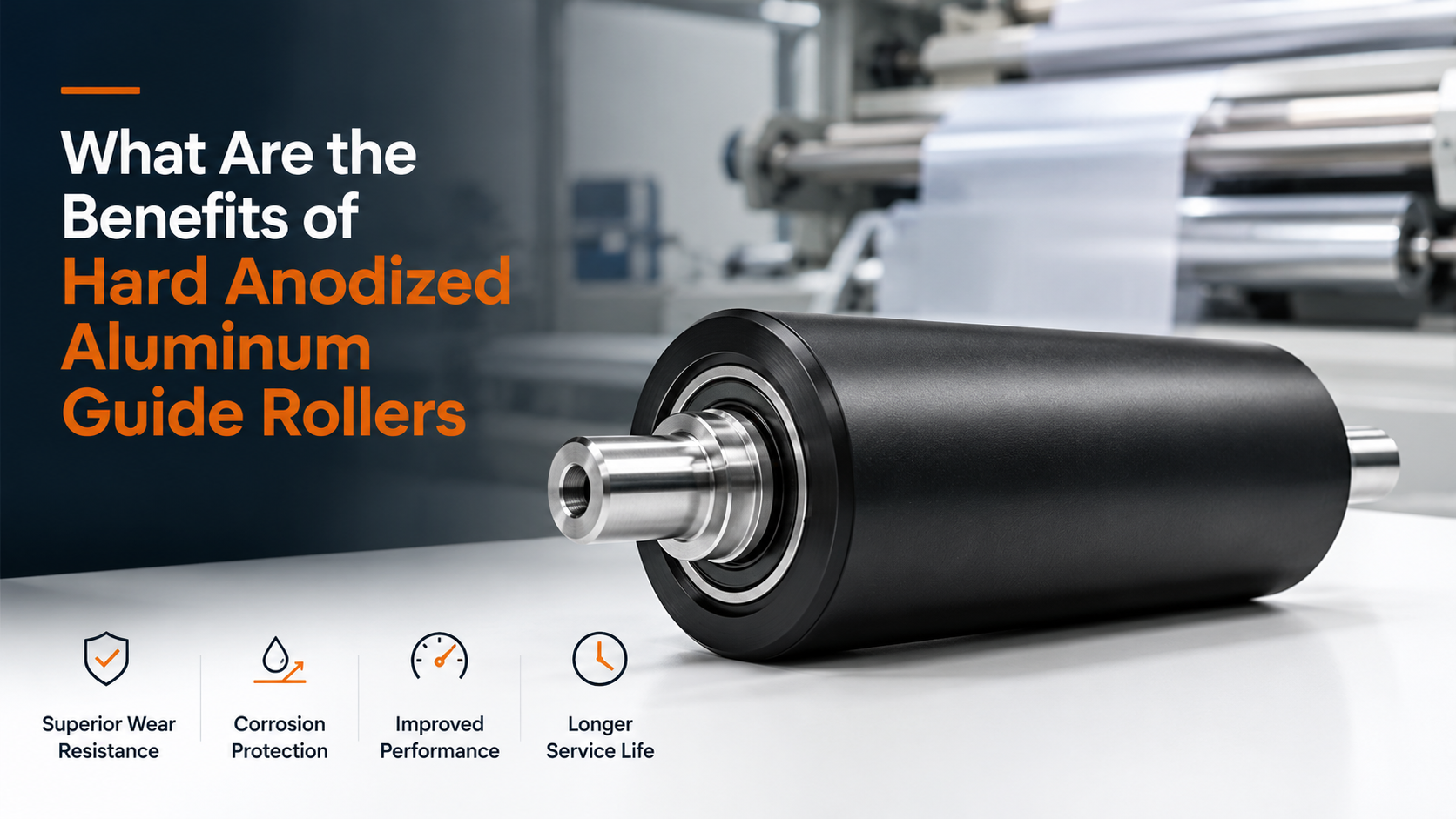
What Are the Benefits of Hard Anodized Aluminum Guide Rollers?
In printing, packaging, film processing, textile, coating, and other roll-to-roll production lines, guide rollers directly affect material transport and web stability. Their weight, surface condition, concentricity, and wear resistance can all influence long-term machine performance. Aluminum is widely used for guide rollers because it is lightweight, easy to machine, and suitable for high-speed rotation. However, untreated aluminum surfaces may gradually develop scratches, wear, oxidation, or changes in surface condition after repeated contact with film, paper, foil, fabric, and other web materials.
Hard anodizing improves the surface properties of aluminum while retaining its lightweight characteristics. This makes hard anodized aluminum guide rollers a practical choice for many demanding web-handling applications.
What Is a Hard Anodized Aluminum Guide Roller?
A hard anodized aluminum guide roller is an aluminum alloy roller treated through an electrochemical anodizing process.
Unlike paint or an external coating, anodizing converts the aluminum surface itself into a protective aluminum oxide layer. Hard anodizing generally creates a thicker and harder surface than standard decorative anodizing, improving wear and corrosion resistance.
Depending on the application, the roller surface can be smooth, polished, grooved, cross-hatched, fluted, or specially profiled.
1. Higher Surface Hardness and Wear Resistance
Continuous contact with film, paper, textile, foil, and process materials can gradually wear an untreated roller surface.
Hard anodizing increases surface hardness and improves resistance to abrasion, scratching, and repeated material contact. This helps the roller maintain a more consistent surface condition during long production cycles.
It is particularly useful in printing, slitting, rewinding, coating, and converting equipment where roller surface damage may influence web quality.
2. Better Corrosion and Oxidation Protection
Industrial rollers may be exposed to humidity, ink residue, coatings, adhesives, cleaning agents, and other contaminants.
The anodized oxide layer provides additional protection for the underlying aluminum and improves resistance to oxidation and corrosion under suitable operating conditions.
Actual chemical resistance depends on the alloy, anodizing specification, sealing process, temperature, and process medium, so roller treatment should still be selected according to the real production environment.
3. Lightweight Design and Low Rotational Inertia
One of the biggest advantages of aluminum guide rollers is their lower weight compared with steel.
Lower rotating mass means lower rotational inertia, which can support:
- Faster acceleration and deceleration
- Lower bearing loads
- Easier response to speed changes
- Reduced drive-system load
- Better suitability for low-tension webs
This makes aluminum rollers especially attractive for high-speed film, packaging, printing, and roll-to-roll equipment.
Hard anodizing improves surface durability without losing these lightweight advantages.
4. More Consistent Web Handling
Hard anodizing does not directly eliminate wrinkles or web-tracking problems, but a stable and durable roller surface helps maintain more consistent contact conditions over time.
As an untreated roller wears, surface roughness and friction conditions may gradually change. A hard anodized surface reduces this variation and supports more predictable web transport.
Different roller surfaces can also be selected according to the material:
- Smooth for general guidance
- Cross-hatch for traction and air release
- Grooved for specific web-control requirements
- Fluted or profiled for reduced film contact
The correct surface design depends on web material, speed, tension, and process requirements.
5. Longer Service Life and Lower Maintenance
A worn roller creates more than a replacement cost. It may also result in production downtime, maintenance labor, machine adjustment, and material waste.
By improving wear resistance and surface durability, hard anodizing can extend the useful life of an aluminum roller and reduce the frequency of repair or replacement.
For continuous production equipment, this can contribute to lower maintenance costs and better long-term operating efficiency.
6. Flexible Customization
Hard anodized aluminum guide rollers can be customized according to the machine and web-handling process.
Common options include:
- Roller diameter
- Face length
- Shaft design
- Bearing arrangement
- Surface roughness
- Anodizing thickness
- Dynamic balancing
- Grooves or cross-hatch patterns
- Special profiled surfaces
This allows the roller structure, surface treatment, and operating characteristics to be matched to the actual application rather than using one standard design for every production line.
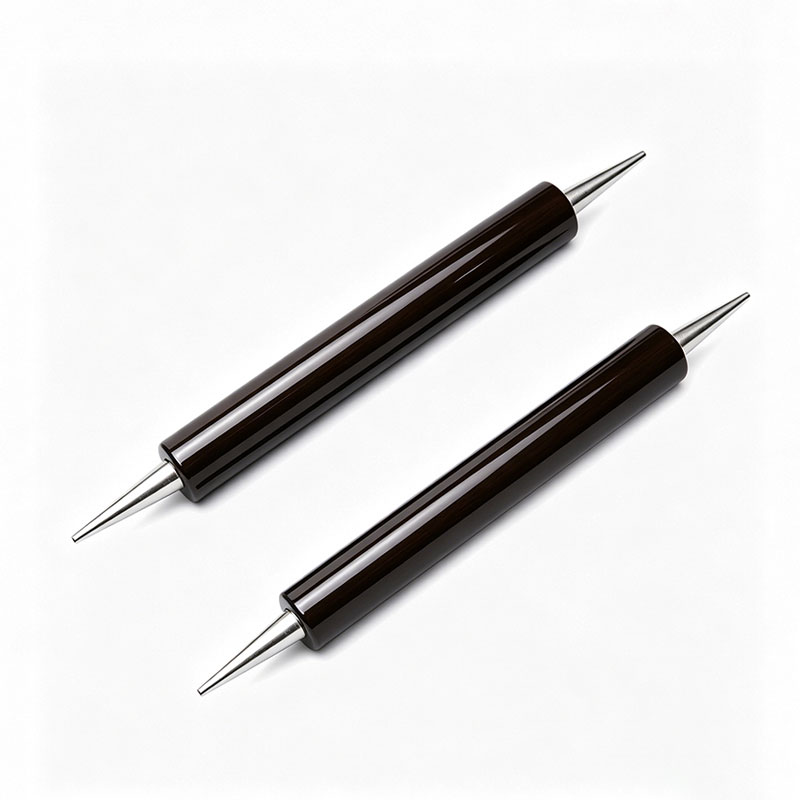
Steel Roller vs. Hard Anodized Aluminum Roller
Both steel and aluminum rollers have suitable industrial applications.
|
Feature |
Steel Roller |
Hard Anodized Aluminum Roller |
|---|---|---|
|
Weight |
Higher |
Lower |
|
Rotational Inertia |
Higher |
Lower |
|
Structural Rigidity |
Excellent |
Good, depending on design |
|
Surface Wear Resistance |
Depends on finish |
Improved by hard anodizing |
|
Corrosion Resistance |
Depends on coating |
Good for many applications |
|
High-Speed Response |
Moderate |
Very Good |
|
Low-Tension Web Handling |
Application dependent |
Well suited |
Steel rollers are still preferred where high structural loads or very large roller dimensions demand additional rigidity.
Hard anodized aluminum rollers are especially useful where low weight, faster rotational response, and durable surface performance are important.
Where Are Hard Anodized Aluminum Guide Rollers Used?
Printing
Guide rollers transport paper, film, labels, and other substrates through printing equipment. Lightweight aluminum construction supports rapid speed changes, while hard anodizing improves surface durability during continuous production.
Flexible Packaging
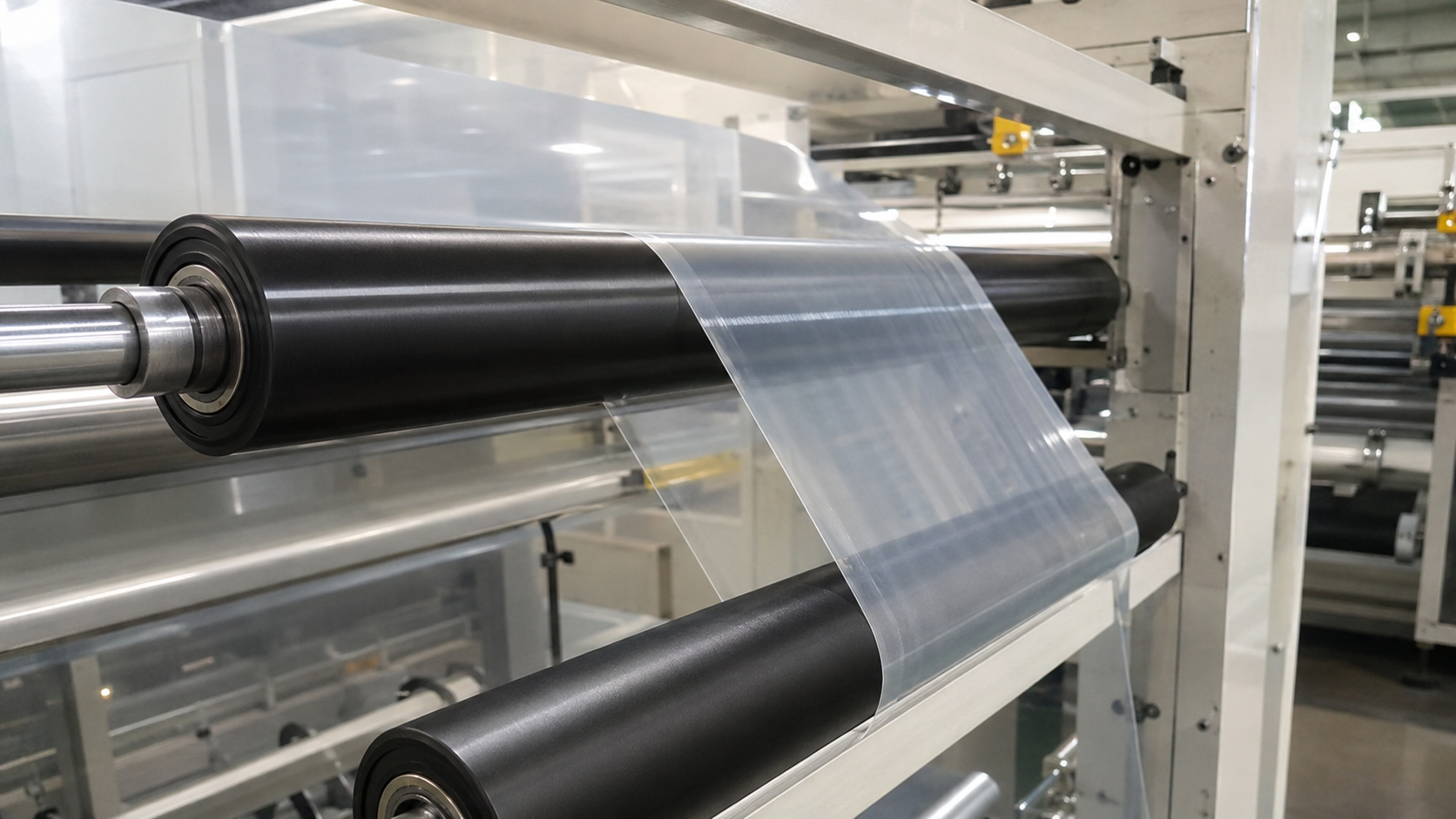
Laminating, slitting, rewinding, and converting lines frequently process thin flexible films at relatively high speeds. Hard anodized guide rollers provide lightweight web support with improved resistance to wear.
Plastic Film Processing
Film blowing, coating, inspection, and winding systems require stable roller rotation and controlled surface characteristics. Smooth, grooved, or patterned aluminum rollers can be selected according to the film and web-handling requirements.
Textile and Nonwoven Processing
Textile and nonwoven production lines benefit from lightweight rollers that provide stable guidance without adding unnecessary rotating mass.
Battery and New Energy Manufacturing
Roll-to-roll processing of battery foil, separator film, and other continuous materials may require lightweight, precisely balanced rollers with controlled surface properties.
Standard Anodized vs. Hard Anodized Aluminum Rollers
Not every aluminum guide roller requires hard anodizing.
Standard anodizing can be sufficient for general applications with relatively low wear and moderate operating conditions.
Hard anodizing becomes more valuable when the roller is exposed to:
- Continuous high-speed operation
- Frequent material contact
- Abrasive or contaminated webs
- Long production cycles
- High maintenance costs
- Surface-sensitive applications
Standard anodizing mainly provides corrosion protection and appearance, while hard anodizing places greater emphasis on hardness, wear resistance, and industrial durability.
When Should You Choose a Hard Anodized Aluminum Guide Roller?
A hard anodized aluminum guide roller may be suitable when your production line requires:
- Lightweight roller construction
- Low rotational inertia
- High-speed operation
- Improved wear resistance
- Better corrosion protection
- Longer maintenance intervals
- Stable surface performance
- Custom roller geometry
It is particularly useful when a standard aluminum roller wears too quickly or when a steel roller creates unnecessary weight and inertia.
How to Specify the Right Guide Roller
Before ordering a custom roller, the following information should be confirmed:
- Roller diameter
- Face length
- Web width
- Web material
- Maximum line speed
- Web tension
- Surface requirement
- Anodizing requirement
- Shaft and bearing design
- Dynamic balancing requirement
These parameters allow the roller structure and surface treatment to be selected according to the actual working conditions.
Conclusion
Hard anodizing strengthens the key advantages of an aluminum guide roller.
The aluminum structure provides low weight and low rotational inertia, while the hard anodized surface improves wear resistance, corrosion protection, and long-term durability.
For printing, packaging, film processing, textile, converting, and other continuous web-handling applications, this combination can help improve roller service life while maintaining stable operation.
AstraRoll manufactures custom hard-anodized aluminum guide rollers according to machine dimensions, operating speeds, web materials, shaft configurations, surface textures, and anodizing requirements. Smooth, cross-hatch, grooved, and other customized roller surfaces can be developed for different web-processing conditions.
- Explosion proof electric roller
- The Silent Quality Drivers: How High-Precision Rollers Shape Release Film Perfor
- What Are the Benefits of Hard Anodized Aluminum Guide Rollers?
- Why High-End Manufacturing Cares So Much About Roller Surface Precision
- Why Your Heavy-Duty Conveyor Needs Garland Idler Rollers
- What are the differences and applications between anilox roller and embossing ro
- Why Teflon Coated Aluminum Rollers Are the Best Choice for Non-Stick Web Handlin
- How to Eliminate Static Accumulation and Defect Risks in High-Speed Battery Sepa