
Conveyor Rollers
A conveyor roller is the working heart of any belt conveyor, gravity line or material handling system - yet it is the component most often taken for granted until it fails. At AstraRoll, we manufacture conveyor rollers built to keep your line running: from standard gravity rollers for warehouse carton transport to heavy-duty steel rollers for mining, quarries and port loading. Every roller is precision-turned, dynamically balanced and sealed against dust, water and oil, so it lasts under the conditions other rollers cannot. Whether you need a single replacement set or a full production order, we engineer, coat and batch-produce rollers to your drawings - and ship them globally.
Conveyor Rollers FAQs
A conveyor roller is a cylindrical tube that carries the belt or the load - it rotates freely (gravity) or is driven (powered). A conveyor pulley (often called a drive or tail pulley) is the larger shaft-mounted cylinder at either end of the belt loop that actually drives or redirects the belt. In practice, rollers make up the vast majority of the parts on a conveyor line: they support the return side, the load side, and the transition curves. We manufacture both - rollers and pulleys - under the same roof, so you can source the complete running gear from one supplier.
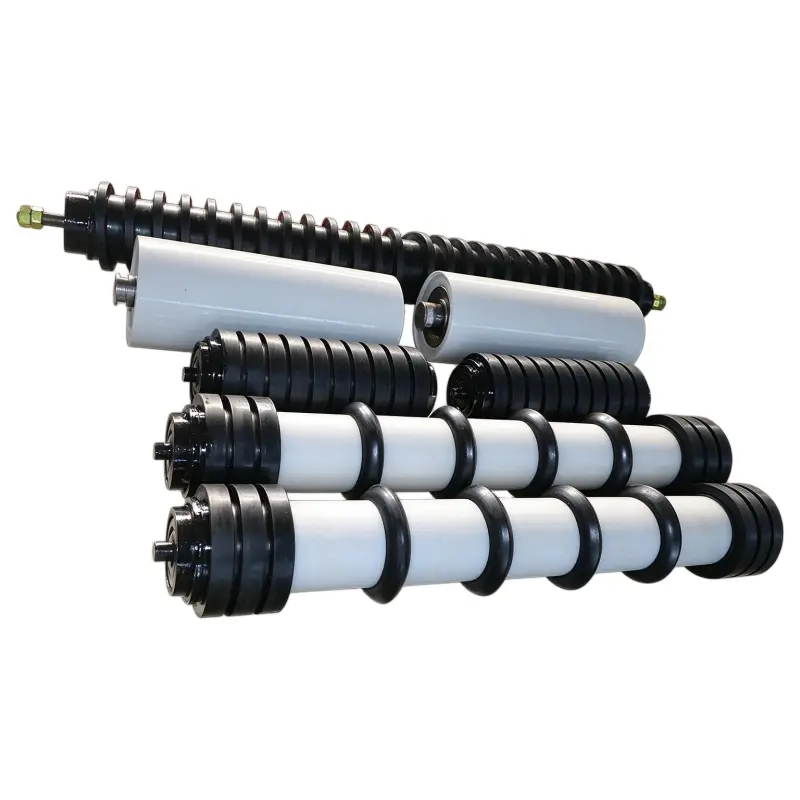
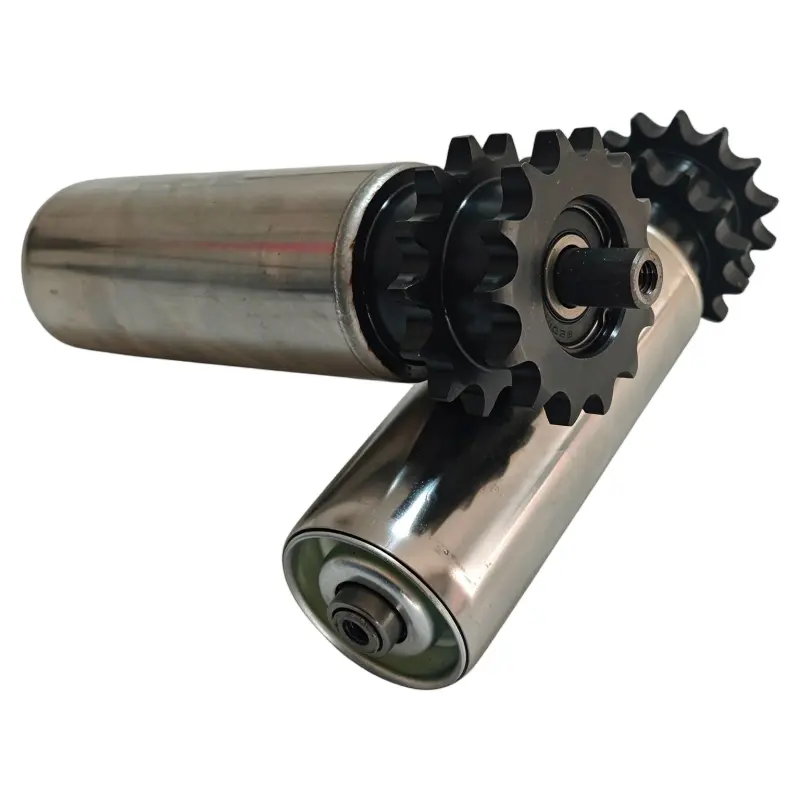
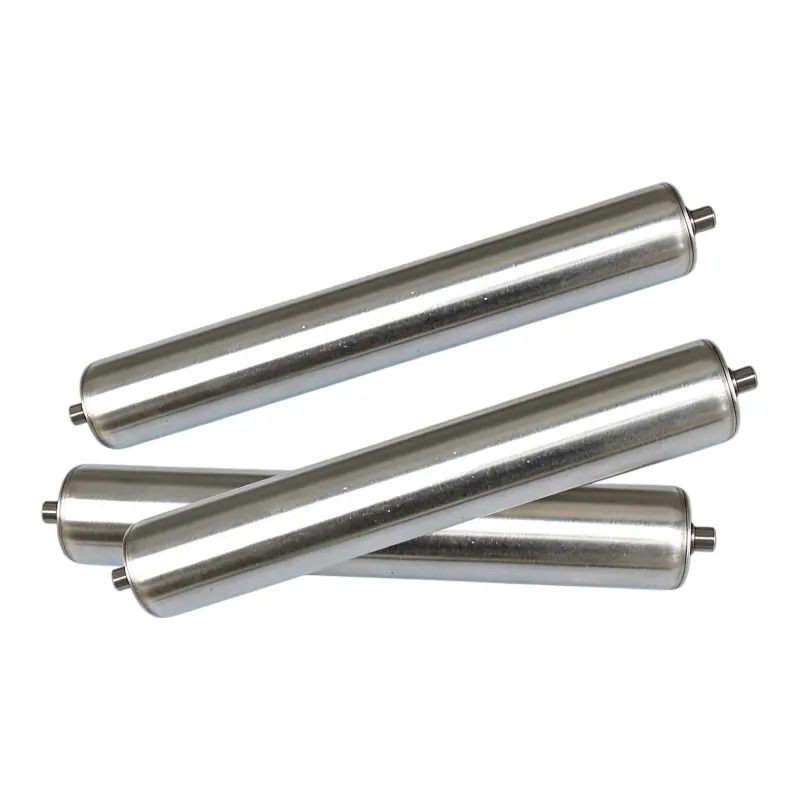
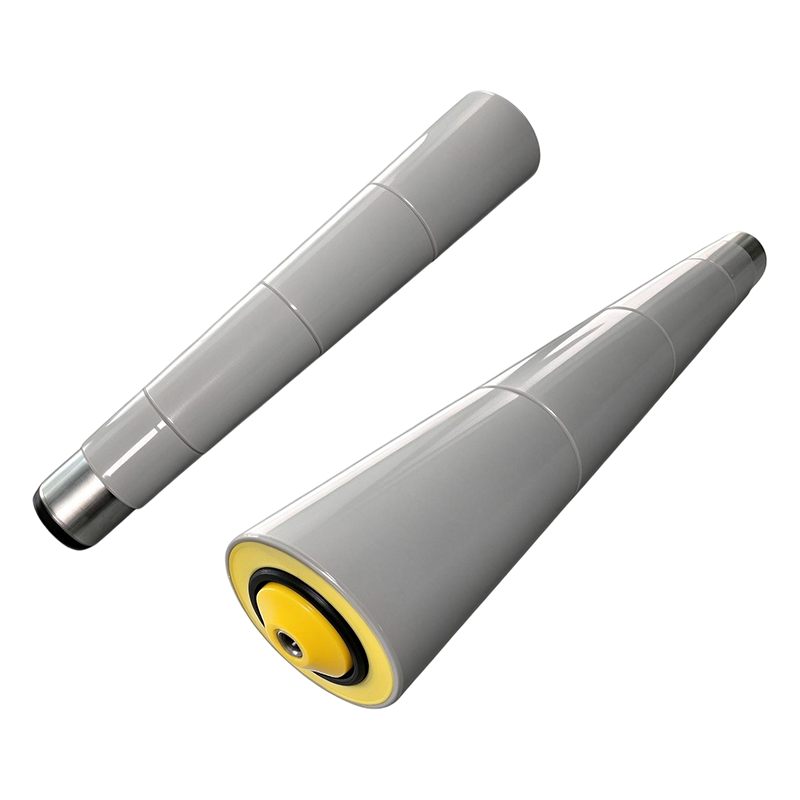
We produce the full range: gravity rollers (free-spinning, for carton and tote transport), driven / powered rollers (for belt-driven or chain-driven live loads), tapered / conical rollers for curve sections, grooved rollers for accumulation or O-ring lines, spring-loaded rollers for quick-change frames, and heavy-duty impact rollers for load-transfer points. If you tell us your belt speed, load per roller and frame width, we will recommend the right type.
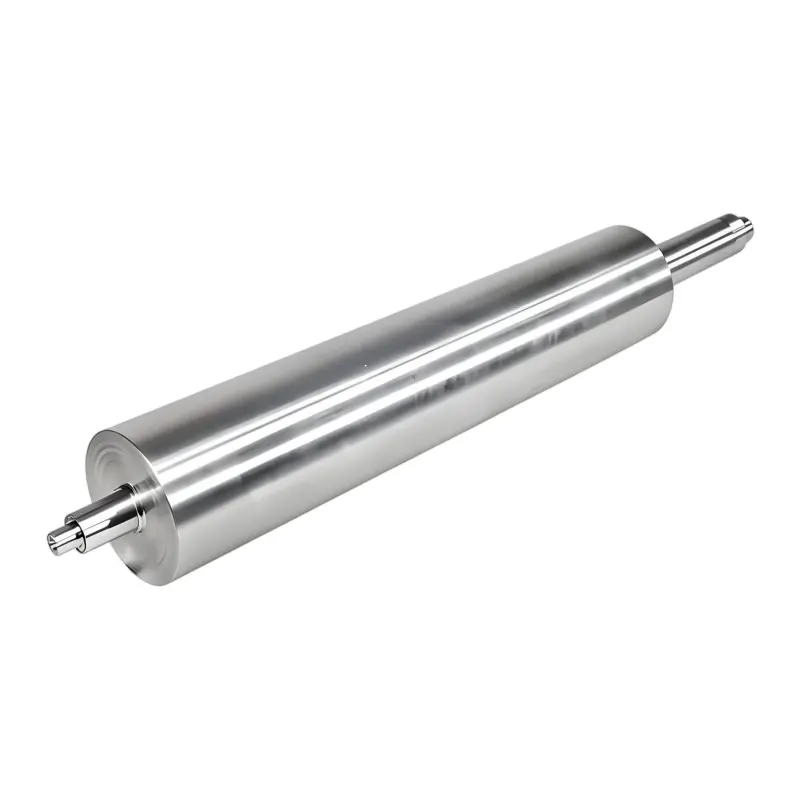
Tubes are available in carbon steel (zinc-plated, painted or black), stainless steel 304 / 316 (for food, chemical or wash-down environments), PVC and HDPE (for light, quiet or corrosive loads), and aluminium (for low-maintenance gravity lines). Shafts are cold-drawn steel or stainless steel; bearings are sealed precision ball bearings. Optional coatings include rubber lagging, polyurethane lining, zinc plating, powder coating and food-grade coatings matched to your industry.
Yes - custom is our standard. We manufacture to your drawings on tube diameter (typically Ø20 mm to Ø133 mm), tube length (from 150 mm to 3,000 mm), shaft diameter, bearing type and end mounting (spring axle, hex axle, flat bore, keyway). Minimum order quantity for custom parts is typically 50–100 pieces; sample rollers can be produced in 7–10 working days. Send us your drawing or an existing roller, and we reverse-engineer it.
Our conveyor rollers go into intralogistics and parcel sortation, food and beverage processing, warehouse automation, mining and aggregates, port and container handling, agricultural processing, pharma and cosmetics, and general manufacturing lines. If your industry is not listed, ask - most conveyor problems look the same at the roller level, and we have probably solved one like it
What you may want to know about Conveyor Rollers
Choosing the Right Conveyor Roller: A Buyer's Guide
A conveyor roller looks simple - a tube, a shaft, two bearings - but selecting the wrong one will cost you in belt drift, noise, product damage and unplanned line stops. Before you specify a roller, work through four questions.
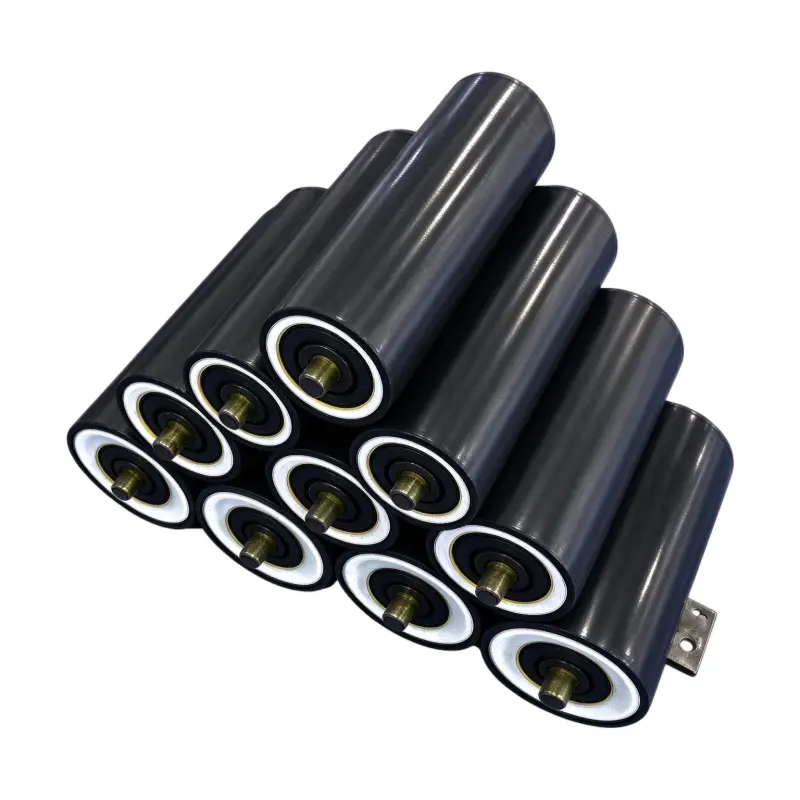
First, what is the load? A light carton on a gravity line needs a 20 mm or 30 mm tube with a thin wall. A 500 kg bag on a quarry belt needs a Ø89 mm or Ø133 mm heavy-duty roller with a thick-wall tube and sealed spherical bearings. Under-loading is cheap; over-loading is expensive.
Second, what is the environment? Wash-down food lines, chemical plants and coastal salt air demand stainless steel 304 or 316. Dry warehouse lines are fine with zinc-plated carbon steel. Quiet office or hospital automation often uses PVC or aluminium rollers to reduce noise. Mining and aggregate lines need impact rollers at the load point, where material drops onto the belt.
Third, how is it mounted? Spring-loaded axles let you change a roller in seconds; hex axles resist slip; keyway shafts are for driven pulleys. Confirm the frame width and axle style before ordering — a roller that is 2 mm too long will not fit the frame, and one that is too short will drift.
Fourth, how long should it last? The cheapest roller is rarely the cheapest over a year. Look at bearing seals (double-lip rubber seals outperform felt seals in dust), tube wall thickness, and whether the tube is precision-turned and dynamically balanced. A balanced roller runs cooler, lasts longer and does not make your line vibrate.
Common questions buyers ask us
- How do I measure an existing conveyor roller? Measure the overall tube diameter, the face length (tube length, not shaft length), the shaft diameter and the axle style (spring, hex or flat). If you send us a photo, we will reverse-engineer it.
- Why does my new roller make noise? Usually the bearings are not seated, the tube is unbalanced, or the shaft is too small for the load. Send us the serial number or a sample and we will diagnose it.
- Steel or stainless for food? Always stainless - carbon steel will rust under wash-down and can contaminate product. 304 is standard; use 316 for salt, acid or dairy environments.
- Can you match an OEM roller that is no longer available? Yes. Most conveyor rollers are interchangeable if you match diameter, length, shaft and bearing type. Send us the old roller and we will quote a direct replacement.
If you are replacing a batch, designing a new line or just tired of rollers that fail too soon, send us your drawings or a sample. AstraRoll engineers every conveyor roller to the load, environment and budget of your application - and ships worldwide.