
Phone: +86 15398058207
E-mail: sales@astraroll.com
Add: Room 603 Building C, The Huixin Center, Zhangba One Road, Yanta Zone, Xi'an City, Shaanxi Province, China
How to Eliminate Static Accumulation and Defect Risks in High-Speed Battery Separator Conveying
As the lithium battery industry relentlessly pushes for higher energy density and manufacturing efficiency, battery separators are becoming thinner than ever—shrinking from over a dozen microns down to the single-digit range. However, during high-speed automated conveying, slitting, and stacking processes on the production line, this ultra-thin and highly insulating polyethylene (PE) or polypropylene (PP) film faces a fatal "invisible killer": Static Electricity.
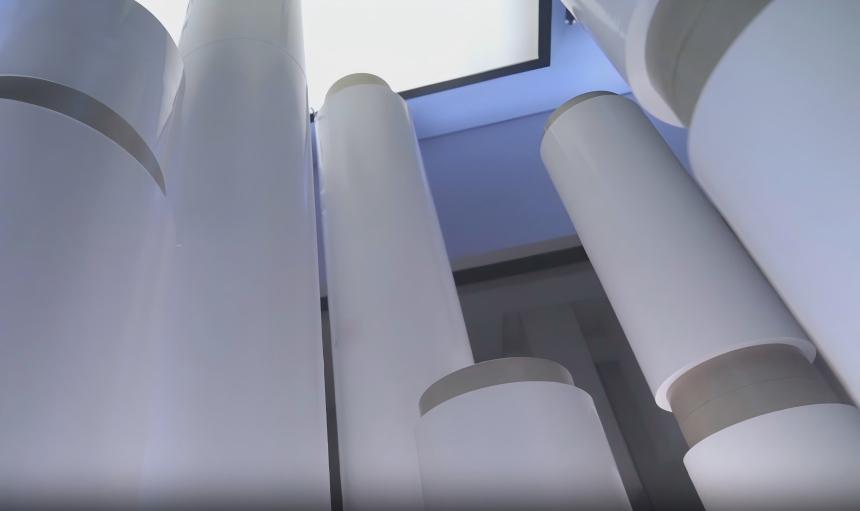
1. Phenomenon Analysis: Kilovolt Pressures Leading to "Web Wrapping" and "Puncture"
The base materials of lithium battery separators (PE/PP) are inherently excellent insulators. When the lightweight separator rubs against metal guide rollers at line speeds of hundreds or even thousands of meters per minute, the friction generates static charges that cannot dissipate quickly.
Under extreme operating conditions, static voltage can accumulate to several kilovolts (kV) or even exceed 10,000 volts. This extreme static accumulation triggers two highly destructive phenomena on the production line:
1.1 Fatal Electrostatic Adhesion (Web Wrapping)
A static voltage of 10,000V generates an electrostatic force strong enough to make the feather-light separator "bite" tightly onto the metal roller. Under normal processes, the separator web should smoothly release from the roller at the specified wrap angle and enter the next station. However, electrostatic adhesion prevents clean release. In mild cases, it causes web tracking deviations and wrinkling; in severe cases, it leads to web breaks and line downtime, severely bottlenecking production efficiency.
1.2 Undetectable ESD Puncture (Micro-Pinhole Hazards)
When static accumulation reaches a critical threshold, Electrostatic Discharge (ESD) occurs toward the roller. Given that battery separators are typically only a few microns thick, the instantaneous high current and high temperature of an ESD event can directly "burn" micro-pinholes into the film—defects that are virtually invisible to the naked eye.
This is a ticking time bomb. A separator with ESD punctures allows direct contact between the cathode and anode. During subsequent charge/discharge cycles or when exposed to heat, this inevitably causes an Internal Short Circuit (ISC), potentially leading to thermal runaway and catastrophic battery failure.
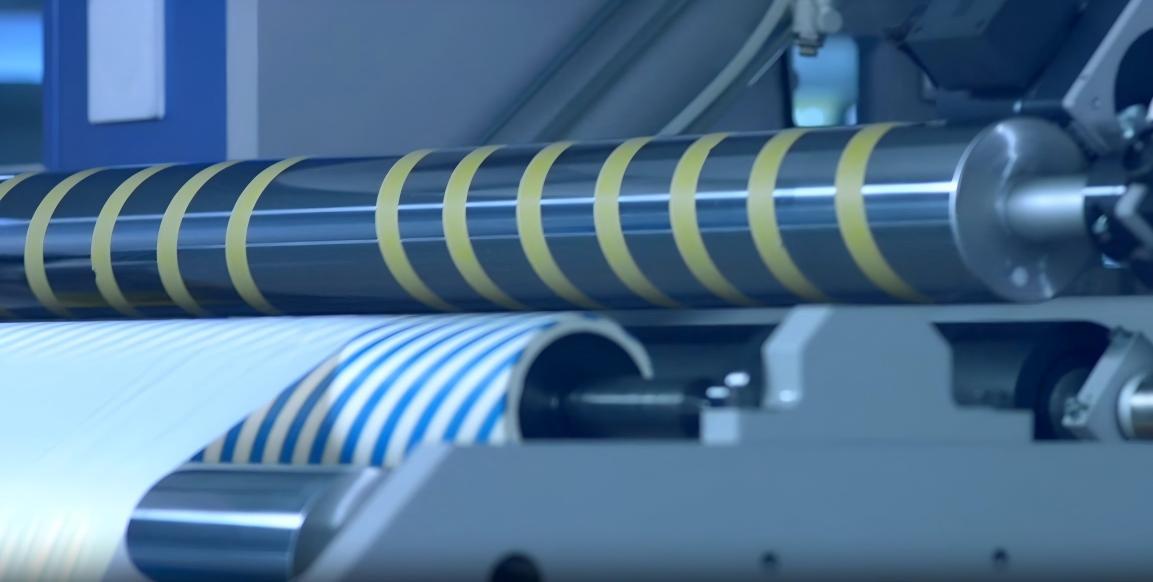
2. The Core Breakthrough: Anti-Static Technologies in Guide Roller Design
To solve the static pain points in high-speed separator conveying, relying solely on factory humidification or external ionizing bars is often a band-aid solution—external static elimination has a lag time that cannot keep up with line speeds of hundreds of meters per minute.
The real key to solving this problem lies in the guide rollers that operate tirelessly on the line. Lithium battery production lines have extremely stringent requirements for the surface anti-static properties of rollers. Using untreated standard metal rollers is essentially building a bridge for static electricity. To ensure that separators remain static-free and do not wrap around rollers at high speeds, modern lithium battery rollers must employ the following core technologies:
2.1 Specialized Conductive Anodizing
For aluminum guide rollers, standard hard anodizing (which is highly insulating) must be avoided. Instead, specialized conductive anodizing is required. By altering the microstructure of the surface oxide film, this process maintains the necessary wear resistance and hardness while providing excellent electrical conductivity. Thus, the static charges generated by separator friction can be instantly conducted through the roller body and bearings to the equipment ground, nipping charge accumulation in the bud.
2.2 Static Dissipative Coatings
For specific applications, a high-tech anti-static coating can be uniformly applied or wrapped onto the roller surface. The surface resistivity of this coating is precisely controlled within the "static dissipative range" (typically 104 ∼106 Ω/sq). It acts like a sponge, rapidly absorbing and dissipating surface charges from the separator, while also providing an ultra-smooth surface finish that further reduces the friction coefficient, thereby lowering the initial generation rate of static electricity.
2.3 Micro-Grooved Aluminum Rollers (The Ultimate Solution)
At ultra-high speeds (e.g., 800 m/min and above), a layer of air is entrained between the fast-moving separator and the roller surface, creating an "air cushion." This air cushion not only causes the web to float and generate static but also blocks the path for charge dissipation. To combat this, the industry has developed special aluminum rollers with precision de-aeration micro-grooves.
The surface of these rollers is precision-machined with a microscopic groove network that provides a multi-faceted solution:
- Air Exhaust: It instantly evacuates the air between the web and the roller surface, eliminating the air cushion so the separator makes true physical contact with the roller (physical contact, not electrostatic adhesion).
- Enhanced Charge Dissipation: Without the air gap, static charges have a direct conduction path. Combined with the roller's inherent conductivity, this enables millisecond-level charge drainage.
- Wrinkle Prevention: The micro-grooves also effectively release residual internal stresses within the separator film, preventing wrinkling during ultra-high-speed operation.
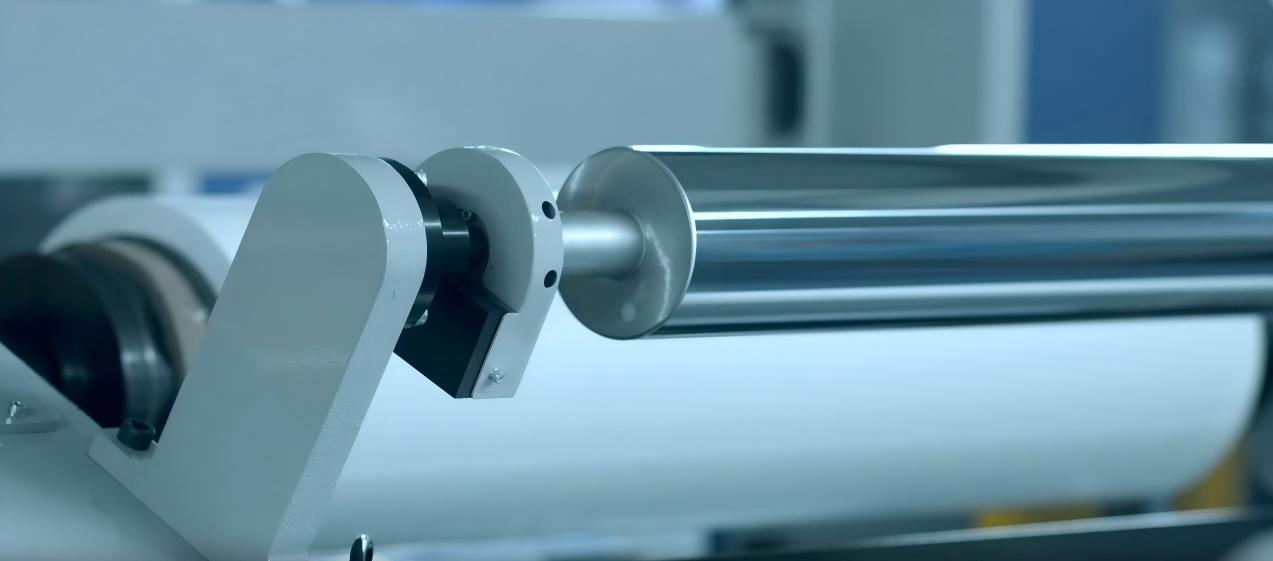
3. Conclusion: Don't Let a Single Roller Compromise an Entire Cell
In lithium battery manufacturing, the electrostatic adhesion and ESD puncture of separators is a complex challenge that bridges material properties and mechanical engineering. A few kilovolts—or even a few dozen volts—of invisible static electricity dictates the ultimate safety baseline of the final battery cell.
As the "joints" of the production line, guide rollers are no longer simple mechanical support cylinders; they are precision static control components. During line upgrades or new line planning, it is crucial to scrutinize every roller that contacts the separator: Has it undergone conductive anodizing? Does it feature a static dissipative coating? Are micro-grooved de-aeration rollers implemented for high-speed sections?
Only by strictly controlling roller anti-static performance can we completely eliminate separator "web wrapping" and "ESD breakdown," safeguarding the high yield and uncompromised safety of lithium battery production.
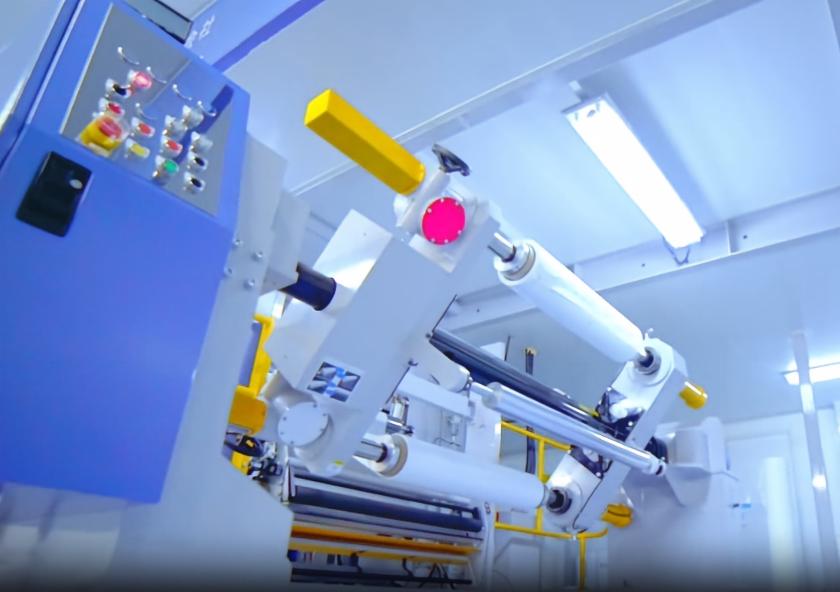
If you are currently facing separator tracking issues such as static adsorption, high-speed slippage, web wrinkling, or unexplained pinhole insulation test alarms, contact the AstraRoll Engineering Team today. Based on your operating line speeds, tension ranges, and mechanical drawings, we will provide a high-performance, precision-engineered anti-static roller solution within 24 hours!
- Explosion proof electric roller
- The Silent Quality Drivers: How High-Precision Rollers Shape Release Film Perfor
- What Are the Benefits of Hard Anodized Aluminum Guide Rollers?
- Why High-End Manufacturing Cares So Much About Roller Surface Precision
- Why Your Heavy-Duty Conveyor Needs Garland Idler Rollers
- What are the differences and applications between anilox roller and embossing ro
- Why Teflon Coated Aluminum Rollers Are the Best Choice for Non-Stick Web Handlin
- How to Eliminate Static Accumulation and Defect Risks in High-Speed Battery Sepa