
Phone: +86 15398058207
E-mail: sales@astraroll.com
Add: Room 603 Building C, The Huixin Center, Zhangba One Road, Yanta Zone, Xi'an City, Shaanxi Province, China
What are the Different Heating Methods for Calendar Rollers?
Here is a quick breakdown of the 6 industrial roller heating methods to help you choose the best technology for your line.
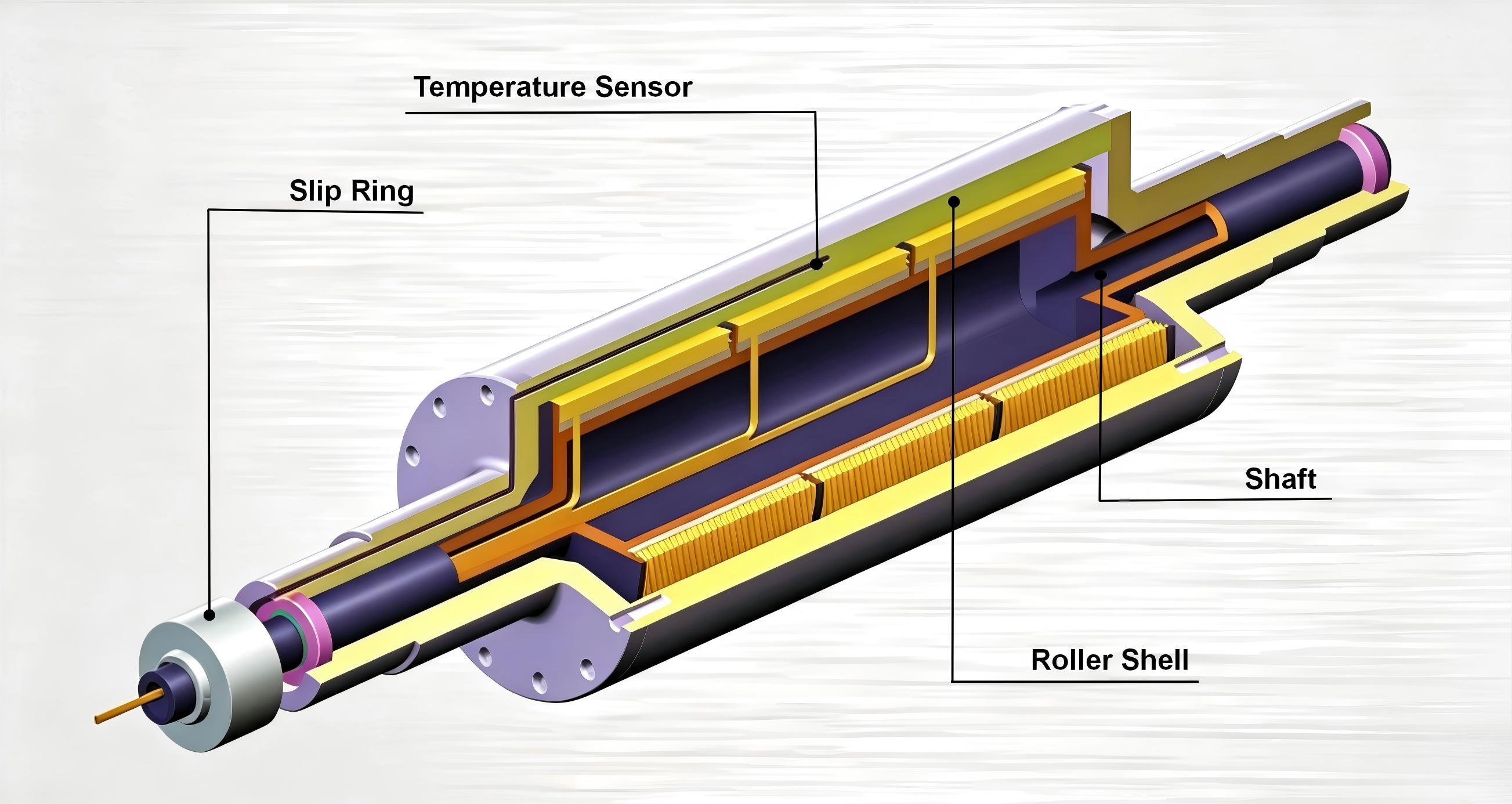
1. Mainstream Roller Heating Methods
- Water Heating: Circulates hot water through internal channels. It offers excellent heat transfer, low media cost, and zero fire risk for low-temperature applications (under 90℃). Pitfalls: Limited to lower temperatures (rarely exceeds 140℃ even under pressure) and prone to internal scale build-up and rust.
- Thermal Oil Heating: Circulates heated synthetic oil. It is highly mature, handles temperatures up to 300℃, and provides stable thermal capacity. Pitfalls: High thermal lag (delayed adjustments), high maintenance due to internal carbon coking, and fluid leakage or fire risks.
- Steam Heating: Introduces boiler steam into the roller cavity to release latent heat via condensation. It features rapid heat-up speeds and low costs for heavy-duty traditional lines. Pitfalls: Max temperature is tied to steam pressure (usually under 180℃), internal condensate pooling causes uneven surface temperatures, and it requires a bulky boiler infrastructure.
- Conventional Resistance Heating: Uses internal electric heating cartridges to transfer heat via radiation or conduction. It features mechanical simplicity and low upfront capital costs without external plumbing. Pitfalls: High thermal inertia (prone to temperature overshooting), elements burn out frequently under high-heat cycles, and low energy efficiency.
- Electromagnetic Induction Heating: Uses internal static coils to generate a high-frequency magnetic field, forcing the rotating metal roller shell to heat itself via eddy currents. It delivers peak accuracy (≤±0.5℃ variance) up to 420℃, slashes energy use by 50% due to zero transmission loss, and operates completely wear-and-leak-free. Pitfalls: Higher initial equipment investment.
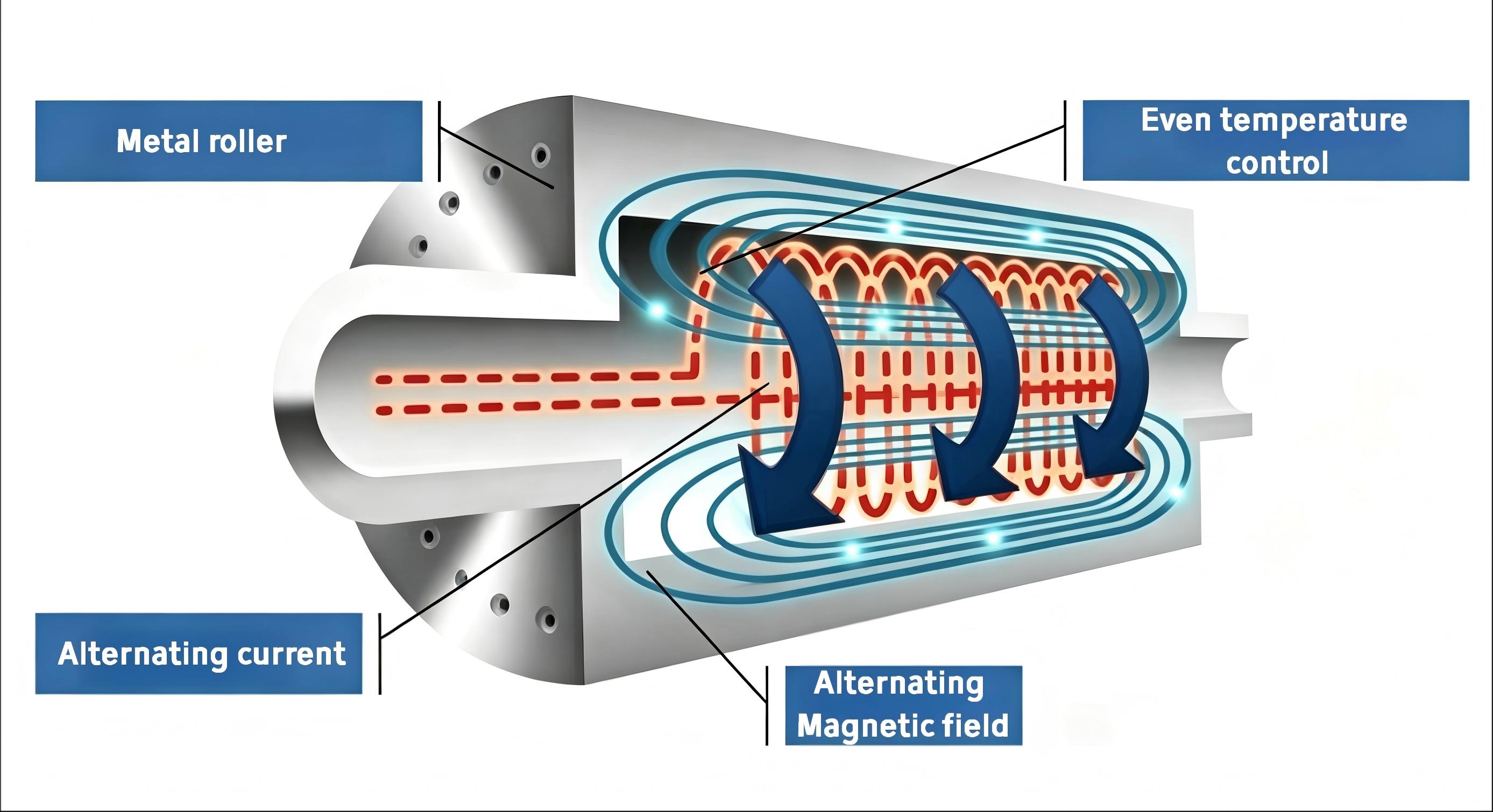
2. Advanced & Future Heating Trends
- Infrared / Radiant Heating: Uses internal or external IR lamps to heat the shell via electromagnetic waves. It is lightweight with instant response, but suffers from massive ambient heat loss and relies heavily on roller surface coatings.
- Laser Heating: Directs high-power lasers onto the spinning roller surface. It offers micron-zone pinpoint accuracy and hyper-fast heating, but faces exorbitant hardware costs and is restricted to shallow surface treatments.
- Hot Air Convection Heating: Blows high-temperature air streams onto or through the roller. It is safe and contamination-free, but air's low thermal conductivity results in sluggish response times and steep energy losses.
- Multi-Zone Hybrid Systems: Combines multiple methods (e.g., induction + internal fluid cores) via closed-loop software. It achieves absolute physical uniformity on ultra-wide lines, but carries extreme integration complexity and engineering costs.
3. Quick Performance
| Heating Method | Max Temp | Temp Uniformity | Thermal Efficiency | Maintenance Needs | Safety & Cleanliness |
| Water | 140℃ | ±1℃ | High | Medium (Scale/Rust) | Maximum Safety |
| Thermal Oil | 300℃ | ±1℃~±2℃ | Low | High (Coking/Flushing) | Leak & Fire Risks |
| Steam | 180℃ | ±2℃~±3℃ | Moderate | High (Boiler/Leaks) | High-Pressure Blowout Risk |
| Electric Cartridge | 300℃ | ±2℃~±5℃ | Low | High (Element Burnouts) | Clean, but Overshoots Heat |
| Induction | 420℃ | ≤±0.5℃ | Extreme (Self-Heats) | Minimal (Wear-free) | Green & Eco-Friendly |
4. Partner with AstraRoll
Choosing a roller heating method is about balancing product quality, energy consumption, and Total Cost of Ownership (TCO).
AstraRoll designs and builds high-performance roller systems to match your exact parameters:
Custom-engineered internal flow channels for water and oil rollers to maximize turbulent heat transfer and minimize shell deflection.
Ultra-precision machined, high-magnetic-permeability roller bases built for next-generation electromagnetic induction systems.
Contact the AstraRoll engineering team today for a tailored heated roller solution optimized for your operational ROI!
- The Silent Quality Drivers: How High-Precision Rollers Shape Release Film Perfor
- What Are the Benefits of Hard Anodized Aluminum Guide Rollers?
- Why High-End Manufacturing Cares So Much About Roller Surface Precision
- Why Your Heavy-Duty Conveyor Needs Garland Idler Rollers
- What are the differences and applications between anilox roller and embossing ro
- Why Teflon Coated Aluminum Rollers Are the Best Choice for Non-Stick Web Handlin
- How to Eliminate Static Accumulation and Defect Risks in High-Speed Battery Sepa
- What Are Hard Coated Rollers?