
Air Differential Shaft
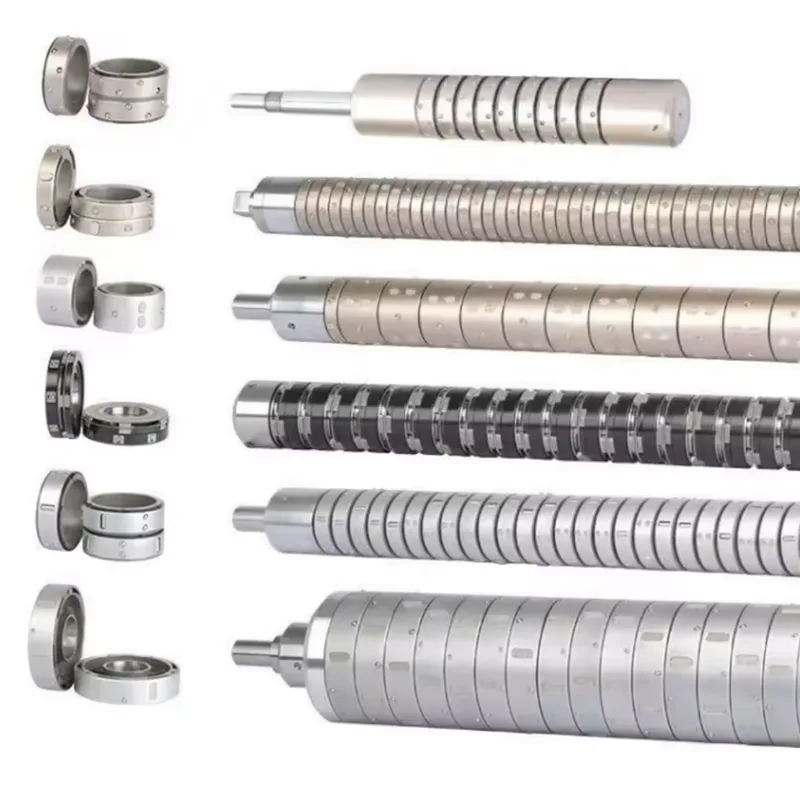
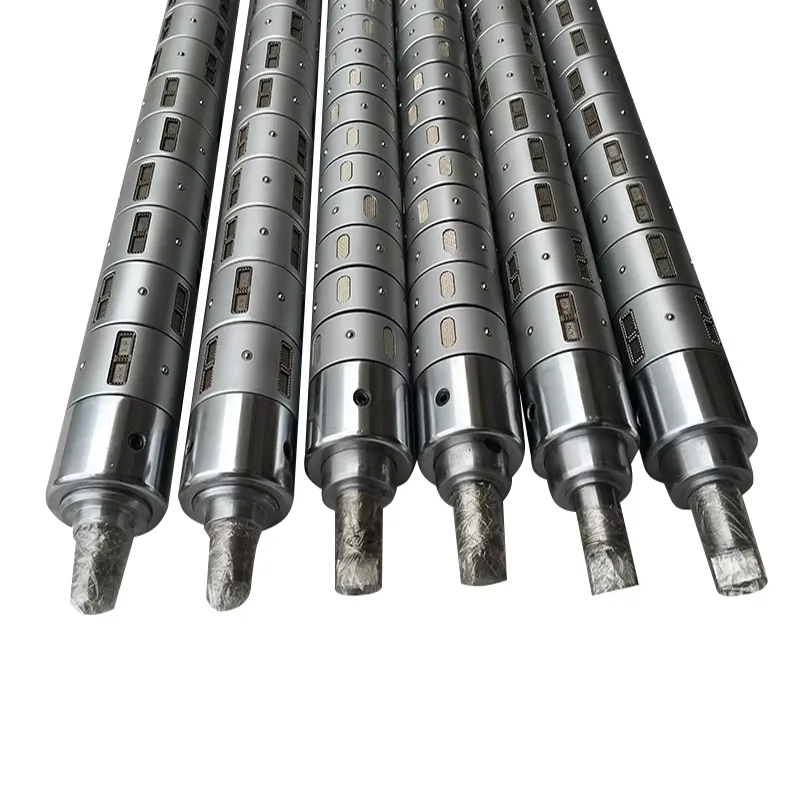
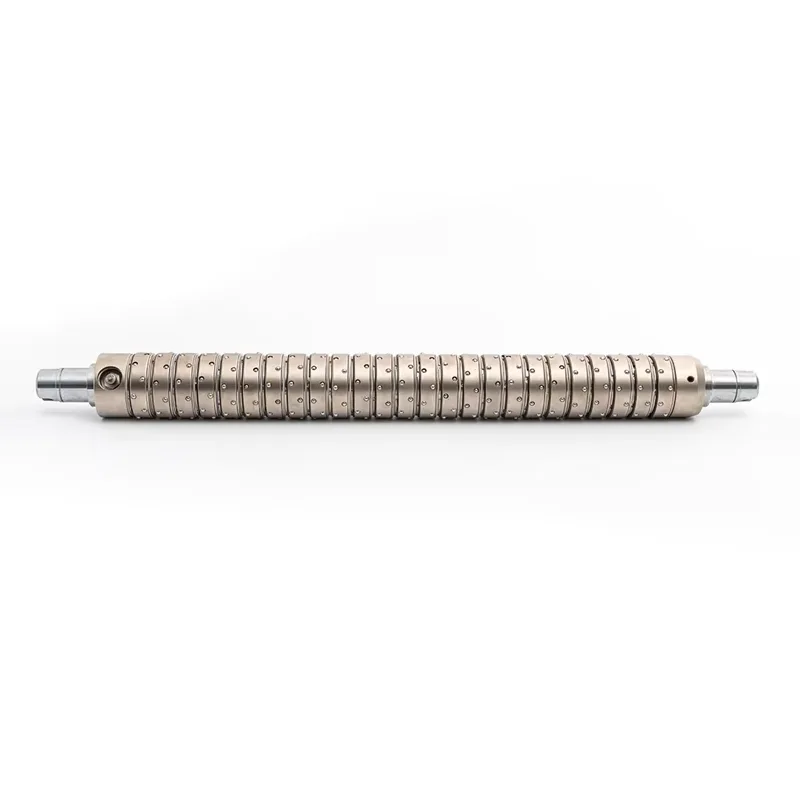
An air differential shaft gives each slit strip its own tension. Instead of one fixed grip across the full width, the shaft carries individual friction rings or slip rings that can each slip at a different rate, so every rewound roll stays tight, square, and free of stretch marks - even when strip widths, film gauges, or roll diameters vary across the same shaft. AstraRoll builds air differential shafts and matched friction rings for slitting, rewinding, film, foil, paper, and label applications, machined to your core size, web width, and tension range. Browse the options below, or send us your drawing and line details for a tailored recommendation.
Air Differential Shaft FAQs
A standard air shaft grips the entire core with one uniform expansion, so every roll on the shaft turns at the same speed with the same grip. An air differential shaft is built with separate slip or friction rings along the body. Each ring can slip independently, which means each rewound strip can run at its own tension and speed. This matters in slitting, where narrow strips, different film thicknesses, or uneven roll build-up would otherwise cause loose or over-tight rolls. If your line rewinds multiple strips on one shaft and tension consistency is a problem, a differential shaft is usually the better fit.
Tension is controlled through air pressure applied to the friction rings. Increasing pressure increases the grip between each ring and the shaft body, so the ring resists slipping more and the strip winds tighter. Reducing pressure lets the rings slip more freely for lighter tension. Because the rings are independent, one pressure setting still allows each strip to find its own balance. Operators can adjust pressure to suit the material, strip width, and target roll hardness. AstraRoll can advise on the pressure range and ring configuration for your specific web and speed.
Air differential shafts are widely used for plastic film, BOPP, PET, CPP, paper, label stock, foil, nonwoven, and similar web materials. They are particularly useful when a slitting line produces many narrow strips from one wide master roll. Minimum strip width depends on the ring design and the number of rings that can be fitted along the shaft. Very narrow strips need compact rings and careful spacing. When you specify a shaft, tell us your narrowest strip width, maximum roll diameter, and total web width, and we can confirm a workable ring layout.
Loose, soft, or telescoped rolls on a conventional shaft usually point to a tension mismatch across the web. Narrow strips build up faster in diameter than wide ones, so a single fixed grip cannot keep all of them equally tight. Differences in film gauge and friction also cause strips to wind at different rates. An air differential shaft addresses this by letting each ring slip as needed, so every strip maintains consistent tension as its roll grows. If you are seeing edge stagger, soft centers, or uneven roll hardness, a differential shaft is worth evaluating.
Yes. AstraRoll produces air differential shafts and slip rings to customer drawings and application requirements. We match core inner diameter, shaft length, journal and mounting interface, ring quantity and spacing, air supply arrangement, and tension range to your slitting or rewinding line. We can also supply matched friction rings and related components so the shaft and rings work as one system. Send us your drawing, web width, strip width range, roll weight, and line speed, and our team will recommend a configuration and confirm the manufacturing details before production.
What you may want to know about Air Differential Shaft
In multi-roll slitting and rewinding, a common problem appears: rolls wound on the same shaft come out uneven. Some rolls have clean edges and uniform tension; others wrinkle, telescope, or break. The material batch is often blamed, but the real cause is usually the tension control capability of the rewinding shaft.
This article explains where air differential shafts are used, how they work, and how to choose the right slip ring type for your material and process. At AstraRoll, we build air differential shafts and slip rings to match the actual demands of your slitting line.
Where Air Differential Shafts Are Used
An air differential shaft is used in multi-roll rewinding, where each rewinding position needs independent tension adjustment. It compensates for line speed differences caused by uneven material thickness and changing roll diameters.
Common applications include:
1. Packaging and printing
Gravure and flexographic press unwind and rewind units handling BOPP, PET, PE, and other films. Air differential shafts help prevent film stretching and deformation.
2. Label stock and adhesive products
Label slitting machines and protective film slitters handle wide, tension-sensitive materials. A differential shaft helps avoid liner breakage and face stock wrinkling.
3. Lithium battery and metal foil processing
Copper and aluminum foil slitting involves thin, high-value materials. Differential shafts enable low-friction tension control and clean roll edges.
How an Air Differential Shaft Works on a Slitting Machine
In simple terms: the shaft keeps the line speed of every rewound roll the same, so all rolls finish at the same total length.
The main shaft rotates at a constant speed, setting the material transport speed. Slip rings mounted on the shaft each carry one roll of material. At the start of rewinding, all rolls have a small diameter. As rewinding continues, one position may have slightly thicker material—often invisible to the eye—and its roll diameter grows faster than the others. We can call this a "fat roll."
If the fat roll kept the same rotational speed as normal rolls, its material line speed would exceed the incoming material speed. Tension would rise, and the material could break.
Each slip ring is set to transmit a maximum torque through air pressure. When the pulling force from the fat roll exceeds the set value, the slip ring starts to slip—its rotational speed drops below the main shaft, matching the incoming material line speed. Normal rolls continue to rotate with the main shaft.
The result: each roll turns at a different speed, but the rewinding line speed stays consistent. All rolls finish together, and the material does not break or wrinkle.
Three Common Slip Ring Types and Their Applications
The slip ring is the execute unit of the air differential shaft. Different structures suit different material characteristics and process requirements.
1. Keyed Slip Ring (Ball-Key Type)
Structure: The outer ring has several retractable keys, usually four. Air pressure pushes the keys outward against the core.
Grip method: Surface contact. The keys press flat against the core wall, giving a large contact area.
Characteristics: Strong load capacity, low damage to paper cores, durable structure.
Applications: Thick materials and high-tension rewinding, such as thick tape, paper, and label liner.
Note: Surface contact responds more slowly to slipping and is not ideal for very thin or tension-sensitive materials.
2. Ball Slip Ring
Structure: The outer ring carries multiple independent small steel balls, usually in two rows. The balls rotate freely.
Grip method: Point contact. The balls press against the core inner wall at small, evenly distributed points.
Characteristics: Fine grip adjustment and smooth loading and unloading. If the core is out of round or slightly deformed, the balls automatically adjust their extension height for better conformity.
Applications: Narrow-width slitting and applications requiring high loading efficiency, such as label stock, protective film, and optical film slitting.
Note: Single-point load capacity is relatively low, so it is not suitable for very high-tension conditions.
3. Roller Slip Ring (Ball-Roller Type)
Structure: Combines rollers and balls—long rollers for line contact and small balls for point contact.
Grip method: Line contact plus point contact. The rollers provide stable support, while the balls assist smooth adjustment.
Characteristics: Balances support stability and smooth slipping. It causes little damage to plastic cores and aluminum foil cores, and responds quickly.
Applications: Tension-sensitive materials and diverse core materials, such as thin films, label stock, and lithium battery separator film.
Note: Some label slitting machines use this type because of its smooth slipping and suitability for frequent loading and unloading.
Selection Guide
Choosing a slip ring requires considering material characteristics, core material, tension range, and loading frequency:
- Thick material, high tension, paper core: Keyed slip ring is preferred.
- Narrow width, frequent loading, possible core deformation: Ball slip ring is preferred.
- Thin material, tension-sensitive, plastic or aluminum core: Roller slip ring is preferred.
The performance of an air differential shaft also depends on whether the air pressure setting matches the material tension requirement. If set too high, the slip ring will not slip and the material may break. If set too low, excessive slipping reduces rewinding efficiency.
AstraRoll Custom Air Differential Shafts and Slip Rings
At AstraRoll, we build air differential shafts and slip rings to customer drawings and application requirements. We match:
- Core inner diameter and tolerance
- Shaft length and journal interface
- Slip ring quantity and spacing
- Air supply arrangement
- Tension range and pressure settings
- Material type and strip width
Whether you are running label stock, thin film, foil, or specialty webs, we can recommend a slip ring configuration that fits your slitting line and helps you achieve consistent, clean rolls.
If you are dealing with uneven roll edges, material breakage, or inconsistent tension on your slitting machine, contact AstraRoll. Send us your drawing, web width, strip width range, roll weight, and line speed, and our team will help you specify the right air differential shaft and slip ring combination.