
Phone: +86 15398058207
E-mail: sales@astraroll.com
Add: Room 603 Building C, The Huixin Center, Zhangba One Road, Yanta Zone, Xi'an City, Shaanxi Province, China
What Exactly is an Omni Wheel Conveyor?
The trouble almost never happens on the straightaways. It happens at the intersections—where boxes need to make a sharp 90-degree turn, clear a sorting lane, or get redirected to a different packing station. Traditional motorized pushers, pop-up transfer rollers, and pneumatic arms are the classic fixes, but let’s be honest: they are expensive, incredibly noisy, require endless maintenance, and smash up fragile packages when they strike too hard.
That is exactly why smart logistics engineers are ripping out those complicated systems and replacing them with a purely mechanical, bulletproof alternative: Omni Wheel Conveyor Systems and Multi-Directional Roller Tracks.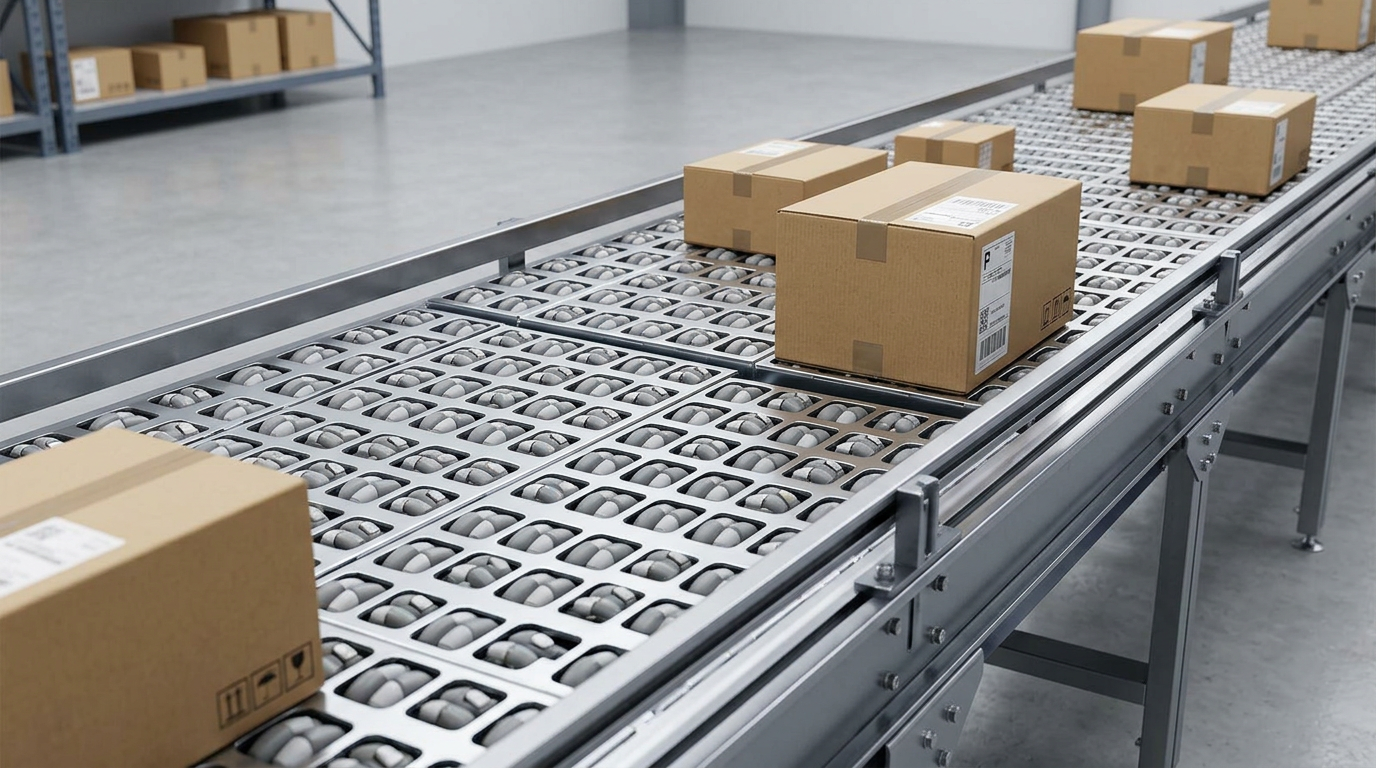
Let's look at how these clever universal wheels work and how they can immediately speed up your shop floor without blowing your budget.
1. What Exactly is an Omni Wheel Conveyor?
A standard conveyor roller can only roll forward and backward. If you try to push a box sideways onto it, the box drags, friction builds up, and the line jams.
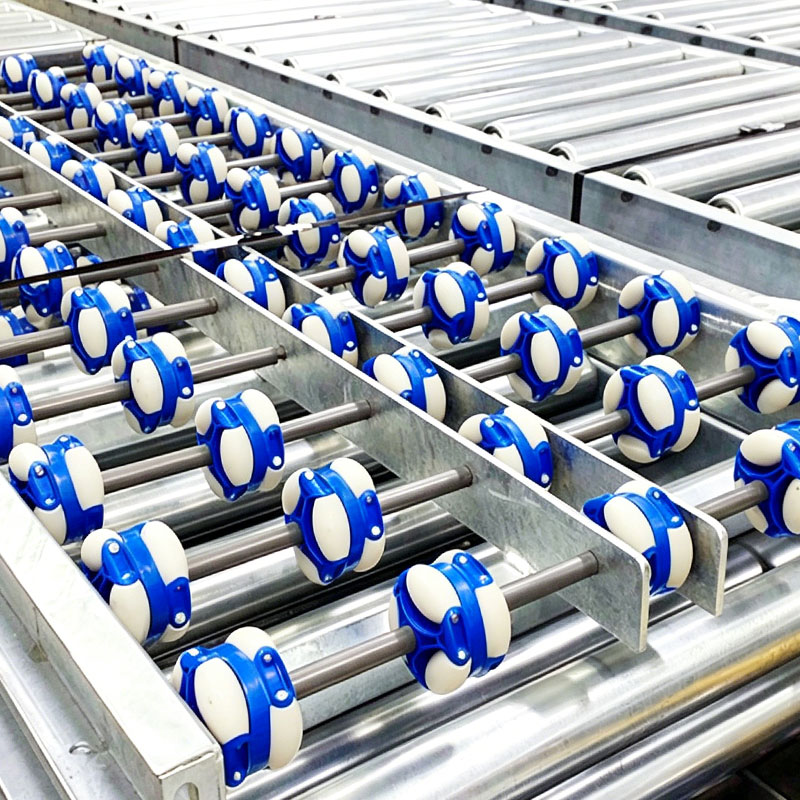
An Omni Wheel solves this mathematically. It consists of a main wheel hub, but along its outer rim, it features a series of smaller, secondary rollers mounted perpendicularly to the axis.
When you configure these wheels together into an Omni Wheel Conveyor System, you get a bed of rolling contact points that allow any package, plastic tote, or heavy box to slide effortlessly in any direction—360 degrees—with zero rotational lag.
2. The Big Benefits: Why Drop One into Your Line?
Fix Your 90-Degree Corners (No Power Required)
Instead of installing an expensive motorized sorting mechanism at a cross-section, you can simply drop in a modular patch of omni wheel tracking. Because the wheels can spin in any direction simultaneously, a worker (or a simple mechanical guide rail) can slide a 50-pound carton directly to the left or right with the push of a single finger. It turns an expensive, powered bottleneck into a seamless, gravity-fed breeze.
Zero-Radius Turning and Package Alignment
On standard lines, turning a box around to scan a barcode or check a label requires a massive sweeping curve or stopping the belt entirely. On a multi-directional roller bed, packages can be rotated completely in place (zero-radius turning). This makes it the perfect setup for packing stations, inspection zones, and weight-checking scales.
Drop-In Compatibility (No Re-welding Needed)
You don’t need to scrap your existing conveyor setup to get the benefits of 360-degree mobility. These omnidirectional rollers are designed as modular inserts. Whether you need to retrofit an old gravity roller frame or build a custom FIFO (First-In, First-Out) flow rack from scratch, the tracking components clip right into standard steel frames and industrial aluminum profiles.
3. Choose Your Setup: Tracks vs. Full Beds
Depending on what you are moving and how much space you have, industrial omni layouts generally fall into two categories:
A. Multi-Directional Roller Tracks (The Lean Manufacturing Fix)
These are long, structural rails packed with staggered universal rollers. They are ideal for (Lean Manufacturing) workspaces, assembly line supply racks, and packaging desks. If you are building modular pipe-and-joint flow racks, these rails slide right into your framing, allowing operators to effortlessly feed parts in from the back, rotate them at the workstation, and slide the empty bins out the side.
Explore our modular rail setups directly on the AstraRoll Multi-Directional Roller Track and Rails page.
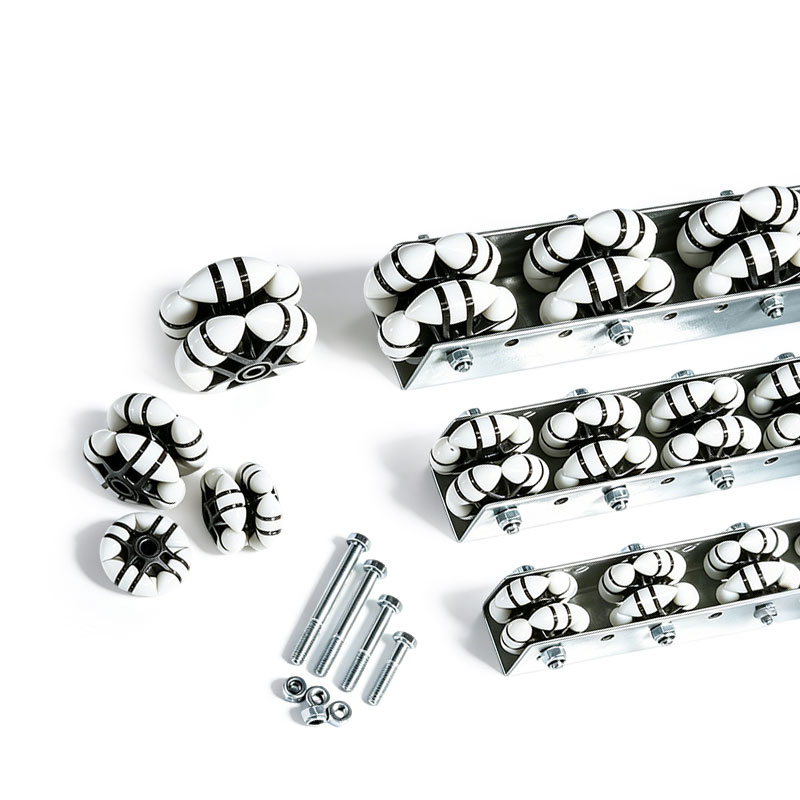
B. Omni Wheel Conveyor Beds (The Automated Logistics Powerhouse)
When you are dealing with high-throughput distribution centers handling everything from tiny parcels to massive flat-bottomed shipping crates, you need a full surface bed. By arraying dozens of heavy-duty omni wheels across a wide transfer table, you create a seamless "floating" zone where goods can be sorted, diverted, or merged into different lanes smoothly without ever catching an edge or jamming.
Check out our full automated sorter beds on the AstraRoll Omni Wheel Conveyor Systems page.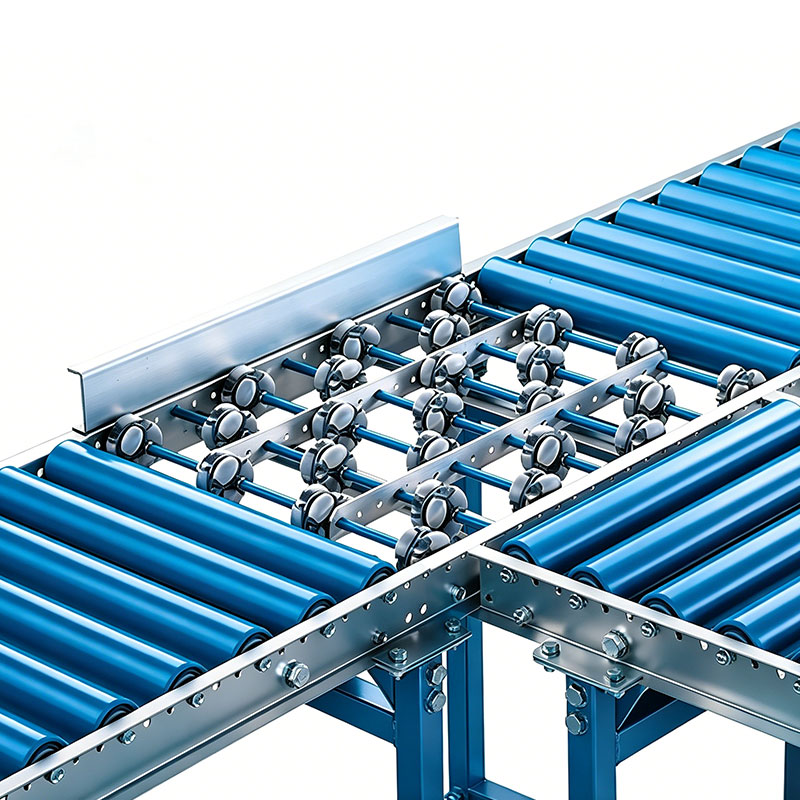
4. Why AstraRoll Built Them to Survive Real-World Abuse
Let's be real: cheap plastic omni wheels break. In a dusty warehouse environment, cardboard fibers, packing tape residue, and debris love to slip into wheel axles. Once dirt gets inside, the rollers freeze up, develop flat spots, and stop rolling altogether.
At AstraRoll, we don't make toy components. We engineer our material handling gear for industrial endurance:
- Shielded Internal Bearings: Every single micro-roller on our omni wheels features enclosed bearings to lock out warehouse dust and fine packing fibers.
- High-Impact Engineering Polymers: Our rollers maintain their perfect round profile even when heavy plastic totes or loaded pallets sit on them over the weekend—meaning no flat spots and no morning restarts.
- Rigid Structural Chassis: Whether encased in a heavy-duty steel channel or an aircraft-grade aluminum rail, our tracks won't flex or bow under heavy industrial weight.
Stop Fighting Jams—Keep It Simple
The smartest engineering solutions are always the simplest ones. Why install complicated electronics, air lines, and sensors at a junction when pure mechanical freedom can do the exact same job for a fraction of the price?
Whether you need to upgrade a single packing table or design an entire multi-directional airport baggage sorting floor, we machine and assemble our gear completely in-house to match your exact dimensions.
Ready to eliminate your line's biggest bottleneck? Browse our full specifications on our Multi-Directional Tracks Page or our Omni Conveyor Systems Collection, and let's get your facility moving faster today!
- The Silent Quality Drivers: How High-Precision Rollers Shape Release Film Perfor
- What Are the Benefits of Hard Anodized Aluminum Guide Rollers?
- Why High-End Manufacturing Cares So Much About Roller Surface Precision
- Why Your Heavy-Duty Conveyor Needs Garland Idler Rollers
- What are the differences and applications between anilox roller and embossing ro
- Why Teflon Coated Aluminum Rollers Are the Best Choice for Non-Stick Web Handlin
- How to Eliminate Static Accumulation and Defect Risks in High-Speed Battery Sepa
- What Are Hard Coated Rollers?