
Phone: +86 15398058207
E-mail: sales@astraroll.com
Add: Room 603 Building C, The Huixin Center, Zhangba One Road, Yanta Zone, Xi'an City, Shaanxi Province, China
How Proper Cleaning Protects Your Anti-Static Rubber Roller Surface
However, a rubber roller is only as good as its surface. Over weeks of continuous running, rollers inevitably accumulate dried oil-based inks, chemical coatings, synthetic dust, and ambient grime. When operators use the wrong cleaning methods—like scrubbing with wire brushes or dousing the roll in aggressive polar solvents—they actively destroy the roller.
Here is the engineering guide to protecting your rubber rolls and preventing web blowouts.
1. The Danger of Dirty Rubber Rollers
When ink, paste, or dust builds up on an anti-static NBR or EPDM rubber roller, it creates a physical barrier that triggers three main problems:
- Loss of Anti-Static Shielding: Dried ink or glaze acts as an insulator, blocking the conductive rubber matrix from contacting the web. Static builds up, sparks fly, and dust is magnetically sucked onto your clean film.
- Uneven Nip Pressure (Diameter Distortion): Hardened buildup creates micro-peaks. Under high nip pressure, these spots crush delicate film fibers, leave streaks in your coating, and cause uneven web tension.
- Chemical Cracking: If chemical residues sit on the rubber surface for too long, aggressive ink components leach into the rubber polymers, causing the surface to dry out and develop deep, irreparable cracks.
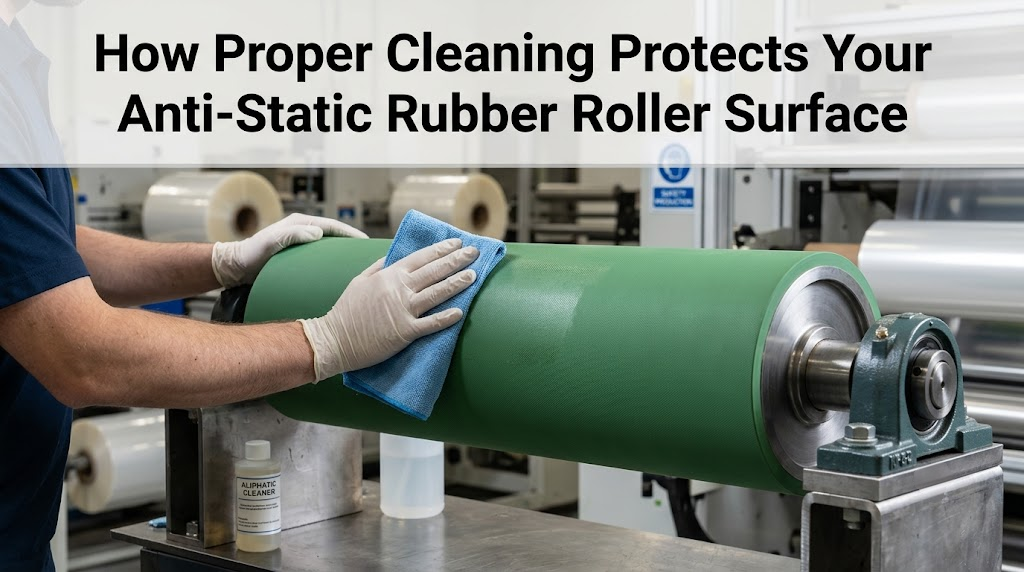
2. The Golden Rules of Rubber Roller Cleaning
To keep your rollers running with sub-micron precision, treat industrial rubber like an engineered asset, not a piece of scrap metal.
❌ The Deadly "Don'ts."
- Never Use Metal Scrapers or Wire Brushes: One micro-scratch on a precision-ground rubber surface will permanently transfer defects onto every single mile of film you run next.
- Avoid the Wrong Solvents: Dousing a Nitrile (NBR) roller in acetone or ethyl acetate causes instant swelling and turns it into a sticky, useless mess. Conversely, cleaning an EPDM roller with mineral oils causes immediate delamination.
- Never Leave Rollers Soaking: Leaving a rubber roller submerged in a tray of solvent breaks down the chemical bond between the rubber shell and the inner steel core, leading to catastrophic peeling under high torque.
The Three "Dos"
- Do Identify Your Rubber First: Always match your cleaning agent to the polymer. Use aliphatic hydrocarbons for NBR rollers, and use alcohols or water-based detergents for EPDM rollers.
- Do Use Lint-Free Microfiber Cloths: Use a soft, clean rag and wipe from the center of the roller outward to the shafts. This prevents pushing gritty debris into the side bearings.
- Do Clean While the Ink is Wet: It takes 2 minutes to wipe down a roller at the end of a shift when the ink is fluid, but it takes 2 hours of dangerous scrubbing once it cures.
3. Quick Reference: Chemical Compatibility Chart
Print this quick reference guide to display on your shop floor:
|
Roller Material Type |
Safe Cleaning Agents |
Danger Zone (Never Use!) |
Impact of Wrong Cleaning |
|
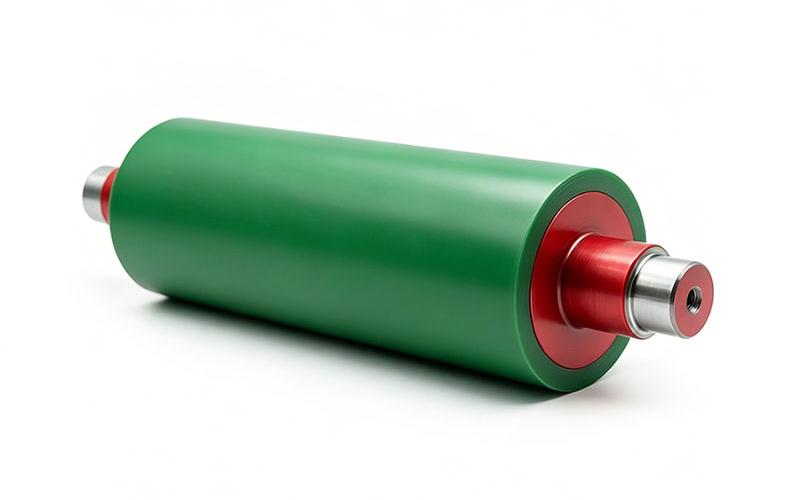
Green Nitrile (NBR) |
Aliphatic solvents, specialized ink washes, warm water + mild soap. |
Acetone, MEK, Ethyl Acetate, Toluene. |
Instant Swelling. The roll turns soft, deforms, and loses tracking alignment. |
|
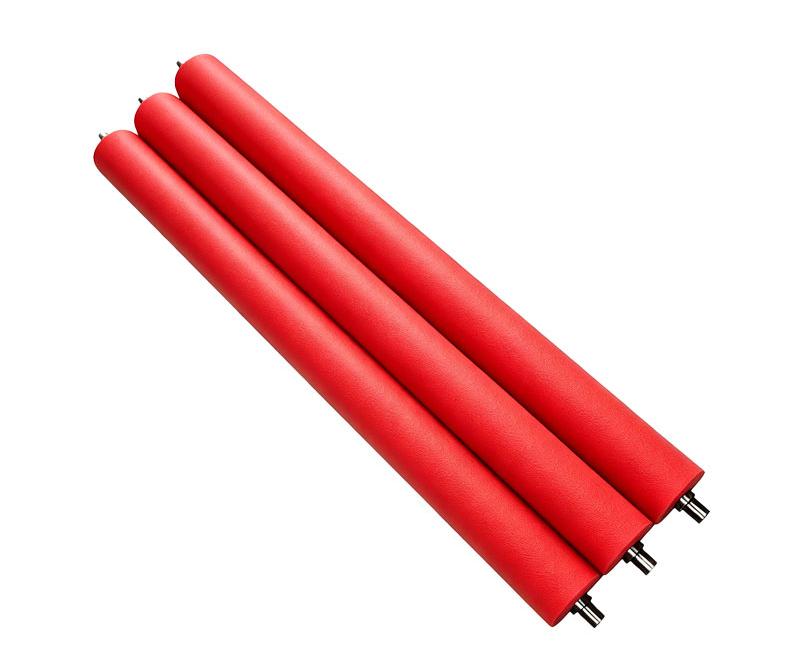
Red / Black EPDM |
Alcohols (IPA, Ethanol), Water-based cleaners, Ketones. |
Gasoline, Kerosene, Mineral Oils, Hydrocarbons. |
Softening & Melting. The rubber dissolves and peels off the steel shaft. |
|
Polyurethane (PU) |
Mild alcohol wipes, dry soft cloths. |
Strong acids, boiling water, heavy chlorinated solvents. |
Hydrolysis Breakdown. The PU matrix cracks and crumbles under pressure. |
4. How to Handle a Damaged Roller Face
If a roller has already suffered from surface glazing, ink scaling, or minor light scratches, follow this three-step rescue protocol:
- Chemical De-Glazing: Use a specialized industrial rubber rejuvenator paste. This penetrates the micro-pores of the rubber, lifting out deep-seated ink resins and restoring the rubber's original grippy texture.
- Precision Hand-Sanding (Emergency Only): Wrap fine-grit emery paper (400-600 grit) around a perfectly flat wooden block. Spin the roller slowly and apply ultra-light, uniform pressure across the entire face. Wipe clean immediately.
- Professional Regrinding (The Ultimate Fix): If the surface is heavily pitted, uneven, or deeply scarred, hand-sanding won't save it. The roller must be stripped and sent to a professional machine shop.
Let AstraRoll Restore Your Line's Precision
In the high-stakes world of flexible packaging and web conversion, proper cleaning directly impacts your final product margins.
If your facility is currently fighting constant web wrinkles, frequent static shocks, or has a stack of old rollers that have lost their grip, let us help. At AstraRoll, we provide full stripping, re-rubbering, and precision CNC grinding services to bring your old steel cores back to OEM-factory specifications.
Ready to optimize your roller maintenance program or need a quote on advanced anti-static replacement rolls? Explore our full compound spectrum on our Industrial Rubber Roller Specs Page or contact our engineering helpdesk today!
- The Silent Quality Drivers: How High-Precision Rollers Shape Release Film Perfor
- What Are the Benefits of Hard Anodized Aluminum Guide Rollers?
- Why High-End Manufacturing Cares So Much About Roller Surface Precision
- Why Your Heavy-Duty Conveyor Needs Garland Idler Rollers
- What are the differences and applications between anilox roller and embossing ro
- Why Teflon Coated Aluminum Rollers Are the Best Choice for Non-Stick Web Handlin
- How to Eliminate Static Accumulation and Defect Risks in High-Speed Battery Sepa
- What Are Hard Coated Rollers?