
Phone: +86 15398058207
E-mail: sales@astraroll.com
Add: Room 603 Building C, The Huixin Center, Zhangba One Road, Yanta Zone, Xi'an City, Shaanxi Province, China
Why Your Heavy-Duty Conveyor Needs Garland Idler Rollers
In heavy-duty bulk material handling—such as mining, quarrying, and port terminals—belt conveyors are subjected to brutal operational forces. Massive lumps of rock, coal, and ore drop onto the belt, causing severe impact damage, while uneven loading leads to constant belt misalignment. Standard rigid idler frames often fail under these extreme conditions.
To solve these persistent challenges, engineers turn to a specialized component: the Garland Idler Roller (also known as a catenary idler).
What is a Garland Idler Roller?
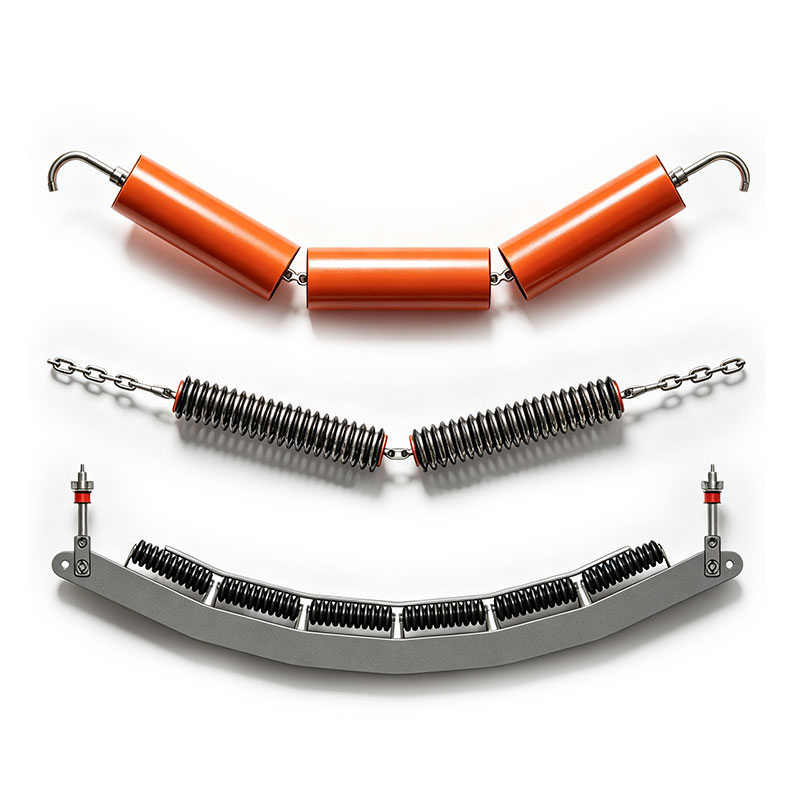
Unlike standard troughing idlers that are rigidly bolted to a stationary steel frame, a garland idler is a flexible, suspended assembly. It consists of multiple individual rollers (typically 2, 3, 5, or 6 rolls) linked together end-to-end using articulating joints or chain links.
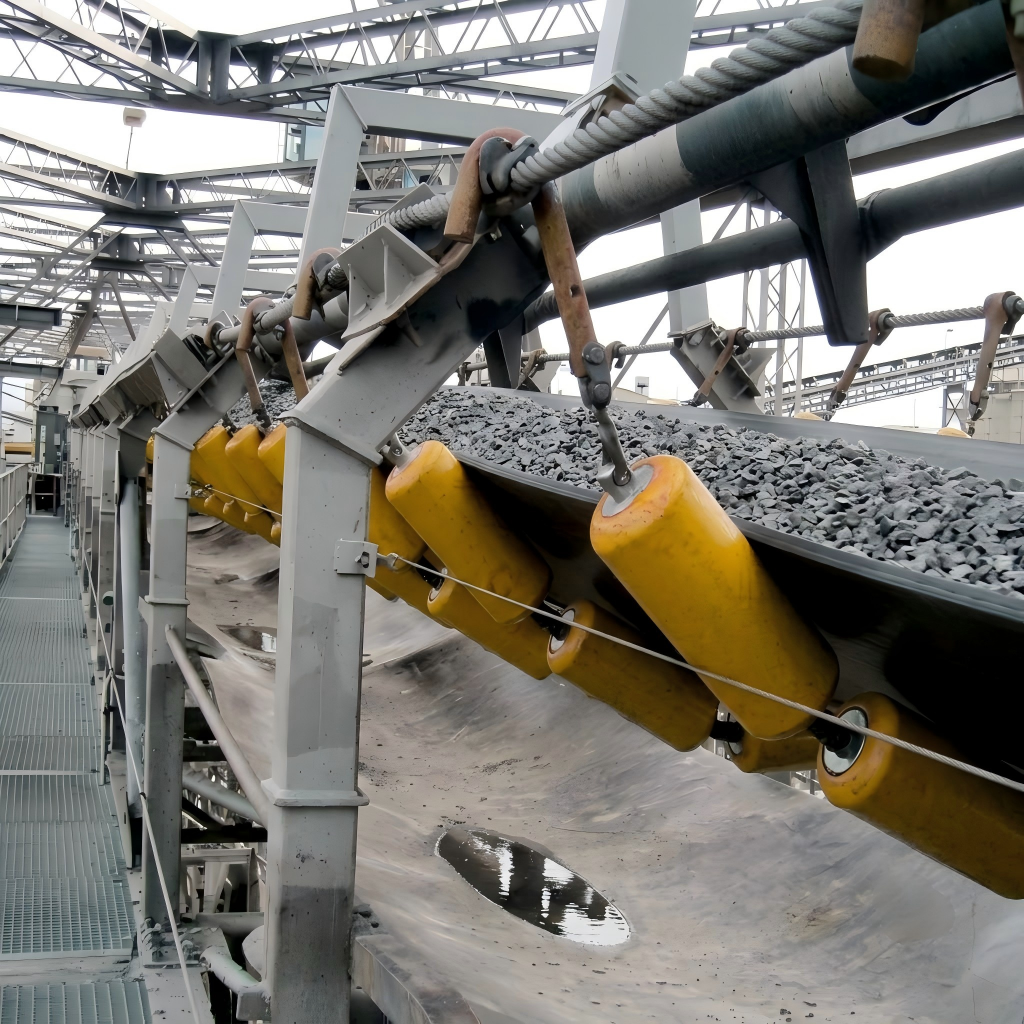
This entire assembly is suspended from the conveyor structure via quick-release hooks or lugs. Because it lacks a rigid supporting bracket underneath, the garland idler hangs in a natural "catenary" (U-shape) curve, adapting dynamically to the weight and profile of the loaded belt.
Key Advantages of Garland Idlers in Bulk Handling
Why do heavy-industry system integrators prefer suspended idlers over traditional fixed frames? The answer lies in their unique mechanical flexibility.
1. Exceptional Impact Absorption
When massive rocks drop onto a conveyor belt, rigid idler frames absorb the full shock, leading to bent shafts, crushed bearings, and torn belt covers. Garland idlers act like a mechanical suspension system. Their articulated joints allow the rollers to "give" and flex downward upon impact, dissipating the kinetic energy and significantly extending the lifespan of both the belt and the bearings.2. Automatic Belt Tracking & Self-Centering
Uneven loading causes conveyor belts to wander off-center, leading to catastrophic edge wear and material spillage. Because garland idlers are suspended flexibly, they naturally swing and adjust their troughing angle based on the load's center of gravity. This dynamic movement automatically guides the belt back to the center of the conveyor, acting as a built-in training mechanism.3. Rapid Installation and Maintenance
Maintaining rigid idlers often requires lifting the heavy belt and unbolting rusted frames—a time-consuming and dangerous task. Garland idlers are hung using simple pin or hook connections. If a roller fails, a maintenance worker can simply unhook the entire assembly and swap it out in a fraction of the time, drastically reducing plant downtime.4. Increased Conveying Capacity
The flexible linkage allows garland idlers to achieve much deeper troughing angles (up to 45° or 60°) compared to rigid frames. A deeper trough increases the cross-sectional area of the belt, allowing you to transport a significantly larger volume of bulk material without spillage.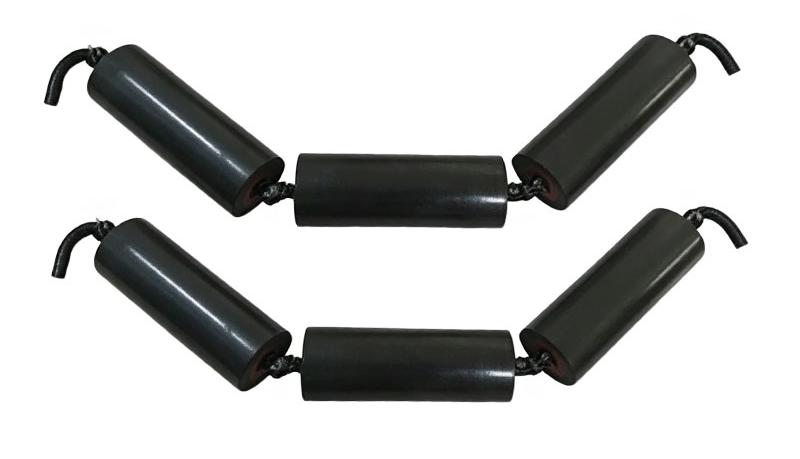
Garland Idlers vs. Standard Rigid Idlers
| Feature | Garland (Suspended) Idlers | Standard (Rigid) Idlers |
| Structure | Flexible, linked rollers hung from hooks. | Rollers fixed to a rigid steel frame. |
| Impact Resistance | Excellent. Flexes to absorb shock. | Poor. Rigid frame takes the full impact. |
| Belt Tracking | High. Self-centers dynamically. | Low. Requires separate training idlers. |
| Maintenance | Fast. Quick-release hook replacement. | Slow. Requires unbolting frames. |
| Best For | Mining, large lumps, high-speed bulk transport. | Standard factory automation, light/medium duty. |
Where Are Garland Idlers Used?
Because of their mobility and heavy-duty resilience, Garland roller assemblies are the standard choice for:- Mining & Quarrying: Transporting uncrushed ore and heavy aggregate.
- Coal Handling Plants: High-capacity, long-distance overland conveyors.
- Port Terminals: Loading and unloading bulk ships with high throughput.
- Mobile Crushers & Stackers: Where conveyor structures are lightweight, and space is limited.
Upgrade Your Conveyor with AstraRoll Industrial Garland Idlers
At AstraRoll, we understand that minimizing downtime and protecting your belt are your top priorities. Our Industrial Garland Idlers for Heavy-Duty Belt Conveyors are engineered to withstand the most punishing industrial environments.
Constructed with heavy-wall seamless steel tubing, reinforced articulation links, and multi-stage labyrinth-sealed bearings, our suspended idlers guarantee long-lasting, maintenance-free performance under extreme loads.
Ready to eliminate belt spillage and impact damage? Explore our Heavy-Duty Garland Idlers today or contact our engineering team to customize a suspension solution for your bulk handling system.
- Explosion proof electric roller
- The Silent Quality Drivers: How High-Precision Rollers Shape Release Film Perfor
- What Are the Benefits of Hard Anodized Aluminum Guide Rollers?
- Why High-End Manufacturing Cares So Much About Roller Surface Precision
- Why Your Heavy-Duty Conveyor Needs Garland Idler Rollers
- What are the differences and applications between anilox roller and embossing ro
- Why Teflon Coated Aluminum Rollers Are the Best Choice for Non-Stick Web Handlin
- How to Eliminate Static Accumulation and Defect Risks in High-Speed Battery Sepa