
Phone: +86 15398058207
E-mail: sales@astraroll.com
Add: Room 603 Building C, The Huixin Center, Zhangba One Road, Yanta Zone, Xi'an City, Shaanxi Province, China
What are the differences and applications between anilox roller and embossing roller?
This article provides an in-depth technical analysis of these two functional rollers to help you make the most accurate decision for your production line line-up.
I. Anilox Roller:
1. Overview & Core Function
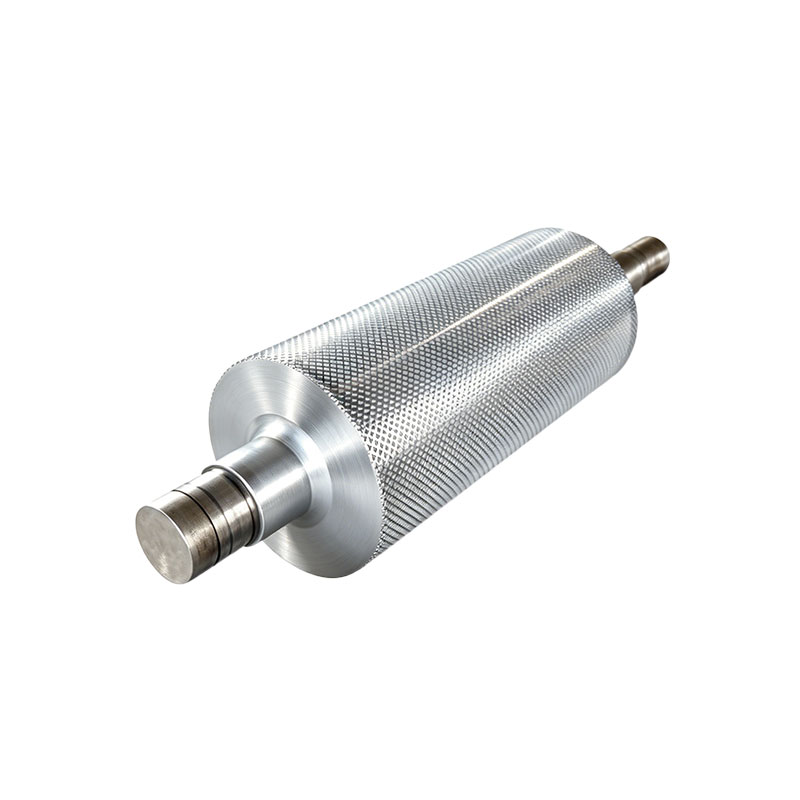
Anilox rollers primarily play the role of "precise metering and fluid transfer." Their surfaces are engraved with millions of microscopic dimples known as "cells." The core function of anilox rollers is to hold a specific volume of fluid (such as ink, coatings, or adhesives) within these cells during rotation and transfer it uniformly, quantitatively, and at a micron-level thickness onto a substrate or another medium.
2. Characteristics & Technical Attributes
Extreme Precision: The performance of anilox rollers is governed by their screen count (LPI, Lines Per Inch) and cell volume (BCM, Billion Cubic Microns per square inch). Geometric and dimensional tolerances are tightly controlled within the micron range.
Ultra-High Wear Resistance: Because they endure high-frequency friction from doctor blades and exposure to chemically corrosive fluids, their surfaces must possess exceptional hardness.
Superior Transfer Uniformity: They guarantee that fluids are laid down evenly without misting or uneven coating defects, even at high operating speeds.
3. Base Materials & Surface Engineering
Base Substrate: Typically constructed from high-grade seamless steel tubes or lightweight aluminum alloys (tailored for low-rotational-inertia demands).
Surface Coating: Modern standards heavily favor laser-engraved ceramic anilox rollers. The substrate undergoes thermal spraying to deposit a dense layer of chromium oxide (Cr2O3) ceramic, which is then laser-etched to form cells, achieving a surface hardness exceeding 1200HV. Traditional anilox rollers may also utilize hard-chrome electroplating.
4. Specific Target Industries
Flexographic Printing: Serving as the central ink-metering component for corrugated boxes, labels, and flexible packaging (such as food-grade plastic films).
Precision Coating Lines: Essential for applying active material slurries in lithium-ion battery electrode coating, optical films, solar backsheets, and adhesive tape manufacturing.
Corrugated Board Production: Employed for high-speed gluing and printing setups within automated corrugated box production lines.
II. Embossing Roller:
1. Overview & Core Function
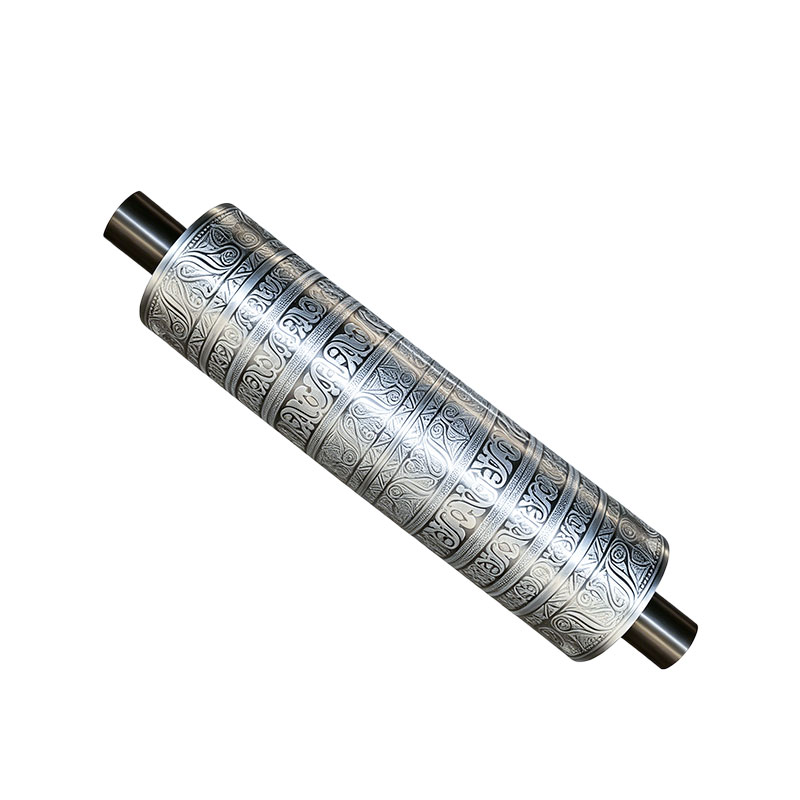
Completely divergent from the fluid-transfer mechanism of anilox rollers, embossing rollers function to "impart three-dimensional textures and structural deformations." The surface of an embossing roller is engraved with macro-scale, continuous geometric patterns or artistic textures. Its core function is to apply intense mechanical pressure (pressure impression) directly onto soft substrates (such as paper, plastics, leather, and metal foils) to press out structural patterns, alter material gloss, or enhance haptic qualities.
2. Characteristics & Technical Attributes
Macroscopic Visual and Tactile Shaping: The textures are clearly visible to the naked eye with depths significantly greater than anilox cells, emphasizing aesthetic appeal, anti-slip properties, or specific physical characteristics like water absorption.
High Compressive and Structural Rigidity: The roller body must withstand immense linear nip pressures to permanently set the textures without undergoing any micro-deformation.
High Degree of Customization: Surface patterns are entirely custom-engineered based on client specifications (e.g., leather grain, wood grain, micro-dots, textile patterns, or anti-counterfeiting logos).
3. Materials & Processing Crafts
Roller Body Material: The vast majority are forged from premium alloy steel (such as 42CrMo or 38CrMoAl) or heavy-wall seamless steel pipes to sustain extreme mechanical stresses.
Surface Finishing: Patterns are engraved utilizing mechanical rolling, CNC computer engraving, or chemical etching. The finished surfaces undergo hard chrome plating, laser quenching, or nitriding treatments to maximize wear resistance and compressive strength.
4. Specific Target Industries
Tissue & Hygiene Products: Used for embossing toilet paper, kitchen towels, and napkins (to increase bulk and water absorbency), as well as texturing the top sheets of diapers and sanitary napkins.
Leather & Textiles: Imparting grain textures onto automotive interior leather, synthetic sofa leather, PVC flooring, and drapery textiles.
Plastics & Packaging Industry: Manufacturing embossed cellophane, decorative packaging aluminum foils, and frosted or decorative textures on plastic packaging boxes.
Construction & Decoration Materials: Pressing realistic wood or brick grain textures onto Wood-Plastic Composites (WPC), aluminum ceiling panels, and wallpapers.
III. Conclusion: How to Choose the Right Roller for Your Production Line?
| Comparison Metric | Anilox Roller | Embossing Roller |
| Core Objective | Micron-level transfer of fluids (inks, coatings, adhesives) | Mechanical replication of macro 3D textures (patterns, haptics) |
| Working Principle | Relies on recessed cells to carry and release fluid | Relies on raised/recessed patterns to compress material |
| Dominant Materials | Steel/aluminum core + laser-engraved chromium oxide ceramic layer | High-strength alloy steel + chemical etching/CNC engraving with hard chrome |
| Surface Feature | Microscopic geometric cells invisible to the naked eye (high screen count) | Macroscopic decorative or functional patterns clearly visible to the eye |
If your processing core centers around "coating more uniformly and controlling fluid volumes more precisely," you require a high-precision anilox roller. If your processing goal is "giving the product a three-dimensional touch, changing its exterior structures, or creating aesthetic textures," a high-rigidity embossing roller is your correct choice.
As a premier global manufacturer of industrial precision rollers, AstraRoll supports comprehensive customization for high-screen-count laser-engraved ceramic anilox rollers and high-hardness tailored embossing rollers.
If you have any technical questions regarding material selection, pattern design, or thermodynamic matrix configurations, contact our engineering support team today!
- Explosion proof electric roller
- The Silent Quality Drivers: How High-Precision Rollers Shape Release Film Perfor
- What Are the Benefits of Hard Anodized Aluminum Guide Rollers?
- Why High-End Manufacturing Cares So Much About Roller Surface Precision
- Why Your Heavy-Duty Conveyor Needs Garland Idler Rollers
- What are the differences and applications between anilox roller and embossing ro
- Why Teflon Coated Aluminum Rollers Are the Best Choice for Non-Stick Web Handlin
- How to Eliminate Static Accumulation and Defect Risks in High-Speed Battery Sepa