
Phone: +86 15398058207
E-mail: sales@astraroll.com
Add: Room 603 Building C, The Huixin Center, Zhangba One Road, Yanta Zone, Xi'an City, Shaanxi Province, China
Industrial Brush Rollers Factory
Industrial brush rollers are more than simple brushes. They are engineered components made from a metal shaft, a filament attachment body such as a plastic or nylon tube, and the brush filaments themselves. Because the shaft, attachment body, filament material, and bristle pattern can all be customized, brush rollers are used across many manufacturing and processing industries.
At AstraRoll, we help customers match the brush roller design to the actual working conditions - whether the goal is cleaning, polishing, dust removal, descaling, or surface finishing.
How Industrial Brush Rollers Are Made
Industrial brush rollers commonly use a 45# carbon steel shaft or 201, 202, or 304 stainless steel shaft. The shaft is cut to the required size, turned on a machine, welded, reinforced, and straightened as needed. The roller core is then formed on a lathe. Depending on the design, the core may be sleeved or placed into a mold for direct injection molding.
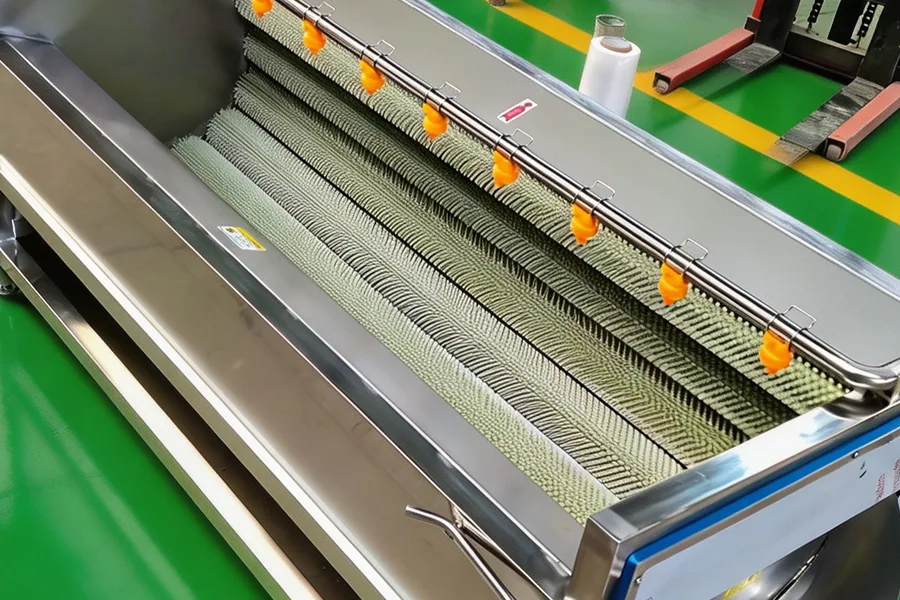
After the basic roller body is formed, it is precision-turned to the drawing dimensions. Further processing may include fine grinding of rubber-covered cores and machining keyways or interfaces on the shaft ends.
The overall production process typically includes:
- Shaft turning
- Sleeving or casting
- Hole drilling / tuft hole preparation
- Tufting - mechanical tufting or manual tufting for special-shaped rollers
- Bristle trimming
For highly special-shaped brush rollers where mechanical tufting cannot be completed, manual tufting can be used.
AstraRoll Custom Specifications
Industrial brush rollers can be customized across a wide size range:
- Inner diameter: ф8–ф150 mm
- Outer diameter: ф25–ф800 mm
- Length: L10–L5000 mm
- Maximum outer diameter: up to 800 mm
- Maximum length: up to 5000 mm
Precision requirements can include:
- Coaxiality of brush body outer diameter and inner bore: outer diameter ≤0.05 mm; inner bore ≤0.04 mm
- Bristle density:
- ф0.5–0.7 mm: ≥3000 bristles/dm²
- ф0.7–1.0 mm: ≥2500 bristles/dm²
AstraRoll can support customization based on the application, mounting interface, shaft material, filament type, and required surface effect.
Brush Roller Construction
A brush roller generally includes the shaft, bearings, brush body, and filaments. Bearings and other components can also be customized according to special requirements.
The filament attachment body is often made by PP casting. Depending on the application, AstraRoll can discuss custom options such as antibacterial nylon, plastic steel, and high-temperature materials.
Common filament options include:
- Nylon filament: diameter ф0.06–ф15 mm
- Pig bristle
- Horsehair
- Abrasive filament
- Sisal
- Antibacterial filament
- Anti-static nylon filament
- High-temperature filament
How Brush Rollers Are Classified
Brush rollers can be classified in different ways:
- By bristle arrangement and trim profile: standard brush rollers and special-shaped brush rollers.
- By filament material: horsehair brush rollers, pig bristle brush rollers, sisal brush rollers, metal wire brush rollers, plastic filament brush rollers, nylon brush rollers, abrasive filament brush rollers, and others.
Common Brush Roller Types and Applications
1. Nylon Filament Brush Rollers
Nylon brush rollers offer high elasticity, high wear resistance, and heat resistance. Food-grade nylon filaments are widely used in the food industry because they are non-toxic and suitable for food-contact applications. Their wear resistance and heat resistance also make them popular in textile and printing and dyeing industries. Their elasticity supports glass cleaning and other cleaning applications.
2. Abrasive Filament Brush Rollers
Abrasive filaments contain special materials such as diamond grit or other abrasives, giving them greater wear resistance than standard nylon in many demanding applications. They are acid- and alkali-resistant and are commonly used in the steel and hardware industries for cleaning, rust removal, and oxide scale removal; initial steel processing; galvanized steel production; color-coated steel; deburring and polishing of castings; and polishing and mirror-finish processing of steel strip, aluminum strip, and copper strip.
Abrasive nylon filament is typically based on nylon 612 combined with 20–40% silicon carbide or aluminum oxide, drawn into a special bristle. This provides high strength, rigidity, fatigue resistance, chemical resistance, and a high melting point.
3. Sisal Brush Rollers
Traditional nylon and PP filaments can generate static electricity when a brush roller runs at high speed, which may reduce polishing and dust removal effectiveness. Natural Mexican sisal can help solve static problems during operation while providing good dust removal and durability. Because it is a natural material, sisal is often used for roughing and polishing in furniture board pre-treatment, as well as for ceramic tile polishing and other applications.
4. Horsehair Brush Rollers
Horsehair brush rollers can offer improved application results compared with ordinary brush rollers. They are often used for surface polishing, waxing, and glaze sealing on leather, flooring, and furniture, with good wear resistance and corrosion resistance.
5. Plastic Filament Brush Rollers
Plastic filament brush rollers are used for stainless steel surface cleaning and polishing; copper strip and steel strip surface polishing; thin copper surface cleaning, oxide scale removal, and polishing; removal of surface oxide scale after blackening processes; tubular part surface cleaning and grinding; and snow clearing on city roads and highways.
6. Pig Bristle Brush Rollers
Pig bristle brush rollers are mainly used in special processes requiring high-temperature resistance, good elasticity, high hardness, and wear resistance—for example, singeing machines and slitting machines in the textile industry.
Five Key Industries for Brush Rollers
Industrial brush rollers are widely used in:
- Food processing
- Glass and ceramics
- Metal processing
- Polishing and cleaning
- Textile machinery
They are also used in cleaning machinery, printing and dyeing machinery, initial and deep processing of steel plates, furniture manufacturing, food machinery including vegetable processing, and sanitation machinery.
Handling and Use Notes
To avoid unnecessary quality concerns and extend service life, brush rollers should be handled carefully before use:
- Clean and package before shipment. Tufting and trimming generate loose bristles. Bristles should be combed and loose material removed before packaging.
- Use proper packaging during transport. Boxes or bags help prevent dust and foreign matter from contaminating the filaments.
- Do not leave bristles exposed on the floor or in contaminated environments before use.
- Support the shaft ends with pads to help keep the bristles straight and clean.
At AstraRoll, we believe the right brush roller starts with a clear understanding of the application, the workpiece, the operating environment, and the required finish. If you need help selecting or customizing an industrial brush roller, contact AstraRoll to discuss your requirements.
- Industrial Brush Rollers Factory
- Three common industrial applications of brush rollers
- Is Hard Chrome Plating Enough for Stretch Rolls?
- Explosion proof electric roller
- The Silent Quality Drivers: How High-Precision Rollers Shape Release Film Perfor
- What Are the Benefits of Hard Anodized Aluminum Guide Rollers?
- Why High-End Manufacturing Cares So Much About Roller Surface Precision
- Why Your Heavy-Duty Conveyor Needs Garland Idler Rollers