
Phone: +86 15398058207
E-mail: sales@astraroll.com
Add: Room 603 Building C, The Huixin Center, Zhangba One Road, Yanta Zone, Xi'an City, Shaanxi Province, China
The Precision Manufacturing Process of Polyurethane Forklift Wheel
When subjected to high-frequency start-stops, sharp turns, or complex environments like cold storage and high humidity, standard rubber wheels or low-grade lagged wheels are highly susceptible to excessive heat generation leading to internal blowouts, delamination (debonding), or cracking. How is a truly wear-resistant, high-load-bearing, non-delaminating polyurethane forklift wheel engineered? This technical guide provides an inside look at AstraRoll's heavy-duty lagging manufacturing process.
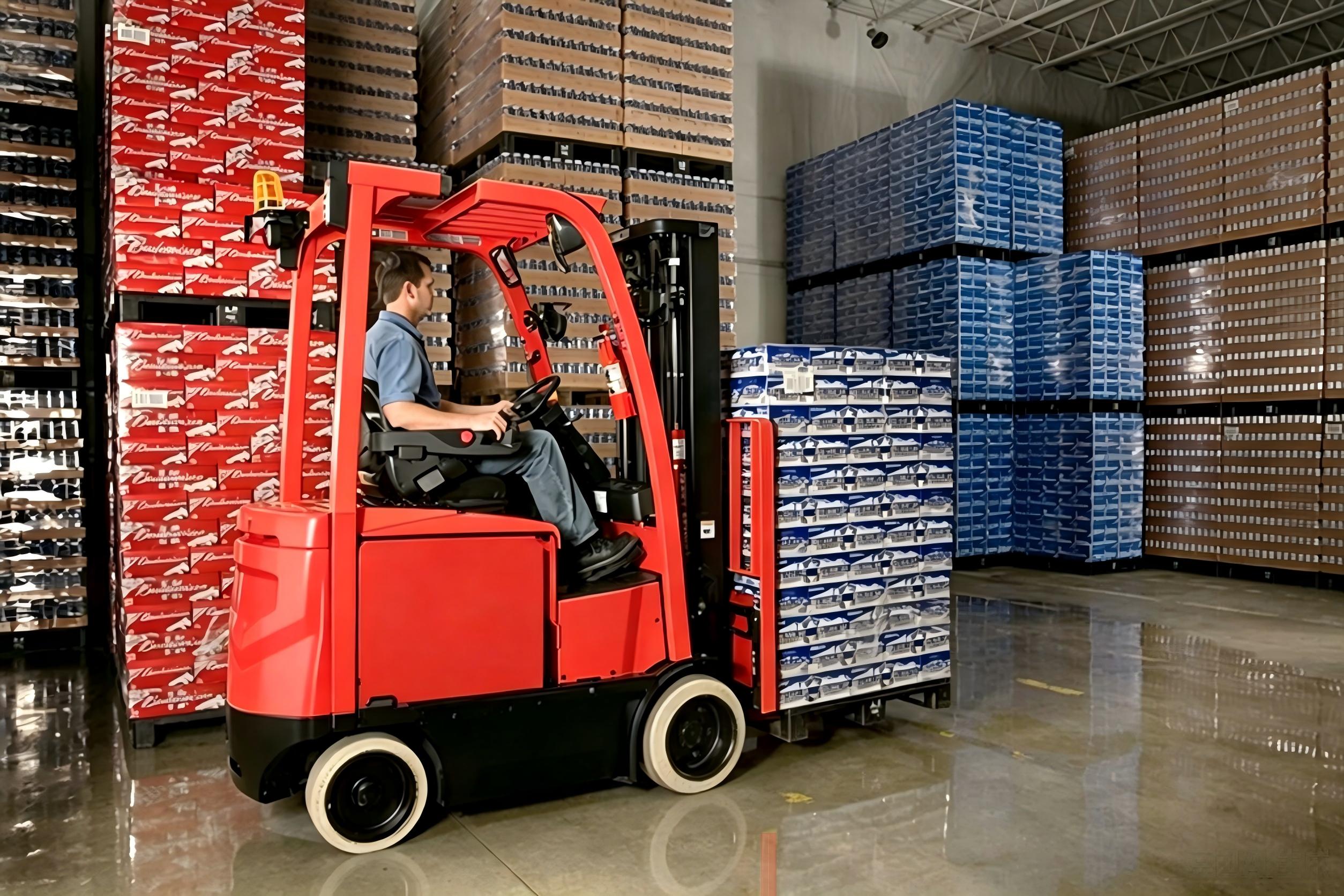
I. Why Choose Polyurethane (PU) Over Rubber for Forklift Wheels?
In B2B industrial procurement, physical material parameters dictate ROI. Compared to traditional rubber, high-performance polyurethane elastomers offer distinct, structural advantages:
Extreme Load Capacity: Polyurethane possesses an exceptionally high Young's modulus and mechanical strength. Under identical diameters, its load-bearing capability is several times that of standard rubber, effortlessly handling static and dynamic heavy loads ranging from 3 to over 10 tons.
Low Rolling Resistance & Minimal Dynamic Heat Build-up: As a forklift wheel travels at high speeds, continuous compression causes internal heat accumulation. Premium polyurethane formulations (such as NDI systems) feature ultra-low dynamic heat generation, systematically preventing thermal fatigue and subsequent "chemical degradation."
Premium Floor Protection: Polyurethane runs quietly and leaves no black marks, sheds no debris, and prevents wear and tear on expensive factory epoxy or cured concrete floors during prolonged heavy rolling.
II. The Golden 9-Step Process: AstraRoll's Polyurethane Wheel Lagging Workflow
In AstraRoll's manufacturing facility, transforming a raw metal core into a high-precision, heavy-duty lagged wheel requires 9 strictly digitized control steps:
1. Precision Core Machining & Dimension Verification
Whether it is a brand-new custom steel/cast iron core or an old core sent back by a client for stripping and refurbishing, it must first undergo micro-turning on high-precision CNC lathes. This ensures that the concentricity of the bearing bore, face run-out, and the dimensions of the lagging section strictly match the engineering blueprints.
2. Comprehensive Chemical Degreasing & Cleaning
Machining processes leave residues of cutting oils, anti-rust fluids, or fingerprint smudges on the metal core. We utilize specialized industrial degreasers and ultrasonic cleaning equipment to thoroughly strip these contaminants, as even a microscopic trace of oil can trigger delamination later in the wheel's lifecycle.
3. High-Intensity Sandblasting / Shot Blasting
The clean metal core is moved into an automated blasting chamber, where corundum or steel grit is blasted at high pressure. This step completely eliminates microscopic oxide layers from the metal surface and creates a uniform micro-cellular honeycomb roughness, geometrically multiplying the bonding surface area.
4. Nano-Grade Primer & Adhesive Coating
Within a strict window following surface roughening, a highly experienced technician uniformly applies a layer of imported nano-grade metal-to-polyurethane chemical coupling agent (primer). This adhesive serves as a "chemical bridge" between the metal and the polyurethane, establishing irreversible covalent bonds at the molecular level.
5. Core Preheating & Temperature Stabilization
The coated metal core is placed inside an industrial oven for precise drying and preheating (typically heated to between 80°C and 100°C). This preheating ensures that the liquid polyurethane prepolymer does not undergo localized thermal shock upon contacting the metal, thereby guaranteeing uniform hardness and density throughout the entire elastomer layer.
6. Digital Multi-Component Liquid Casting
The preheated core is assembled with a precision-engineered mold. Utilizing an automated, multi-component polyurethane casting machine in a digitally monitored, dust-free environment, the precisely metered prepolymer, curatives, and modifying additives are blended at high speeds and injected into the mold cavity. AstraRoll's vacuum degasification system ensures the cast layer is 100% free of air bubbles, micro-voids, and impurities.
7. Thermostatically Controlled Heat Curing (Post-Curing)
Once the polyurethane reaches its initial gel state, the wheel—still inside its mold—is transferred to a large-scale, thermostatically controlled curing oven. Depending on the material system (such as standard CPU or premium NDI systems), it undergoes a staged secondary thermal vulcanization lasting 12 to 24 hours. This process allows the polyurethane molecular chains to achieve perfect cross-linking, bringing its hardness, resilience, and wear resistance to their theoretical peaks.
8. Precision Cylindrical Grinding & Tread Grooving
After complete vulcanization and natural cooling, the wheel is demolded. The raw lagged wheel is mounted onto a high-precision CNC cylindrical grinding machine to finish-grind the polyurethane tread, locking the radial run-out to $\leq 0.05\text{mm}$. For cold storage or wet floor environments, various custom tread patterns (such as herringbone or diamond drainage grooves) can be CNC-machined simultaneously.
9. Stringent Quality Inspection & Dynamic Balancing
Before any batch leaves the factory, it must pass durometer hardness checks, dimensional tolerance audits, and rigorous peel strength (adhesion) testing. For high-speed drive wheels, high-specification dynamic balancing is performed to guarantee that the forklift operates smoothly without vibration or tracking drift.
III. Conclusion: Why Partner with AstraRoll for Your Industrial Wheel Lagging?
When procuring industrial components, quality is the metric, but lifespan is the true ROI. AstraRoll possesses over a decade of experience serving global automation and heavy-duty logistics engineering sectors. We understand the value a premium forklift wheel brings to a facility's bottom line:
1:1 Drawing Flexible Customization: Whether you require non-standard drive wheels, load wheels, or castors for major international forklift brands or heavy-duty travel wheels for bespoke AGV/AMR platforms, we can execute a premium 1:1 replication based on your engineering drawings or original worn parts.
Extended Lifespan Guarantee, Elimination of Bond Failures: Thanks to our unique 9-step chemical bonding and digital post-curing workflow, the bonding strength between our elastomer and the metal core is 1.5 to 2 times higher than conventional marketplace products, drastically reducing your equipment downtime and replacement costs.
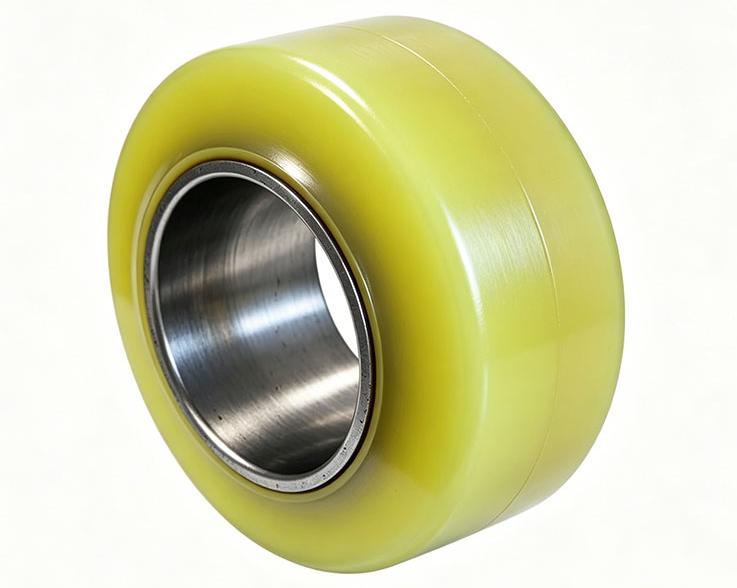
Are you experiencing premature wheel wear, bond delamination, or warehouse floor damage?
Contact the AstraRoll engineering expert team today. Share your equipment capacities, operating speeds, and facility conditions with us, and we will deliver a tailored, high-performance polyurethane heavy-duty lagging solution optimized for your operational ROI within 24 hours!
- Explosion proof electric roller
- The Silent Quality Drivers: How High-Precision Rollers Shape Release Film Perfor
- What Are the Benefits of Hard Anodized Aluminum Guide Rollers?
- Why High-End Manufacturing Cares So Much About Roller Surface Precision
- Why Your Heavy-Duty Conveyor Needs Garland Idler Rollers
- What are the differences and applications between anilox roller and embossing ro
- Why Teflon Coated Aluminum Rollers Are the Best Choice for Non-Stick Web Handlin
- How to Eliminate Static Accumulation and Defect Risks in High-Speed Battery Sepa