
Phone: +86 15398058207
E-mail: sales@astraroll.com
Add: Room 603 Building C, The Huixin Center, Zhangba One Road, Yanta Zone, Xi'an City, Shaanxi Province, China
Why Battery Factories are Upgrading to Carbon Fiber Rollers
The electric vehicle (EV) and energy storage markets are experiencing unprecedented growth, pushing battery manufacturers to scale production at record speeds. To meet this demand, gigafactories are upgrading their equipment to handle wider webs and faster run rates. However, this aggressive scaling has exposed a critical mechanical bottleneck in traditional manufacturing lines.
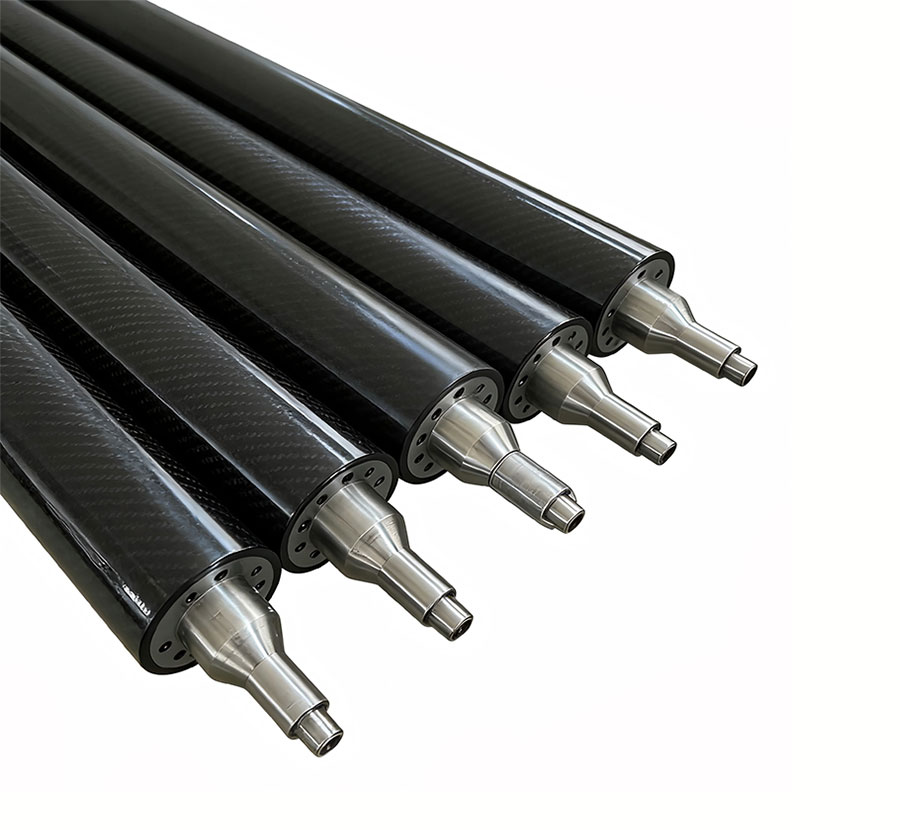
The Industry Pain Point: Reaching the Limits of Metal
Modern lithium-ion battery manufacturing involves processing ultra-thin copper foils, aluminum foils, and separator films—often just a few microns thick. As coating lines expand to widths of 1,000mm to 1,500mm to increase throughput, traditional steel and aluminum rollers are failing to keep up.
Heavy metal rollers suffer from sagging and deflection over long spans. This bending causes uneven tension across the web, leading to wrinkles, material stretching, and ultimately, uneven battery slurry coating. Furthermore, the massive weight of metal rollers creates high rotational inertia. When the manufacturing equipment accelerates or decelerates, heavy rollers cannot react fast enough, causing the delicate battery foils to slip, scratch, or snap entirely.
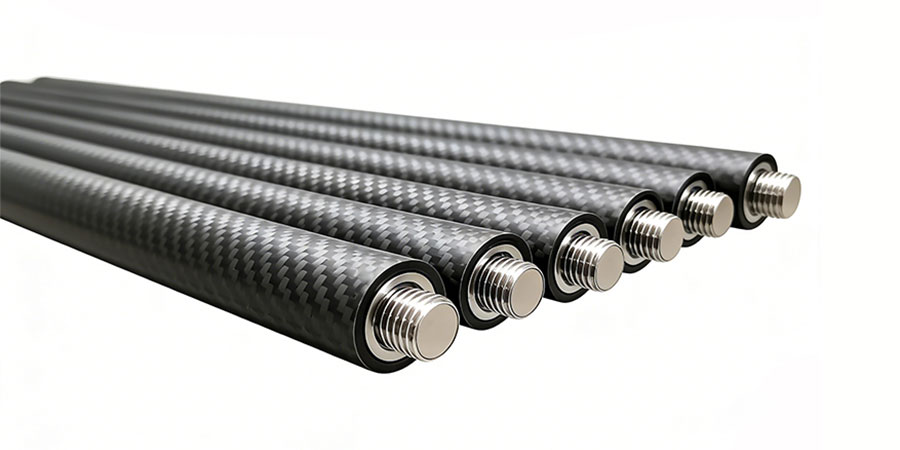
Applications in Battery Manufacturing
To overcome these physical limitations, the industry is rapidly transitioning to Carbon Fiber Reinforced Polymer (CFRP) Rollers. In a modern battery plant, carbon fiber rollers are now deployed in the most critical stages of production:
Electrode Coating Lines: Used as guide rollers to ensure absolute flatness before and after the slurry is applied.
Slitting Machines: Used to maintain perfect tension as wide master rolls are cut into narrower strips.
Winding and Calendering: Deployed where frequent starts, stops, and precise speed synchronization are mandatory.
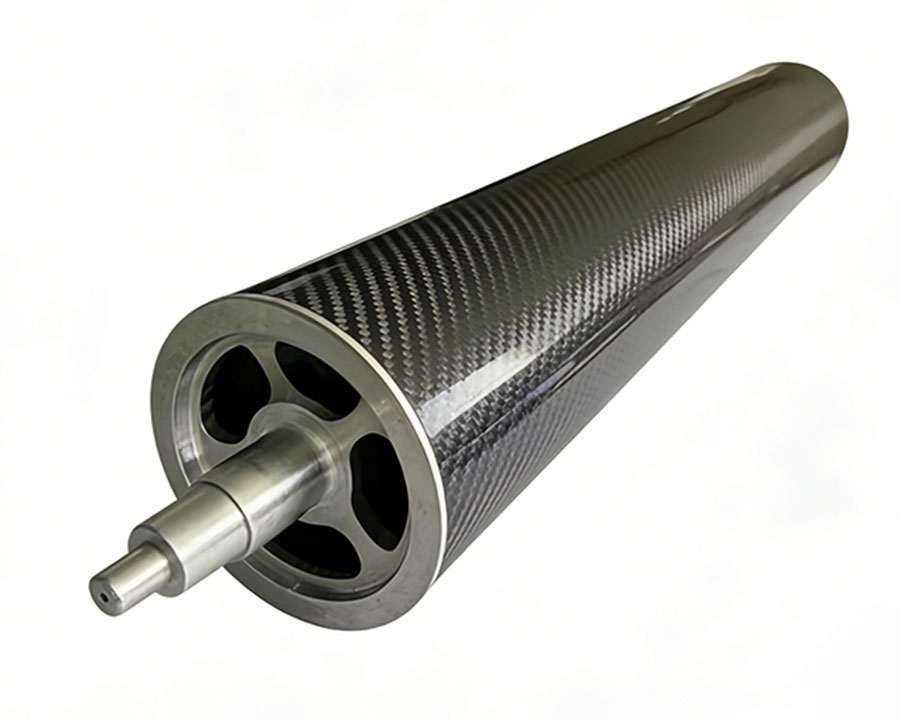
The Carbon Fiber Advantage
Upgrading to carbon fiber rollers provides a massive leap in mechanical performance, directly impacting the quality and output of battery cells:
Ultra-High Stiffness (Zero Deflection): Carbon fiber has a significantly higher stiffness-to-weight ratio than steel. Even on ultra-wide coating lines, CFRP rollers remain perfectly straight. This absolute flatness guarantees that the active battery materials are coated with micron-level uniformity, which is crucial for battery safety and energy density.
Low Rotational Inertia: Weighing up to 75% less than steel and 50% less than aluminum, carbon fiber rollers require very little energy to spin. They start and stop in perfect synchronization with the web, providing flawless tension control and completely eliminating slip-scratches on fragile copper foils.
Vibration-Free High Speeds: Traditional rollers often hit a "critical speed" where they begin to vibrate violently, forcing engineers to cap production speeds. Carbon fiber rollers have a much higher natural frequency, allowing manufacturing machines to run 30% to 50% faster without any disruptive vibrations.
Zero Thermal Expansion: Unlike aluminum or steel, carbon fiber maintains its dimensions regardless of temperature changes. This ensures consistent precision in high-heat coating or drying processes, eliminating web drifting or tension variations caused by metal expansion.
Anti-Static & Chemical Resistance: Available with specialized surface treatments, carbon fiber rollers can be engineered to manage static buildup on separator films and easily resist the highly corrosive nature of battery slurries.
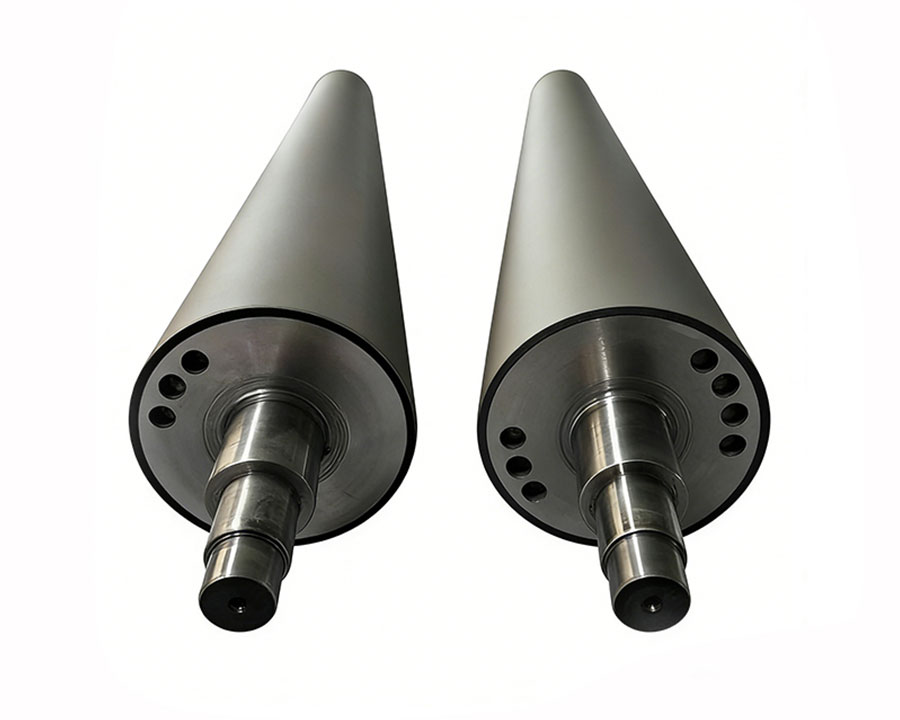
Why Choose Us as Your Roller Manufacturer?
Not all carbon fiber rollers are created equal, and the harsh environment of a battery plant requires specialized engineering.
We don't just supply standard carbon tubes; as a dedicated industrial roller manufacturer, we engineer precision components tailored specifically for lithium-ion manufacturing. We offer custom surface treatments, including tungsten carbide for extreme wear resistance against sharp foil edges, and specialized conductive coatings for superior static control. Every roller we produce undergoes strict dynamic balancing, ensuring plug-and-play integration into your high-speed lines.
Whether you are designing a next-generation gigafactory or upgrading an existing coating line to run faster and wider, we have the engineering expertise to help you eliminate web breaks and maximize your yield. Reach out to our engineering team today to discuss your specific width, tension, and manufacturing requirements.
- Explosion proof electric roller
- The Silent Quality Drivers: How High-Precision Rollers Shape Release Film Perfor
- What Are the Benefits of Hard Anodized Aluminum Guide Rollers?
- Why High-End Manufacturing Cares So Much About Roller Surface Precision
- Why Your Heavy-Duty Conveyor Needs Garland Idler Rollers
- What are the differences and applications between anilox roller and embossing ro
- Why Teflon Coated Aluminum Rollers Are the Best Choice for Non-Stick Web Handlin
- How to Eliminate Static Accumulation and Defect Risks in High-Speed Battery Sepa