
Phone: +86 15398058207
E-mail: sales@astraroll.com
Add: Room 603 Building C, The Huixin Center, Zhangba One Road, Yanta Zone, Xi'an City, Shaanxi Province, China
How Spiral Conveyors Work and How They Save Warehouse Floor Space
If you need to move products from the first floor to a mezzanine, you have a space problem. Standard incline belt conveyors are reliable, but they eat up a massive amount of your floor space. Freight elevators save space, but they are "stop-and-go," which kills your production speed.
The most practical solution is a Vertical Spiral Conveyor. Here is a simple breakdown of how they work, the math behind the space savings, and how to choose the right one for your product.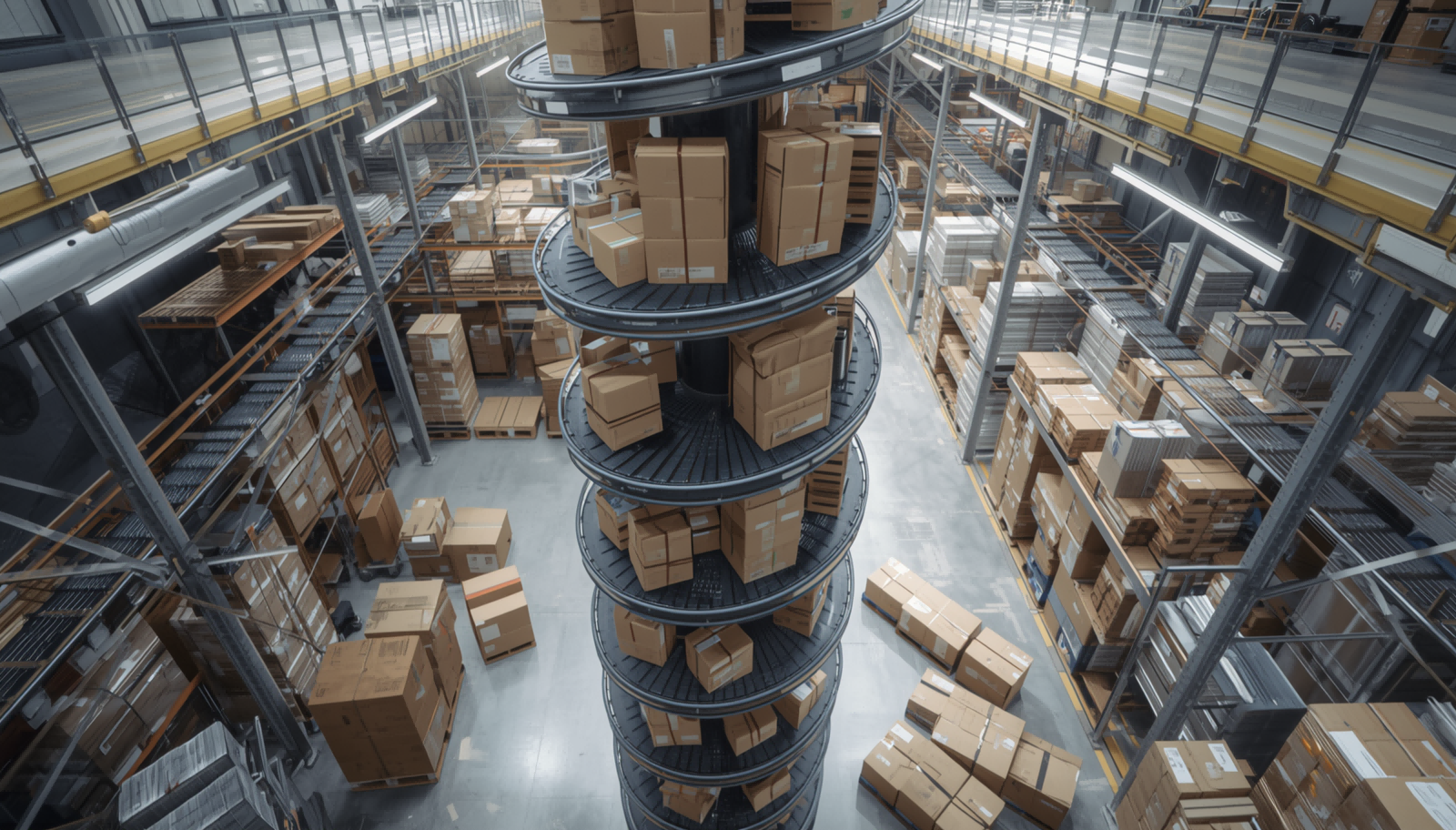
1. The Working Principle: How Does It Actually Work?
Think of a spiral conveyor as a moving sidewalk built like a spiral staircase. Instead of moving products in a long, straight ramp, it wraps the conveyor path around a single central pillar.Here is the mechanical breakdown:
- The Drive System: Unlike traditional lines with multiple drives, a spiral conveyor usually runs on a single, low-power motor. This motor pulls a continuous chain through a low-friction guide rail.
- The Slat Belt: Attached to this chain are overlapping plastic or metal slats. Because they overlap, they create a perfectly flat, gap-free surface that can bend around tight corners without opening up.
- Continuous Flow: Products enter at the bottom, ride the flat surface up the spiral, and exit at the top (or vice versa). There are no sensors waiting for an elevator car, and no stopping. It is continuous, smooth movement.
2. The Space-Saving Math (Incline vs. Spiral)
Let’s look at the actual footprint. Suppose you need to lift a box 15 feet (about 4.5 meters) into the air.- The Incline Belt Conveyor: To keep boxes from sliding backwards, the maximum safe angle for an incline conveyor is usually about 15 degrees. To reach 15 feet high at a 15-degree angle, your conveyor needs to be about 60 feet long on the floor.
- The Spiral Conveyor: A spiral goes straight up. It only requires a circular footprint of about 10 feet in diameter.
- The Result: You instantly reclaim roughly 50 feet of factory floor. You can use that space for forklift aisles, extra storage racks, or packaging machinery.
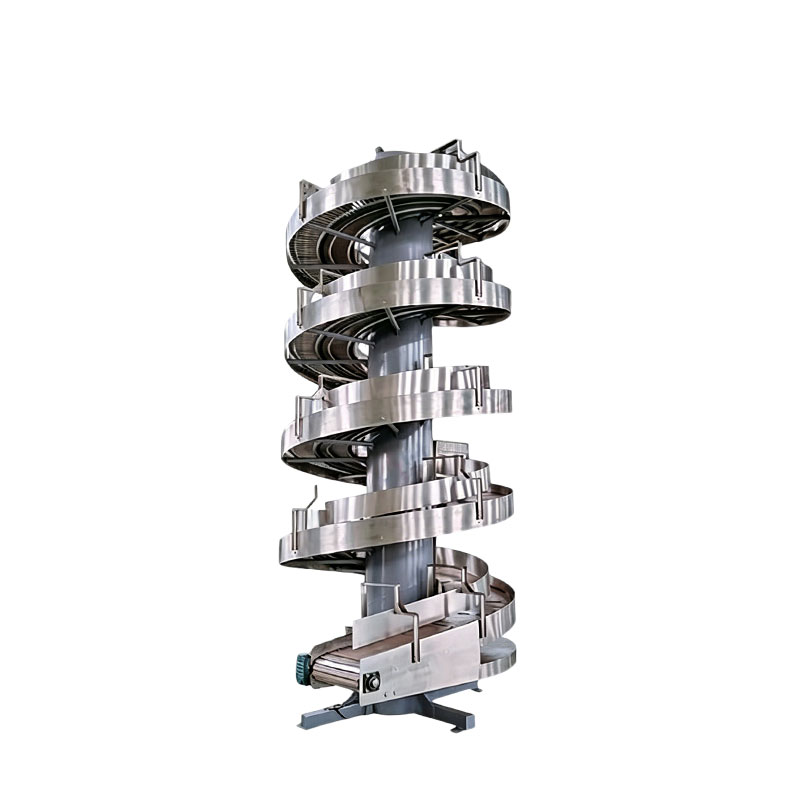
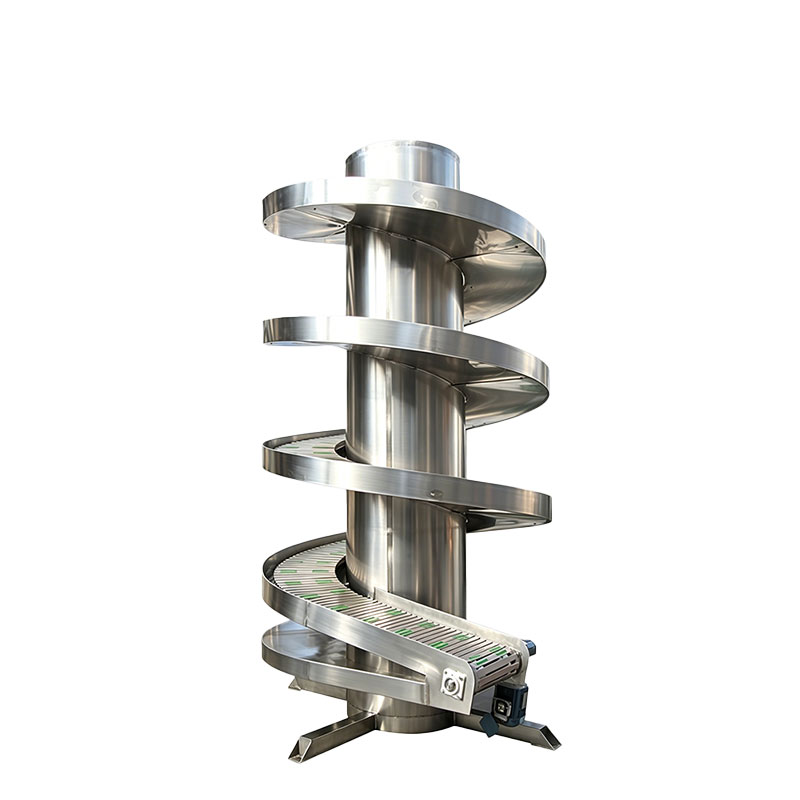
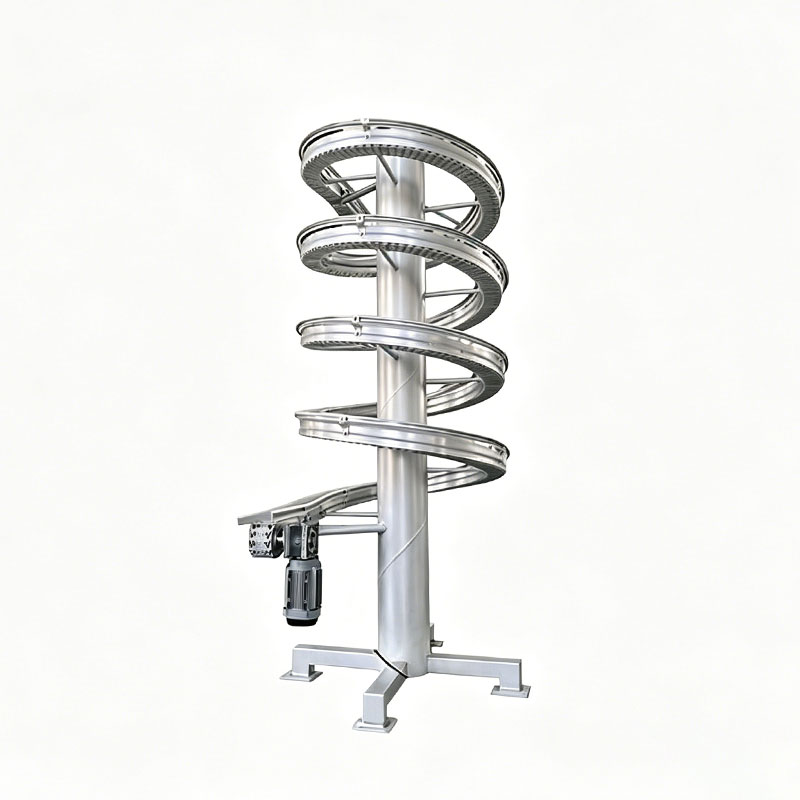
3. Matching the Spiral to Your Product (AstroRoll Solutions)
Not all spirals are built the same. The design of the belt must match what you are moving.
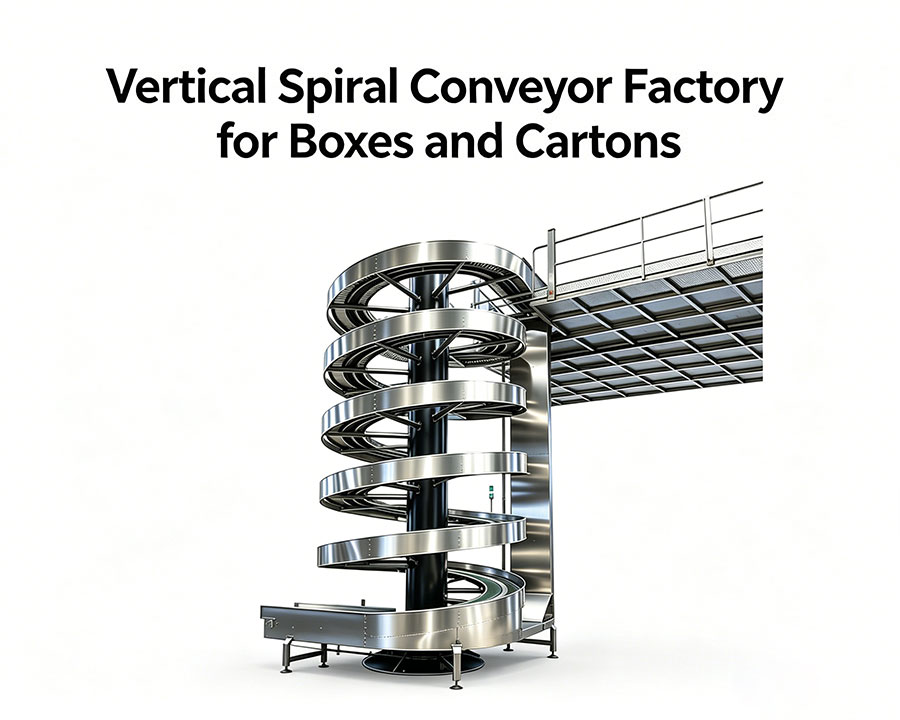
Scenario A: Moving Cardboard Boxes & Totes
If you are running an e-commerce warehouse, you are dealing with heavy boxes and plastic totes.
The Problem: Heavy boxes can slip on curves.
The Solution: We build our Vertical Spiral Conveyors for Boxes and Cartons with high-friction slat inserts. This grips the cardboard tightly, ensuring that thousands of boxes can flow continuously to the next floor without traffic jams or sliding.
Scenario B: Moving Glass Bottles & Cans
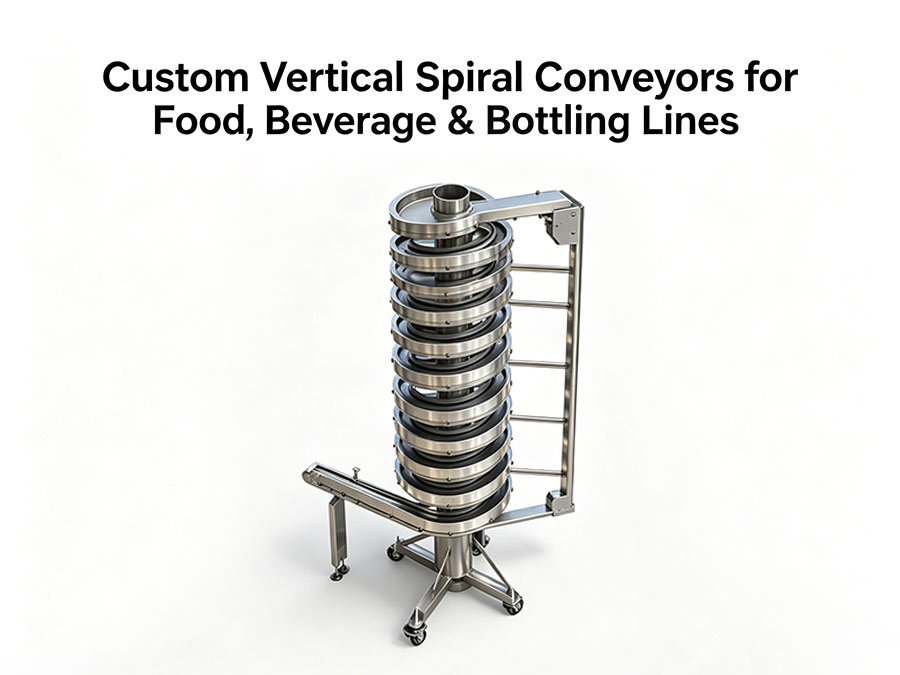
If you are in the food and beverage industry, you are dealing with tall, unstable containers.
The Problem: A tall PET bottle or glass jar will easily tip over and spill when transitioning onto a curve.
The Solution: AstroRoll engineers Custom Vertical Spiral Conveyors for Food & Beverage Lines using ultra-flat, micro-pitch belts. This "zero-tipping" technology keeps bottles perfectly upright. Plus, the open stainless-steel frame allows your crew to easily wash down the equipment with high-pressure hoses at the end of the shift.
Bottom Line
If your factory is out of floor space, don't expand the building—expand upwards. By utilizing the simple, continuous mechanical rotation of a spiral conveyor, you keep your products moving while taking your floor space back.
Need to go vertical? Contact AstroRoll's engineering team today to find out which spiral configuration fits your specific layout.
- The Silent Quality Drivers: How High-Precision Rollers Shape Release Film Perfor
- What Are the Benefits of Hard Anodized Aluminum Guide Rollers?
- Why High-End Manufacturing Cares So Much About Roller Surface Precision
- Why Your Heavy-Duty Conveyor Needs Garland Idler Rollers
- What are the differences and applications between anilox roller and embossing ro
- Why Teflon Coated Aluminum Rollers Are the Best Choice for Non-Stick Web Handlin
- How to Eliminate Static Accumulation and Defect Risks in High-Speed Battery Sepa
- What Are Hard Coated Rollers?