
Phone: +86 15398058207
E-mail: sales@astraroll.com
Add: Room 603 Building C, The Huixin Center, Zhangba One Road, Yanta Zone, Xi'an City, Shaanxi Province, China
What are the function of Three Different Types of Cleated Belt Conveyor?
A cleated belt conveyor is a type of conveyor belt equipped with vertical projections, called cleats, on its surface. These cleats prevent materials from sliding back or falling off during inclined or fast movement. Cleated belt conveyors are widely used in material handling, industrial automation, and applications requiring efficient vertical transport of bulk or irregular-shaped items.
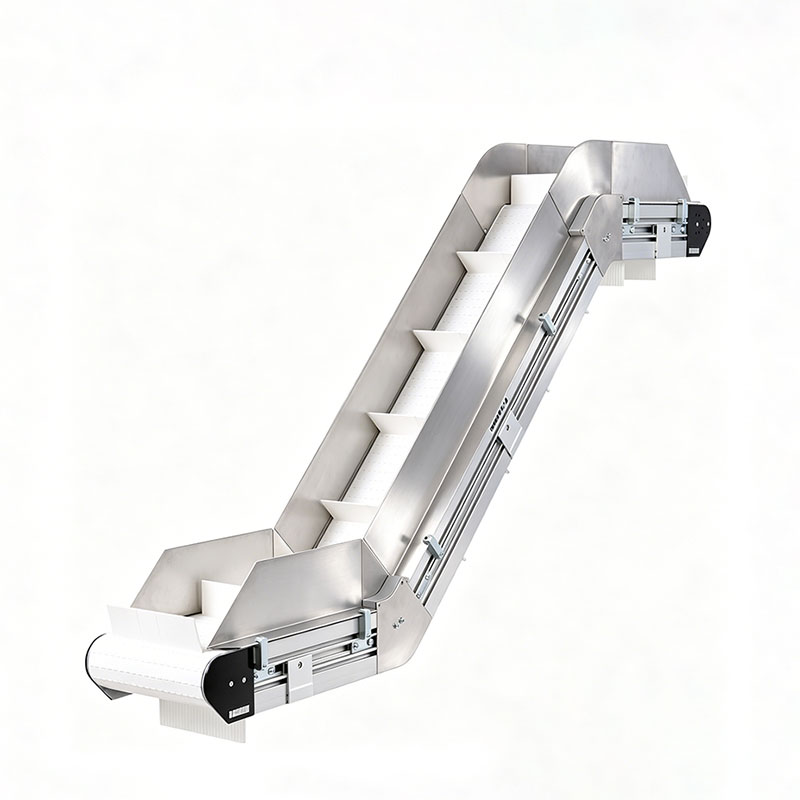
- Applications
Material Elevation: Prevents backward sliding on inclined conveyors.
Spacing Control: Maintains consistent gaps between items for automated processes.
Load Conveyance: Ensures stable transfer of heavy loads at various angles.
Special Material Handling: Suitable for bulk, granular, or irregular-shaped products.
- Common Materials
Cleated conveyor belts and their cleats are typically made from:
Rubber (SBR, NBR): Durable, wear-resistant, industrial-grade.
PVC: Food-grade, easy to clean, suitable for light-to-medium duty.
PU (Polyurethane): High wear resistance, food-safe.
Silicone: Heat or cold resistant.
Material choice depends on product characteristics, temperature, and industry standards (food, chemical, etc.).
- Functions & Typical Use Cases
| Function | Typical Use Case |
| Anti-slip | Inclined/steep conveyor belts |
| High throughput | Packaging, sorting, bulk material lifting |
| Positioning & spacing control | Automated sorting and packaging lines |
| Temperature / chemical resistance | Food processing, freezing, or heat treatment lines |
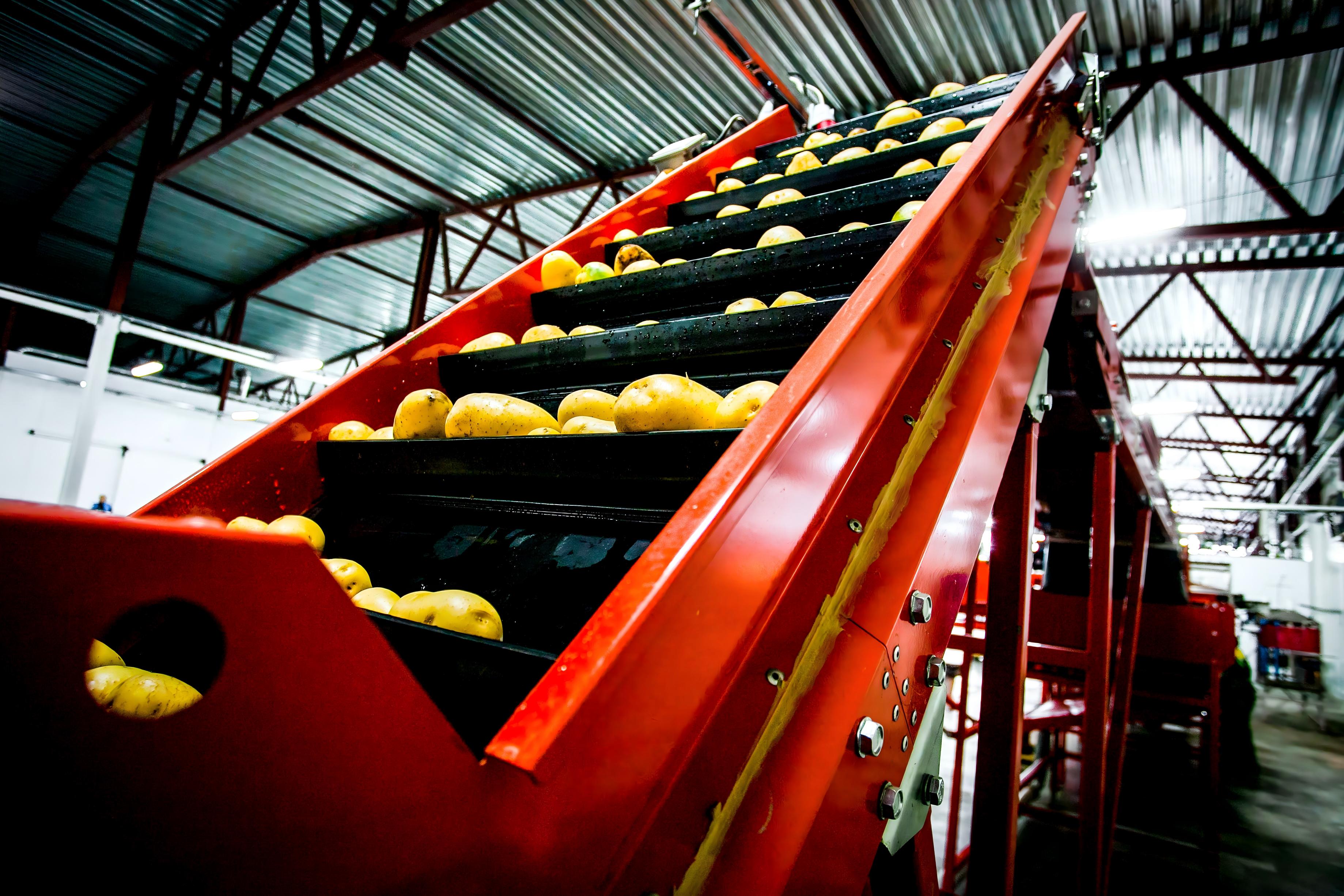
2. Different Types of Cleats (T-cleats, I-cleats, Scoop Cleats)
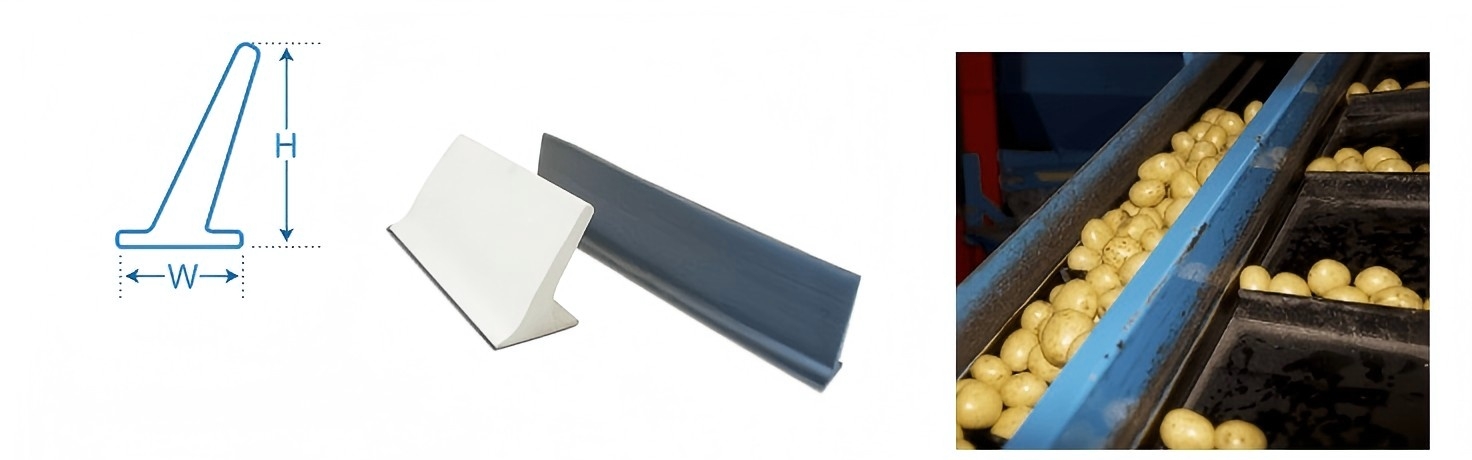
The most common and standard type of cleat.
Vertically mounted to provide strong anti-slip capability.
Can be thermally pressed or mechanically attached to conveyor belts.
Applications: Suitable for general inclined transport and light-to-medium weight materials.
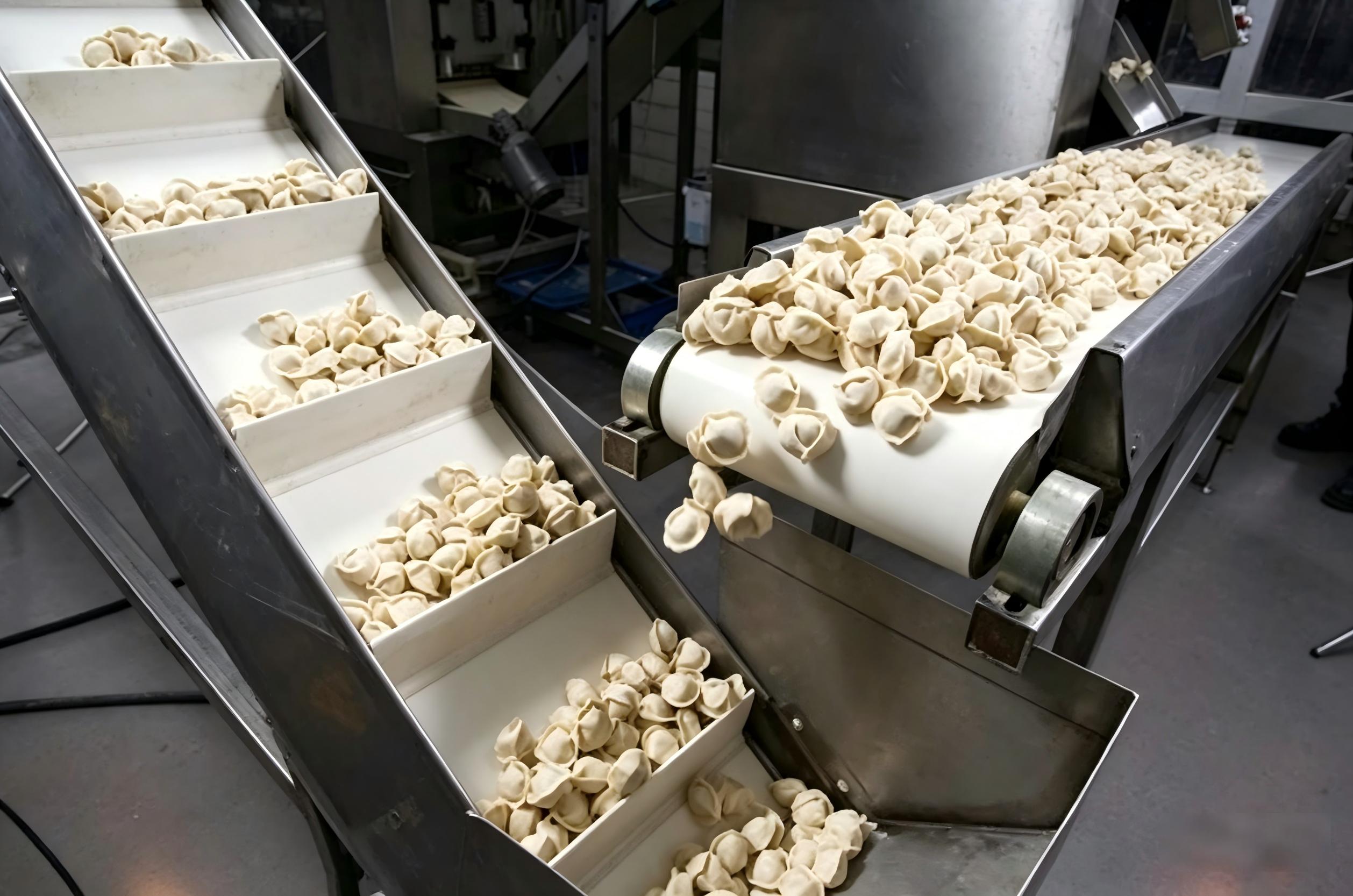
- I-Cleats
Similar to T-cleats but narrower and straight.
Ideal for light-duty or moderately inclined conveyors.
Typically supported by standard conveyor rollers.
Applications: Used for regular-shaped, lighter materials at medium inclines.
- Scoop Cleats
Curved or forward-tilted cleats shaped like a scoop.
Can “scoop” bulk material during transport, improving conveying efficiency.
Applications: Best for granular or free-flowing materials on steep inclines.
3. How to Choose the Right Cleat Type
Choosing the correct cleated conveyor belt depends on:
- Material Characteristics
Granular or powdered material: Scoop cleats improve capacity.
Regular-shaped items: T- or I-cleats are sufficient.
Slippery or heavy items: Consider taller or reinforced cleats.
- Conveyor Incline
Low incline (<15°): Standard T- or I-cleats.
Medium-to-high incline (15°–30°): Scoop cleats recommended.
Steep/vertical incline: Combine with sidewalls or specialized cleats.
- Load & Hygiene Requirements
Heavy or impact-prone materials: Thicker, wear-resistant cleats.
Food or clean-room applications: PU or PVC food-grade materials.
4. Comparison of Cleat Types: Features and Applications
Conclusion Cleated belt conveyors are essential for efficient industrial material handling. Choosing the right cleat type ensures optimal performance and reliability:
| Attribute | T-Cleats | I-Cleats | Scoop Cleats |
| Shape | Vertical, Broad base | Vertical, Narrower | Curved/forward-tilted |
| Conveying Capacity | Medium | Medium-light | High |
| Anti-slip | Good | Moderate | Excellent (scooped shape holds material) |
| Incline Suitability | Medium | Medium | Steep inclines |
| Material Type | Blocked or bulk | Blocked or light items | Granular, free-flowing |
| Installation | Standard | Standard |
Requires precise fabrication |
Notes: T-cleats and I-cleats are functionally similar; T-cleats have a wider base and greater stability. Scoop cleats excel at high-volume material handling on steep inclines.
T-Cleats: Universal, stable, versatile.
I-Cleats: Simple, light-duty, cost-effective.
Scoop Cleats: High-capacity, ideal for steep or granular material transport.
Consider material properties, conveyor incline, load, and environmental conditions when selecting cleats for your conveyor belt system. The correct choice improves efficiency, safety, and durability.
Contact us today to discuss your application parameters or explore our full catalog of industrial rubber rollers to find your perfect match.
- The Silent Quality Drivers: How High-Precision Rollers Shape Release Film Perfor
- What Are the Benefits of Hard Anodized Aluminum Guide Rollers?
- Why High-End Manufacturing Cares So Much About Roller Surface Precision
- Why Your Heavy-Duty Conveyor Needs Garland Idler Rollers
- What are the differences and applications between anilox roller and embossing ro
- Why Teflon Coated Aluminum Rollers Are the Best Choice for Non-Stick Web Handlin
- How to Eliminate Static Accumulation and Defect Risks in High-Speed Battery Sepa
- What Are Hard Coated Rollers?