
Phone: +86 15398058207
E-mail: sales@astraroll.com
Add: Room 603, Building C, Huixin Center, No.1 Zhangba Road, Yanta District, Xi'an, Shaanxi, China
5 Signs Your Industrial Rollers Need Maintenance or Replacement
Industrial rollers are the silent workhorses of modern material handling. They support conveyor belts, guide products, transmit torque and keep production lines running smoothly. When they are in good condition, you barely notice them. When they begin to fail, the symptoms can cascade quickly: belt mistracking, product damage, increased energy consumption, unexpected downtime and costly emergency repairs.
The challenge is that roller degradation is often gradual. A bearing wears slowly, a rubber cover hardens over time, a steel shell develops a subtle bend, and vibration increases inch by inch. By the time the problem becomes obvious, the damage may have spread to the belt, the frame or the drive system.
This guide covers the five most common warning signs that your industrial rollers need maintenance or replacement. For each sign, we explain what to look for, why it happens, what happens if you ignore it, and what you can do about it. We also provide a practical maintenance checklist and guidance on when to repair versus replace.
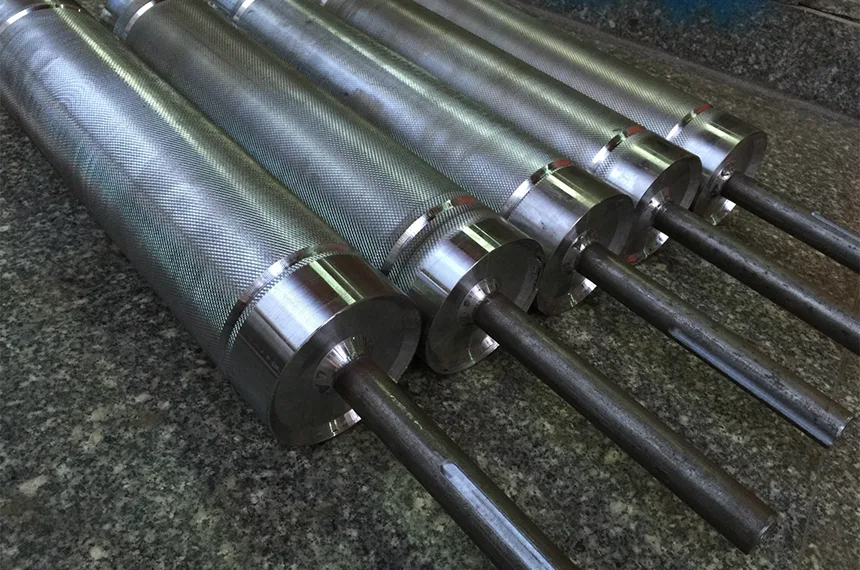
At AstraRoll, we have seen these failure modes across thousands of rollers in logistics, manufacturing, packaging, food processing, mining and web handling. Our goal is to help you catch problems early, extend roller life and keep your conveyor systems running reliably.
Sign 1: Abnormal Vibration or Shaking
What to look for: You may notice the conveyor frame shaking, the belt vibrating, products moving or bouncing on the line, or a low-frequency hum that changes with speed. In severe cases, the vibration can be felt through the floor or heard as a rhythmic thumping.
Why it happens: Vibration in industrial rollers usually comes from one of four sources:
- Imbalance: Dirt buildup, uneven wear, a damaged cover or a manufacturing defect can create an imbalance. At high speed, even a small imbalance generates significant centrifugal force.
- Bearing wear: Worn or contaminated bearings lose smooth rotation, causing vibration and noise.
- Shaft misalignment: If the roller shaft is not properly aligned with the frame or drive, the roller will run out of true.
- Bent or deflected roller: A roller that has been overloaded or impacted may bend, causing runout and vibration.
Why it matters: Vibration accelerates wear on bearings, seals, belts and frame components. It can cause chatter marks on products, reduce surface finish quality and increase noise levels. In high-speed web handling, vibration can ruin coating uniformity and print registration. Ignoring vibration often leads to premature bearing failure and unplanned downtime.
What to do: First, identify the source. Check for visible dirt or damage on the roller surface. Inspect the bearings for play or roughness. Verify shaft alignment and mounting. If the roller is bent or severely worn, replacement is usually the most economical solution. For high-speed applications, specify dynamically balanced rollers to ISO 21940 G2.5 or G1.0. AstraRoll's precision rollers are machined to tight concentricity tolerances and can be dynamically balanced for smooth operation.
Prevention: Keep rollers clean, inspect bearings regularly, avoid overloading and ensure proper alignment during installation. For critical high-speed lines, use precision-machined and dynamically balanced rollers from the start. Explore our range of industrial rollers engineered for low vibration and long service life.
Sign 2: Excessive Noise
What to look for: Squealing, grinding, rattling or rhythmic clicking from the conveyor. Noise may increase with speed or load. It may be localized to one roller or spread across the line.
Why it happens: Noise is often a symptom of bearing problems. A dry bearing, a contaminated bearing or a bearing with worn races will produce squealing or grinding. Loose mounting bolts, worn shaft seats or a misaligned frame can cause rattling. A damaged roller surface or a foreign object trapped between the roller and belt can cause rhythmic clicking.
Why it matters: Noise is not just a comfort issue. It is an early warning of mechanical distress. A noisy bearing can fail suddenly, potentially damaging the shaft, the roller shell or the belt. In food processing and cleanroom environments, noise can also indicate contamination or seal failure. Ignoring noise often leads to more expensive repairs and longer downtime.
What to do: Isolate the noisy roller by listening with a stethoscope or using a vibration meter. Check bearing temperature - an unusually hot bearing is a clear sign of distress. Inspect for loose mounts, debris or surface damage. If the bearing is worn or contaminated, replace it. If the roller shaft or shell is damaged, replace the roller. For harsh environments, specify sealed bearings and corrosion-resistant materials such as stainless steel rollers to reduce contamination-related noise.
Prevention: Use sealed or shielded bearings in dusty or wet environments. Lubricate bearings according to the manufacturer's schedule. Keep the conveyor area clean and avoid overloading. Choose rollers with precision-machined shafts and proper bearing fits to minimize noise from the start.
Sign 3: Belt Mistracking or Deviation
What to look for: The conveyor belt drifts to one side, rubs against the frame, or folds over at the edges. Products may shift or fall off. In severe cases, the belt may be damaged or the conveyor may shut down.
Why it happens: Belt mistracking can be caused by roller misalignment, uneven roller diameters, a bent roller, a worn belt, uneven loading or frame distortion. Idler rollers play a critical role in belt tracking. If an idler roller is seized, misaligned or worn unevenly, the belt will follow the path of least resistance and drift. Drive drum pulleys also affect tracking; if the pulley is not square to the belt or if the lagging is worn unevenly, the belt may mistrack.
Why it matters: Mistracking causes belt edge wear, frame abrasion, product spillage and potential belt failure. It can also increase energy consumption and reduce throughput. In bulk material handling, mistracking can lead to material spillage and safety hazards. Ignoring mistracking often results in expensive belt replacement and downtime.
What to do: Check the alignment of idler rollers and drive pulleys. Verify that rollers are perpendicular to the belt centerline and that the frame is square. Inspect rollers for seizure, uneven wear or bending. Replace damaged idlers and ensure proper lubrication. For long conveyors or misalignment-prone lines, consider self-aligning idlers. AstraRoll's idler rollers are designed for stable belt support, even load distribution and reliable tracking. Our drive drum pulleys are precision-machined to maintain belt alignment under high tension.
Prevention: Install rollers squarely, use self-aligning idlers where appropriate, maintain uniform loading and inspect belt tracking regularly. Keep rollers clean and replace worn components before they affect tracking.
Sign 4: Surface Wear, Damage or Material Buildup
What to look for: The roller surface may show grooves, flat spots, cracks, glazing, hardening, peeling or material buildup. Rubber covers may become hard or glossy. Steel rollers may develop rust, pitting or scratches. Products may start to slip, stick or be marked.
Why it happens: Surface wear is caused by abrasion, chemical attack, heat, UV exposure, product contact and normal aging. Rubber covers harden over time, losing grip and shock absorption. Steel rollers rust in humid environments or develop wear patterns from belt contact. Material buildup occurs when sticky products, dust or debris adhere to the roller surface.
Why it matters: Surface condition directly affects product quality and conveyor performance. A worn rubber roller loses grip, causing slippage and mistracking. A hardened cover loses shock absorption, increasing product damage. A rusty steel roller can contaminate products or damage the belt. Material buildup can cause vibration, mistracking and product marks.
What to do: Inspect roller surfaces regularly. Clean buildup with appropriate methods for the material. Replace rubber covers that are hardened, cracked or worn. For steel rollers, remove rust and apply protective coating, or replace the roller if pitting is severe. If the application involves delicate products, consider a rubber or silicone cover to protect surfaces. For corrosive environments, switch to stainless steel rollers or coated steel rollers. For high-grip applications, rubber rollers provide reliable friction and product protection.
Prevention: Select the right surface material for the environment. Use food-grade or chemical-resistant covers where needed. Keep the conveyor clean and avoid excessive product buildup. Schedule regular surface inspections and replace worn covers before they affect performance.
Sign 5: Bearing Failure or Overheating
What to look for: A hot bearing housing, grease leakage, grinding noise, shaft play, or a roller that seizes or rotates roughly. In extreme cases, the bearing may crack or the roller may stop rotating entirely.
Why it happens: Bearings fail due to contamination, inadequate lubrication, overload, misalignment, corrosion or normal fatigue. In dusty or wet environments, seals may fail and allow contaminants to enter. In high-load applications, bearings may be undersized or improperly installed. In high-speed applications, imbalance or vibration can accelerate bearing wear.
Why it matters: Bearing failure is the most common cause of roller failure. A seized bearing can flat-spot the roller, damage the shaft, wear through the belt and cause sudden downtime. Overheating can also be a safety hazard. Replacing a bearing is usually inexpensive; replacing a damaged roller, belt or shaft is not.
What to do: Check bearing temperature with a contact thermometer or infrared gun. Listen for grinding or squealing. Inspect for grease leakage or shaft play. If the bearing is worn or contaminated, replace it promptly. If the shaft or roller shell is damaged, replace the roller. For harsh environments, specify sealed bearings and corrosion-resistant materials. AstraRoll offers rollers with sealed bearing structures designed to block dust, moisture and debris, extending service life in demanding conditions.
Prevention: Follow a lubrication schedule, use the right lubricant for the environment, and keep seals intact. Avoid overloading and misalignment. In dusty or wet environments, choose rollers with effective sealing and corrosion-resistant components. Consider conveyor rollers designed for your specific load and environment.
Maintenance Checklist: A Practical Routine
A simple preventive maintenance routine can catch most roller problems before they cause downtime:
- Daily: Listen for unusual noise, observe belt tracking and check for product buildup.
- Weekly: Inspect roller surfaces for wear, damage or buildup. Check for loose mounts.
- Monthly: Measure bearing temperature, check for vibration and inspect seals for leakage.
- Quarterly: Review lubrication schedules, check roller alignment and replace worn components.
- Annually: Perform a full conveyor audit, including roller concentricity, shaft wear and frame condition.
Keep a maintenance log for each conveyor. Record roller replacements, bearing changes, alignment adjustments and any recurring issues. This data helps identify patterns and plan replacements before failures occur.
Repair or Replace? A Decision Framework
When you identify a problem, decide whether to repair or replace:
- Repair is usually appropriate for minor bearing wear, loose mounts, surface cleaning or slight misalignment.
- Replace is usually more economical for bent rollers, severely worn covers, corroded shells, damaged shafts or repeated bearing failures.
- Upgrade may be the best option if the current roller is undersized, made from the wrong material or not suited to the environment. For example, switching from carbon steel to stainless steel rollers can eliminate corrosion-related failures. Switching to precision-balanced rollers can solve vibration problems on high-speed lines.
Consider total cost of ownership, not just the price of the replacement part. A slightly more expensive roller that lasts three times longer and reduces downtime is usually the better investment.
How AstraRoll Can Help
AstraRoll manufactures precision industrial rollers for a wide range of applications. Our team can help you diagnose roller problems, select the right replacement or upgrade, and specify rollers that match your load, speed and environment.
We offer:
- Idler rollers for stable belt support and tracking.
- Drive drum pulleys for reliable power transmission.
- Rubber and silicone rollers for grip and product protection.
- Steel, stainless steel, aluminum alloy and carbon fiber rollers for different load and corrosion requirements.
- PU rollers for wear resistance and load capacity.
- Custom rollers with sealed bearings, surface treatments and dynamic balancing.
Whether you need a standard replacement or a custom-engineered solution, our engineering team can work from your drawings, samples or application data to deliver the right roller.
The five signs - vibration, noise, belt mistracking, surface wear and bearing failure - are early warnings that your industrial rollers need attention. Catching them early can prevent belt damage, product loss and unplanned downtime. A simple maintenance routine, combined with the right roller specification, can extend service life and improve conveyor reliability.
If you are seeing any of these signs, act promptly. Inspect the rollers, identify the root cause and decide whether to repair, replace or upgrade. For personalized support, contact AstraRoll or explore our industrial roller solutions to find the right roller for your application.
- 5 Signs Your Industrial Rollers Need Maintenance or Replacement
- Industrial Rollers Material Guide
- How to Choose the Right Industrial Rollers for Your Conveyor System
- Slip Shaft vs Air Shaft: The Two Must-Know Rewind Shafts for Slitting
- Air Shafts – The Unsung Backbone of Automated Web Production Lines
- Air Shafts: How Pneumatic Expanding Shafts Optimize Your Winding
- How to Choose Reliable Heavy‑Duty Brush Roller Manufacturer
- What is Tungsten Carbide Rolls?