
Phone: +86 15398058207
E-mail: sales@astraroll.com
Add: Room 603, Building C, Huixin Center, No.1 Zhangba Road, Yanta District, Xi'an, Shaanxi, China
What is Tungsten Carbide Rolls?
In demanding rolling, calendering, leveling, and high-wear industrial processes, ordinary roller materials may not be enough. This is where tungsten carbide rolls come into the picture. Made primarily from tungsten carbide (WC) hard alloy, these rolls are known for high hardness, excellent wear resistance, and strong compressive performance.
At AstraRoll, we see tungsten carbide rolls as a high-performance solution for applications where conventional steel rolls would wear too quickly or require frequent replacement.
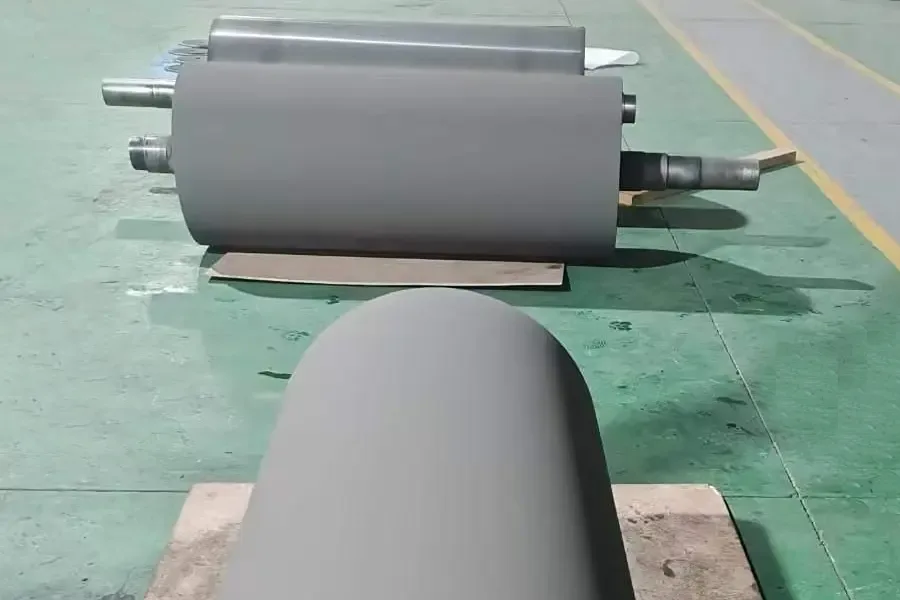
What Is a Tungsten Carbide Roll?
Tungsten carbide rolls are produced by sintering tungsten carbide powder with a metal binder under high temperature and high pressure. The result is a material with hardness approaching ceramic levels, strength comparable to steel, and wear resistance far beyond ordinary materials. It is a representative type of hard alloy roll.
Key Performance Advantages
Extreme wear resistance: In high-pressure and high-friction conditions, tungsten carbide rolls can resist wear for a very long time. Depending on the application, their service life can be several times - or even more than ten times - that of traditional steel rolls.
High hardness: The surface hardness of tungsten carbide rolls typically reaches HRA 88–92, which is significantly higher than quenched steel at HRC 58–62.
Strong compressive performance: Tungsten carbide rolls can withstand very high rolling pressure, making them suitable for metal rolling, slitting, stretching, leveling, and similar processes.
Good corrosion resistance: WC material has strong chemical stability and can be used in humid, corrosive, and high-temperature conditions.
When Should You Specify Tungsten Carbide Rolls?
Tungsten carbide rolls are not necessary for every application. They are most valuable when:
- The process involves high pressure or high friction.
- Roll wear is a major maintenance cost.
- Product precision and surface quality must remain stable over long production runs.
- Conventional steel rolls wear too quickly or deform under load.
- The operating environment includes corrosive media or high temperature.
In these cases, the higher initial cost of tungsten carbide can be offset by longer service life, less downtime, and more stable product quality.
A High-Performance Choice for Demanding Lines
As manufacturing moves toward higher precision and efficiency, tungsten carbide rolls have become an important component in many critical machines. They are not simply "harder rolls" - they are a material solution for severe wear and pressure conditions.
At AstraRoll, we help customers evaluate whether tungsten carbide rolls are the right fit for their process, and how to balance performance, service life, and cost. For demanding applications where ordinary rolls reach their limits, tungsten carbide can be a reliable path to longer life and more stable production.
- What is Tungsten Carbide Rolls?
- How Long Do Rubber Rollers Last?
- Choosing the Right Surface Treatment for Aluminum Rollers
- Industrial Brush Rollers – Crafting Factory
- Anodized Aluminum Rolls vs. PTFE-Coated Aluminum Rolls: What’s the Difference?
- Steel Rolls vs. Aluminum Rolls: How to Choose the Right Roller for Your Line
- Choosing the Right Air Shaft for Web Handling
- Industrial Cleaning Brush Rollers Factory