
Phone: +86 15398058207
E-mail: sales@astraroll.com
Add: Room 603, Building C, Huixin Center, No.1 Zhangba Road, Yanta District, Xi'an, Shaanxi, China
How Long Do Rubber Rollers Last?
"How long will this rubber roller last?" It is one of the most common questions before a custom roller order - and also one of the hardest to answer with a single number. Rubber roller life is not fixed. It depends on the rubber compound, the application, the operating environment, and how the roller is maintained.
At AstraRoll, we encourage customers to think about roller life as a combination of material selection and process management. Here is a practical overview.
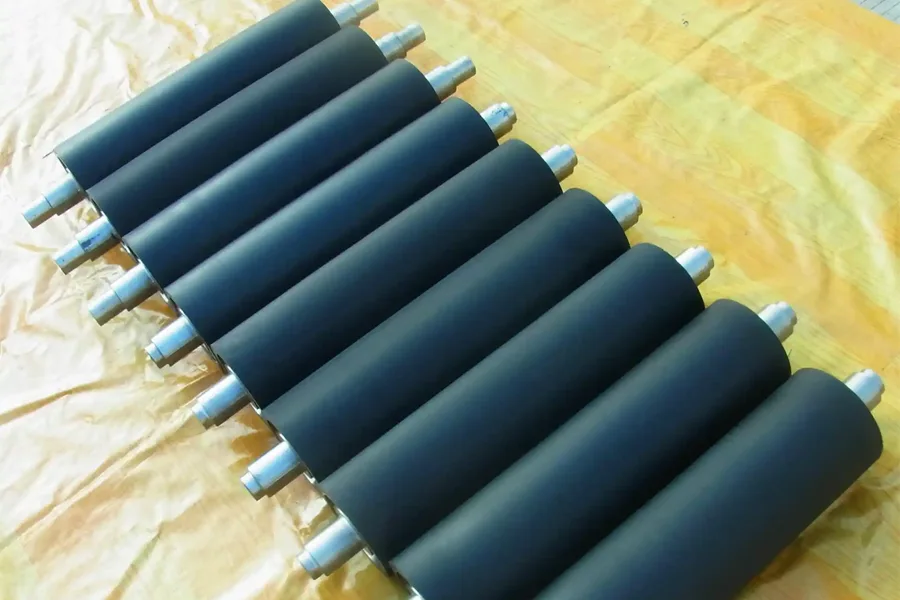
Typical Service Life by Rubber Material
Different rubber materials have different performance profiles. Based on common industry references:
- NBR (nitrile rubber) rollers: typically around 1–2 years. NBR offers good oil resistance and is widely used in printing and conveying.
- PU (polyurethane) rollers: typically around 2–5 years. PU is known for excellent wear resistance and pressure resistance, often giving the longest service life among common rubber rollers.
- Silicone rollers: typically around 1–3 years. Silicone can withstand high temperatures - up to 200°C or higher - but usually has lower mechanical strength.
These figures are useful starting points, but they are not guarantees. A roller that runs in a clean, moderate-temperature environment with proper pressure settings may last much longer than one exposed to solvents, high heat, or frequent overloads.
What Shortens Rubber Roller Life?
In real production, several factors can accelerate aging and wear:
- High temperature: Heat can harden or degrade rubber compounds.
- Ink, oil, and solvent contact: Chemical exposure can cause swelling, softening, or surface deterioration.
- Improper pressure: Excessive pressure increases stress and heat buildup.
- Frequent starts and stops: Repeated mechanical stress can reduce elasticity.
- Poor cleaning and storage: Contaminants and improper storage can damage the surface.
Signs That a Rubber Roller Is Nearing the End of Its Life
Operators should watch for warning signs before roller failure affects product quality:
- The surface becomes hard, sticky, or visibly cracked.
- The roller rebounds slowly after pressure and feels less elastic.
- The surface wears unevenly, causing color variation or inconsistent coating.
- Machine adjustment frequency increases, and process stability drops.
When these signs appear, the roller may be approaching or beyond its reasonable service period. Replacing or reconditioning it at the right time can prevent unexpected downtime and quality losses.
How to Extend Rubber Roller Life
Good roller performance is not only about the rubber compound. It is also about how the roller is used and maintained:
- Select the right rubber material for the chemical and temperature environment.
- Set pressure and nip conditions according to the process.
- Clean the roller with compatible agents and avoid harsh solvents.
- Store rollers properly to prevent deformation and surface damage.
- Monitor surface condition and schedule maintenance before problems escalate.
At AstraRoll, we support customers in matching rubber roller specifications to their actual operating conditions. By combining the right material with proper use and maintenance, rubber rollers can deliver more reliable performance and a longer effective service life.
- How Long Do Rubber Rollers Last?
- Choosing the Right Surface Treatment for Aluminum Rollers
- Industrial Brush Rollers – Crafting Factory
- Anodized Aluminum Rolls vs. PTFE-Coated Aluminum Rolls: What’s the Difference?
- Steel Rolls vs. Aluminum Rolls: How to Choose the Right Roller for Your Line
- Choosing the Right Air Shaft for Web Handling
- Industrial Cleaning Brush Rollers Factory
- Industrial Brush Rollers Factory