
Phone: +86 15398058207
E-mail: sales@astraroll.com
Add: Room 603 Building C, The Huixin Center, Zhangba One Road, Yanta Zone, Xi'an City, Shaanxi Province, China
Choosing the Right Surface Treatment for Aluminum Rollers
Aluminum rollers may look simple, but their performance often depends on what happens at the surface. In web handling, converting, printing, packaging, and film production, the roller surface directly affects friction, wear, release, corrosion resistance, and finished product quality. That is why surface treatment is not a minor detail - it is a core part of roller design.
At AstraRoll, we see surface treatment as a way to match an aluminum roller to its real working environment. A finish that works well for low-tension plastic film may not be the best choice for an abrasive paper-converting line. By understanding the available options, customers can improve equipment stability, reduce maintenance, and extend roller service life.
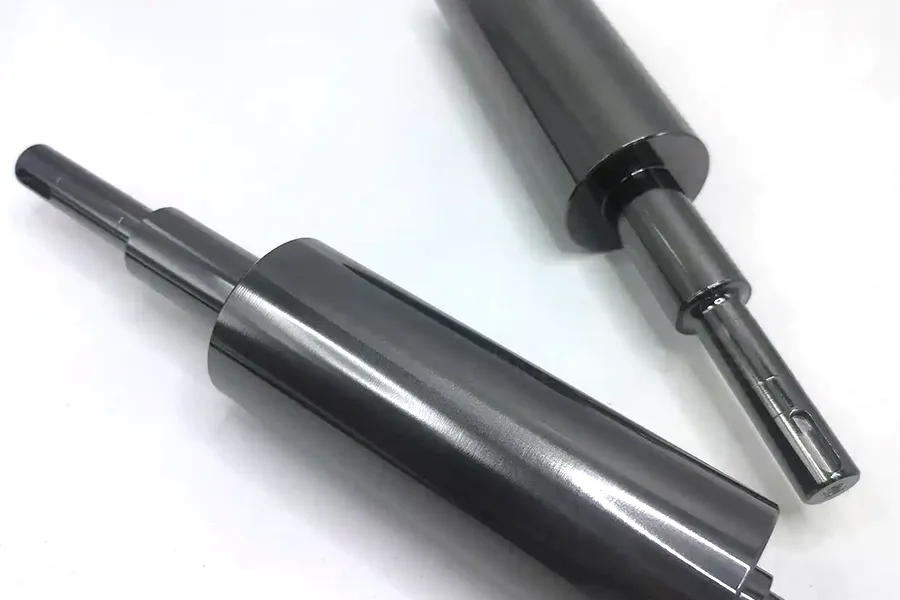
Here is a practical overview of common aluminum roller surface treatments and how to think about selecting the right one.
1. Anodizing: A Durable, Corrosion-Resistant Oxide Layer
Anodizing is one of the most widely used surface treatments for aluminum rollers. Through an electrolytic process, a dense aluminum oxide (Al₂O₃) film is formed on the aluminum surface. This layer improves corrosion resistance, increases surface hardness, and can also enhance appearance.
There are two important categories to consider:
- Standard anodizing - suitable for general corrosion resistance and a clean, uniform surface.
- Hard anodizing - provides greater wear resistance and is often recommended for rollers that experience friction, contact, or repeated mechanical wear.
For applications where the roller must resist abrasion while maintaining a stable surface, hard anodizing can be a strong choice. It is especially useful in demanding friction-related positions where a softer surface may wear too quickly.
2. White Oxidation: A Practical Option for Low-Tension Film
White oxidation offers a moderate surface hardness- typically around HV300 - and can be produced in different colors, including black and white, depending on customer requirements. One of its key advantages is cost efficiency.
This treatment is particularly well suited to low-tension plastic film applications, where extreme wear resistance may not be the primary requirement, but a consistent, controlled surface is still important. For customers looking for a balance between performance and cost, white oxidation can be a practical solution.
At AstraRoll, we help customers evaluate whether a lower-cost treatment like white oxidation is sufficient for their process, or whether a higher-performance finish is needed.
3. Chrome Plating: Hardness, Smoothness, and Mirror-Like Finish
Chrome plating is another common surface treatment for aluminum rollers. In this process, a layer of hard chrome is deposited onto the roller surface, typically with a thickness of 5–50 μm.
The benefits are significant:
- High hardness - commonly in the range of HV800–1200
- Excellent wear resistance
- Very smooth surface
- Roughness as low as Ra 0.01 μm
- Mirror-like appearance
Because of these characteristics, chrome-plated aluminum rollers are widely used in paper processing, film machinery, and other applications where a hard, smooth, and highly finished surface is required. When web contact must be consistent and surface friction must be carefully managed, chrome plating can be an excellent choice.
4. PTFE Coating: Non-Stick Performance for Demanding Web Contact
PTFE surface coating gives aluminum rollers a very different set of properties. Instead of focusing mainly on hardness, PTFE focuses on release and low friction.
A PTFE-coated roller can provide:
- Non-stick performance
- Oil and water repellency
- Low coefficient of friction
- Corrosion resistance
- High-temperature resistance
- Electrical insulation
These properties make PTFE coating useful in plastic film, food packaging, and other applications where material build-up, sticking, or easy release is a concern. When the process requires smooth material transfer without adhesion, PTFE can be a highly effective surface solution.
How to Choose the Right Surface Treatment
There is no single "best" surface treatment for every aluminum roller. The right choice depends on the application. Key questions include:
- What material is being handled - paper, plastic film, foil, or another web?
- How much tension is involved?
- Is the roller exposed to friction, abrasion, or repeated cleaning?
- Is corrosion resistance important?
- Does the process require non-stick release?
- What surface roughness or appearance is required?
- What is the target balance between performance and cost?
For example, a low-tension plastic film line may benefit from white oxidation, while a paper-converting application may require the hardness and smoothness of chrome plating. A food packaging process with sticky materials may call for PTFE coating. A friction-heavy application may justify hard anodizing.
The AstraRoll Approach
At AstraRoll, we believe the best roller is not simply a standard component - it is a solution matched to the process. Our approach is to understand the application first, then recommend the surface treatment that best supports performance, reliability, and cost efficiency.
From anodizing and white oxidation to chrome plating and PTFE coating, AstraRoll helps customers navigate the trade-offs and select a surface finish that fits their equipment and production goals. The result is a roller that performs more consistently, lasts longer, and requires less maintenance over time.
Surface treatment can transform an aluminum roller from a basic rotating component into a high-performance part of the production line. Whether the priority is wear resistance, corrosion protection, mirror-like smoothness, or non-stick release, the right finish makes a measurable difference.
If you are planning a new roller project or looking to improve an existing application, AstraRoll is ready to help you choose the right surface treatment for your aluminum rollers.
Contact our team to discuss your application requirements and explore a customized solution.
- Choosing the Right Surface Treatment for Aluminum Rollers
- Industrial Brush Rollers – Crafting Factory
- Anodized Aluminum Rolls vs. PTFE-Coated Aluminum Rolls: What’s the Difference?
- Steel Rolls vs. Aluminum Rolls: How to Choose the Right Roller for Your Line
- Choosing the Right Air Shaft for Web Handling
- Industrial Cleaning Brush Rollers Factory
- Industrial Brush Rollers Factory
- Three common industrial applications of brush rollers