
WeChat: 15398058207
E-mail: sales@astraroll.com
Add: Room 603 Building C, The Huixin Center, Zhangba One Road, Yanta Zone, Xi'an City, Shaanxi Province, China
Infrared Thermometer Gun
The Role of the Infrared Thermometer Gun in Roller Manufacturing
In a roller factory, temperature is not a by-product of production - it is a controlled variable. Too much heat in the wrong place means a bearing that seizes, a weld that weakens, a shaft that bows, or a roller that fails a thousand kilometres early. That is why the infrared thermometer gun - the handheld, non-contact tool every workshop keeps by the bench - has become one of the most quietly important instruments in our production line. This is what it does, and where.
Non-Contact Temperature Control at the Critical Moments
Unlike contact probes, an infrared thermometer measures surface temperature from a distance, using the infrared radiation the object emits. That single property makes it invaluable in exactly the situations where a probe cannot be used: moving parts, hot surfaces, live test rigs and freshly machined workpieces.
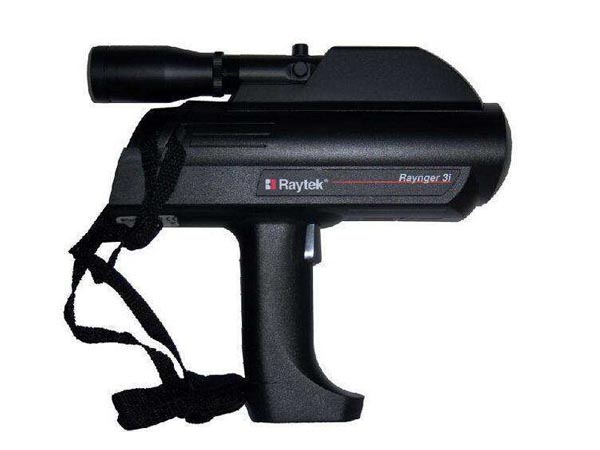
Where the Thermometer Gun Matters in Roller Production
1. Bearing installation and interference fits. Roller bearings are commonly fitted with an interference fit — the bearing is heated (or the shaft chilled) so the two parts join without force, then lock together as temperatures equalise. Overheating a bearing destroys its metallurgy and its preload; underheating means the fit never seats. Before and immediately after assembly, we scan the bearing race and the shaft seat with the thermometer gun to confirm the temperature is within the manufacturer's specified window — usually 80–120°C for bearings heated in oil or by induction.
2. Welding and heat-affected zones. Welded roller shells and shaft-to-endplate joints concentrate intense heat in a small area. Excess heat distorts the shell, changes the steel's structure and invites cracking. As the welder works, a spot check with the thermometer gun verifies inter-pass temperature and warns when the heat-affected zone is climbing too high, so the weld cools at the correct rate.
3. Machining: thermal expansion vs. tolerances. A shaft that is straight at 20°C is not straight at 40°C. During turning and grinding, friction heats the workpiece and the cutting edge, expanding the metal and shifting the dimension mid-cut. Operators scan the workpiece surface before the finishing pass; if it reads hot, they pause, let it settle, or adjust - protecting the final tolerances that our customers' assemblies depend on.
4. Dynamic balancing and run tests. Every finished roller runs on our balancing and test rigs before it ships. The test tells us how the roller behaves under load - and how it heats. A bearing that runs hot, or a shell that heats unevenly, points to excessive preload, misalignment or a lubrication problem. The thermometer gun lets us read each bearing housing without stopping the rotation: a reading that climbs steadily past normal operating range flags the fault before the roller ever reaches a customer's line.
5. Heat treatment and surface hardening. For rollers that are induction-hardened or tempered, the gun verifies the surface temperature at the moment of treatment - confirming the hardening temperature was reached and the tempering cycle stayed within specification.
6. Final quality inspection. On the QC bench, a quick temperature scan is one of the fastest health checks of an assembled roller: uniform, near-ambient readings across a freshly turned roller tell the inspector the component is sound, while a localised hot spot sends it back for investigation.
Why the Gun, and Why Not Just Any Tool
- Speed - a reading in under a second, taken mid-process without stopping the line.
- Safety - no contact with 200°C surfaces, rotating spindles or live test rigs.
- Versatility - one instrument covers bearings, welds, machined surfaces and running test housings.
- Its limits, honestly stated - the gun reads surface temperature only, and accuracy depends on the emissivity of the surface (shiny steel reads differently from blackened steel). We therefore use it alongside contact thermocouples for the critical operations, and calibrate it regularly against a reference source - the gun is the workshop's fast eye, the thermocouple its precise judge.
What It Adds Up To
An infrared thermometer gun costs little compared with the rollers it protects — but it is one of the reasons a factory can promise consistent press-fits, stable tolerances and bearings that leave the test rig within specification. In roller manufacturing, temperature is a quality signal, and the thermometer gun is how we read it: fast, safe, and on every bench where steel meets bearing.
- Explosion proof electric roller
- The Silent Quality Drivers: How High-Precision Rollers Shape Release Film Perfor
- What Are the Benefits of Hard Anodized Aluminum Guide Rollers?
- Why High-End Manufacturing Cares So Much About Roller Surface Precision
- Why Your Heavy-Duty Conveyor Needs Garland Idler Rollers
- What are the differences and applications between anilox roller and embossing ro
- Why Teflon Coated Aluminum Rollers Are the Best Choice for Non-Stick Web Handlin
- How to Eliminate Static Accumulation and Defect Risks in High-Speed Battery Sepa