
Phone: +86 15398058207
E-mail: sales@astraroll.com
Add: Room 603, Building C, Huixin Center, No.1 Zhangba Road, Yanta District, Xi'an, Shaanxi, China
What Makes Precision Industrial Rollers Different from Standard Rollers?
At first glance, one industrial roller can look much like another. Both are cylindrical components that rotate on bearings, support a belt or web, and fit into a machine frame. But the difference between a standard roller and a precision industrial roller becomes obvious when the application demands high speed, tight web tension, uniform coating, delicate product handling or long uninterrupted operation.
Standard rollers are manufactured to general tolerances and are intended for common conveying tasks where moderate runout, moderate balance and general surface finish are acceptable. Precision rollers are engineered to much tighter tolerances and inspected against measurable criteria. They are designed for applications where small deviations - measured in microns or grams - translate into visible defects, premature wear or costly downtime.
At AstraRoll, we manufacture both standard and precision rollers, and we often help customers understand when a standard roller is sufficient and when a precision roller is worth the investment. This article explains the key differences between precision industrial rollers and standard rollers, why those differences matter, and how to decide which level of precision your application requires.
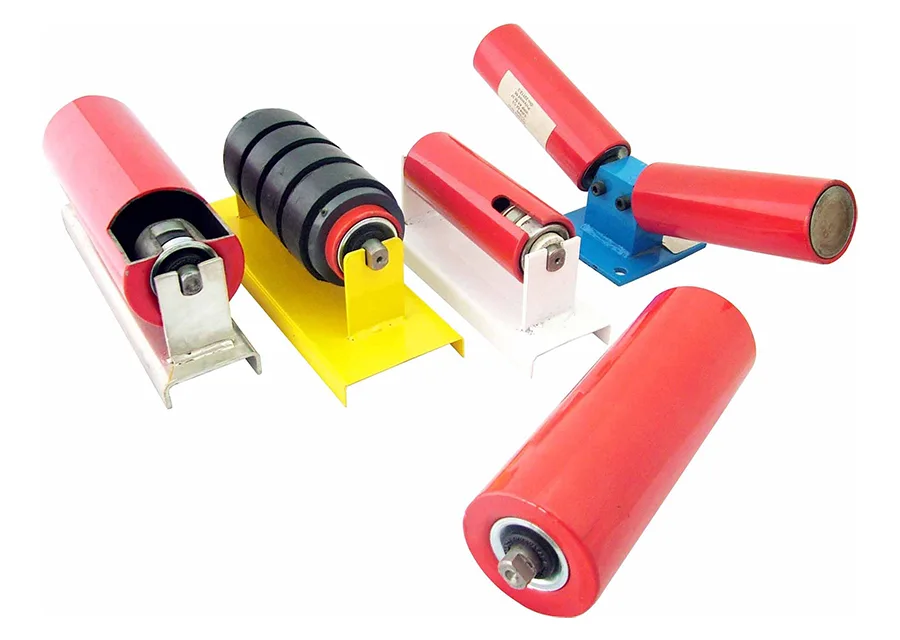
Defining Standard Rollers and Precision Rollers
A standard roller is typically made to catalog dimensions and general tolerances. It may have a commercial surface finish, a standard bearing fit and a static balance check. It is suitable for general conveying, light material handling and applications where the roller is not a critical factor in product quality.
A precision industrial roller is engineered to application-specific tolerances. It is machined to tight concentricity and runout limits, dynamically balanced for high-speed operation, finished to a controlled surface roughness, and inspected with metrology instruments. It may also use upgraded materials, bearings, seals and surface treatments. The precision roller is not simply a “better standard roller”; it is a different level of engineering.
The difference is similar to the difference between a commercial shaft and a precision-ground shaft. Both may fit, but only one will run smoothly at high speed without vibration, wear or alignment problems.
Difference 1: Concentricity and Total Indicator Runout (TIR)
Concentricity is the foundation of roller precision. It describes how closely the outer surface of the roller aligns with the rotational axis. Total indicator runout (TIR) measures the combined effect of concentricity, roundness and surface irregularities as the roller rotates.
A standard roller may have a runout measured in tenths of a millimeter. A precision roller is typically machined to a runout of a few hundredths of a millimeter or better, depending on the application. In high-speed web handling, even a small runout can cause tension fluctuation, web wrinkling, coating thickness variation and vibration.
Why does this matter? Imagine a roller supporting a thin film at high speed. If the roller surface is not perfectly concentric, the film tension will rise and fall with each rotation. The result can be wrinkles, register errors, coating streaks or web breaks. A precision roller maintains uniform contact pressure across the web, which is essential for consistent product quality.
At AstraRoll, we machine roller cores on heavy-duty CNC turning centers and hold tight tolerances on diameter, concentricity and runout. For critical web handling applications, we measure TIR on the finished roller and verify it against the specification. This level of control is what separates a precision industrial roller from a standard conveyor roller.
Difference 2: Dynamic Balancing
Balancing is another major differentiator. A standard roller may be statically balanced, meaning it is balanced at rest. A precision roller for high-speed operation is dynamically balanced, meaning it is balanced under rotation at the actual operating speed or a representative speed.
At high RPM, even a small imbalance creates centrifugal force. This force increases with the square of the speed. A roller that feels smooth at low speed can vibrate severely at high speed if it is not dynamically balanced. Vibration accelerates bearing wear, causes noise, produces chatter marks on products and can damage the machine frame.
Precision rollers are balanced to defined grades such as ISO 21940 G2.5 or G1.0. The lower the grade number, the lower the residual imbalance. For high-speed printing, coating, lamination and film handling, G2.5 or G1.0 balancing is often required. For general conveying at low speed, static balancing may be sufficient.
Dynamic balancing requires specialized equipment and expertise. It is not simply a matter of adding or removing weight; the correction must be made at the correct angle and radius. AstraRoll performs dynamic balancing in-house, which allows us to control the process and verify the result before shipment.
Difference 3: Material Selection and Consistency
Standard rollers are often made from common materials selected primarily for cost and availability. Precision rollers are made from materials selected for the application: strength, stiffness, corrosion resistance, weight, thermal stability and machinability.
For example, a standard conveyor roller may use carbon steel tube with a painted finish. A precision roller for a corrosive food processing line may use stainless steel rollers with a controlled surface finish and sealed bearings. A high-speed web handling roller may use aluminum alloy rollers or carbon fiber rollers to reduce inertia and improve dynamic response.
Material consistency also matters. Precision rollers require consistent wall thickness, straightness and material properties. Variation in wall thickness can cause imbalance and deflection. Variation in material hardness can affect machining and surface finish. AstraRoll controls material incoming inspection and machining parameters to ensure consistency from roller to roller.
Difference 4: Surface Finish and Surface Engineering
The roller surface is the interface with the product. Standard rollers often have a commercial finish that is adequate for general conveying but not for precision web handling or product protection.
Precision rollers are finished to a controlled surface roughness. The required roughness depends on the application. For printing and coating, a smooth, uniform surface helps ensure even ink or coating transfer. For grip applications, a textured or grooved surface may be required. For food processing, a smooth, cleanable surface supports hygiene.
Surface engineering also differentiates precision rollers. A standard roller may be painted or galvanized. A precision roller may use hard chrome plating, tungsten carbide coating, anodizing, or a rubber or silicone covering. Each treatment is selected for a specific function: wear resistance, corrosion resistance, grip, release or product protection.
For example, a precision nip roller in a packaging line may use a rubber cover with a specific hardness and surface finish to ensure even pressure and prevent product damage. A precision coating roller may use a hard chrome or tungsten carbide surface to resist wear and maintain a uniform coating thickness. These are not standard catalog options; they are engineered choices.
Difference 5: Bearing Selection, Fit and Sealing
Bearings are the most common failure point in industrial rollers. Standard rollers often use commercial bearings with standard fits and basic seals. Precision rollers use bearings selected for the load, speed, temperature and contamination level, with controlled fits and effective sealing.
Bearing fit is critical. A bearing that is too loose will spin on the shaft or housing, causing wear and vibration. A bearing that is too tight will preload the bearing, increasing friction and heat. Precision rollers use controlled shaft and housing tolerances to achieve the correct fit.
Sealing is equally important. In dusty, wet or corrosive environments, a standard seal may allow contaminants to enter the bearing. Precision rollers may use labyrinth seals, multiple sealing stages or sealed-for-life bearings. For food processing and washdown, stainless steel bearings or food-grade lubricants may be specified.
The result is smoother rotation, lower noise, less maintenance and longer service life. This is especially important in applications where the roller is difficult to access or where downtime is costly.
Difference 6: Inspection and Documentation
Standard rollers are often inspected by sampling or visual check. Precision rollers are inspected against measurable specifications, often 100% inspection for critical characteristics.
Inspection may include dimensional measurement, concentricity and runout, surface roughness, hardness, balance, bearing fit and rotation, coating thickness and adhesion. Documentation may include inspection reports, material certificates and compliance certificates.
This inspection and documentation matter for machine builders and end users who need to verify that the roller meets the design intent. It also supports traceability and quality system requirements. AstraRoll's quality control lab uses precision metrology instruments to inspect every precision roller before dispatch.
Difference 7: Custom Engineering and Application Support
Standard rollers are selected from a catalog. Precision rollers are often engineered for the application. The manufacturer works from drawings, samples or application data to determine the optimal diameter, wall thickness, shaft design, bearing selection, surface finish and balancing grade.
This engineering support is a key difference. A precision roller manufacturer does not just supply a part; it helps solve a problem. For example, if a customer is experiencing web wrinkling, the manufacturer may recommend a different roller diameter, a crown profile, a different surface finish or an expander roller to spread the web. If a conveyor is mistracking, the manufacturer may recommend idler rollers with better alignment or self-aligning features.
This level of support requires engineering capability and application experience. It is not available from a catalog-only supplier.
Difference 8: Service Life and Total Cost of Ownership
Precision rollers usually cost more upfront than standard rollers. But the total cost of ownership can be lower. A precision roller runs smoother, wears more evenly and lasts longer. It reduces vibration, protects bearings and seals, and minimizes product defects. It also reduces downtime and maintenance labor.
In high-speed or high-value production, the cost of a roller is small compared with the cost of downtime or product waste. A precision roller that prevents a single web break or coating defect can pay for itself quickly. In general conveying, a standard roller may be perfectly adequate and more economical.
The key is to match the roller to the application. Using a precision roller where a standard roller is sufficient is over-specification. Using a standard roller where precision is required is a false economy.
When Do You Need Precision Rollers?
Precision rollers are typically required when:
- The roller operates at high speed, where balance and runout affect vibration and bearing life.
- The roller handles a thin web, film, foil or paper where tension uniformity is critical.
- The roller is part of a printing, coating, lamination or packaging process where surface finish affects product quality.
- The roller handles delicate or scratch-sensitive products that require smooth, uniform contact.
- The roller operates in a corrosive, humid or washdown environment where sealing and material quality matter.
- The roller is difficult to access or replace, making long service life important.
- The machine is a precision machine where roller runout affects accuracy or repeatability.
Standard rollers are often sufficient for general conveying, light material handling, non-critical support and applications where speed and product quality requirements are moderate.
How to Specify Precision Rollers
When specifying precision rollers, define the following:
- Diameter and length: including tolerances.
- Concentricity and runout: specify TIR limit.
- Balance grade: specify ISO 21940 grade and operating speed.
- Surface finish: specify roughness (Ra) and any covering or coating.
- Material: specify grade and any certificates.
- Bearing type and seal: specify load, speed and environment.
- Shaft design: including fits, keyway and mounting.
- Inspection and documentation: specify what must be measured and reported.
AstraRoll's engineering team can help translate application requirements into a roller specification. We can review drawings, recommend materials and finishes, and propose the right balance grade for the operating speed.
Precision industrial rollers differ from standard rollers in concentricity, dynamic balancing, material consistency, surface finish, bearing selection, inspection and engineering support. These differences matter when the application demands high speed, uniform web tension, product protection or long service life.
The right choice depends on the application. Standard rollers are cost-effective for general conveying. Precision rollers are essential where small deviations cause big problems. By understanding the differences, you can specify the right roller and avoid both over-specification and false economy.
For help selecting precision rollers for your application, contact AstraRoll or explore our range of industrial rollers, including conveyor rollers, idler rollers and drive drum pulleys, to find the right solution for your machine.
- What Makes Precision Industrial Rollers Different from Standard Rollers?
- 4 Critical Air Shaft Selection Mistakes That Ruin Your Flexible Packaging Windin
- AstraRoll Custom Industrial Rollers
- 5 Signs Your Industrial Rollers Need Maintenance or Replacement
- Industrial Rollers Material Guide
- How to Choose the Right Industrial Rollers for Your Conveyor System
- Slip Shaft vs Air Shaft: The Two Must-Know Rewind Shafts for Slitting
- Air Shafts – The Unsung Backbone of Automated Web Production Lines